“Shoes For Every Occasion”

There was little doubt about what shoes I would wear throughout grade school. School shoes were brown and white saddle shoes. Party and holiday shoes were patent leather Mary Janes. I also kept a pair of sneakers at school for use in gym class where we dressed down to a blouse, shorts and sneakers. Shoes were handed down in my family, but since I was the oldest I had the benefit of new shoes.

Buying new shoes still seemed like an adventure, even if it was predetermined which shoes I would take home. The shoe store had an x-ray machine that looked to see how much growing room there was in the toe of the new shoe. Previously, the salesman would press down hard to see if there was room to grow. I imagine the x-ray machine was terribly dangerous rather than intriguing, but we didn’t know any better. We never bought shoes that fit at the time of purchase, only ones we could grow into. This meant that not only were the new shoes stiff, but they were also too big.

I kept my saddle shoes clean with saddle soap. I don’t know if it was really for saddles since it was sold in the shoe department. I enjoyed getting them clean enough now and then. I spent hours out of doors, so naturally they got scuffed and dirty. But those shoes were seemingly indestructible and they never wore out before I outgrew them. The shine on the Mary Janes was spiffed up with Vaseline.

Today children wear many different kinds of shoes and actually are often involved in picking them out. I was spared the choice, but fortunately I loved both of the ones chosen for me. I still stick to an Oxford for days and a low heel for special occasions. And they wear out, an experience I never had as a child.


“Money on the Road”

08DADD6F-995A-4521-AE0F-155861560297

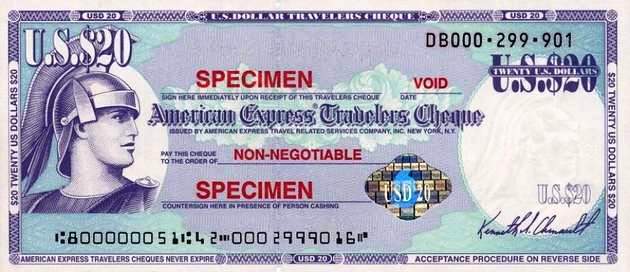
Many many years ago, there was no such thing as an ATM dispenser of cash. There were not credit cards except ones for specific department stores or gasoline stations. A common occurrence was remembering to get enough cash for the weekend. Well established residents could write checks at the grocery store and get a little extra back. But if you were in a strange town, you needed to have cash if you wanted to purchase anything.

Enter the American Express Traveler’s Check. These were purchased at the bank for cash plus a small fee for the service. Sometimes the handling fee was waived for certain customers who kept enough money in the bank. As soon as you bought them, it was important to sign the top line. Otherwise, anyone could cash them.

When you needed to buy something, you would fill out the check to the vendor and then write your signature on the bottom line. As I remember, no further identification was ever asked for. As long as your signature looked pretty much like the first one, you could cash the check. It was essential to keep a list of the serial numbers of the checks so that if you lost them you could immediately notify American Express. I remember being careful to keep the list of serial numbers in a separate place from the checks.

Traveling through Britain in the mid-1970’s I remember becoming aware that we were nearly out of checks. Fortunately, our air fare home was paid for and we practiced extra frugality for the last few days. Hard as it is for the VISA carrying, ATM using present day American to believe, we would have been in serious trouble if we had run out of Traveler’s Checks. They were the only money we had on the road.