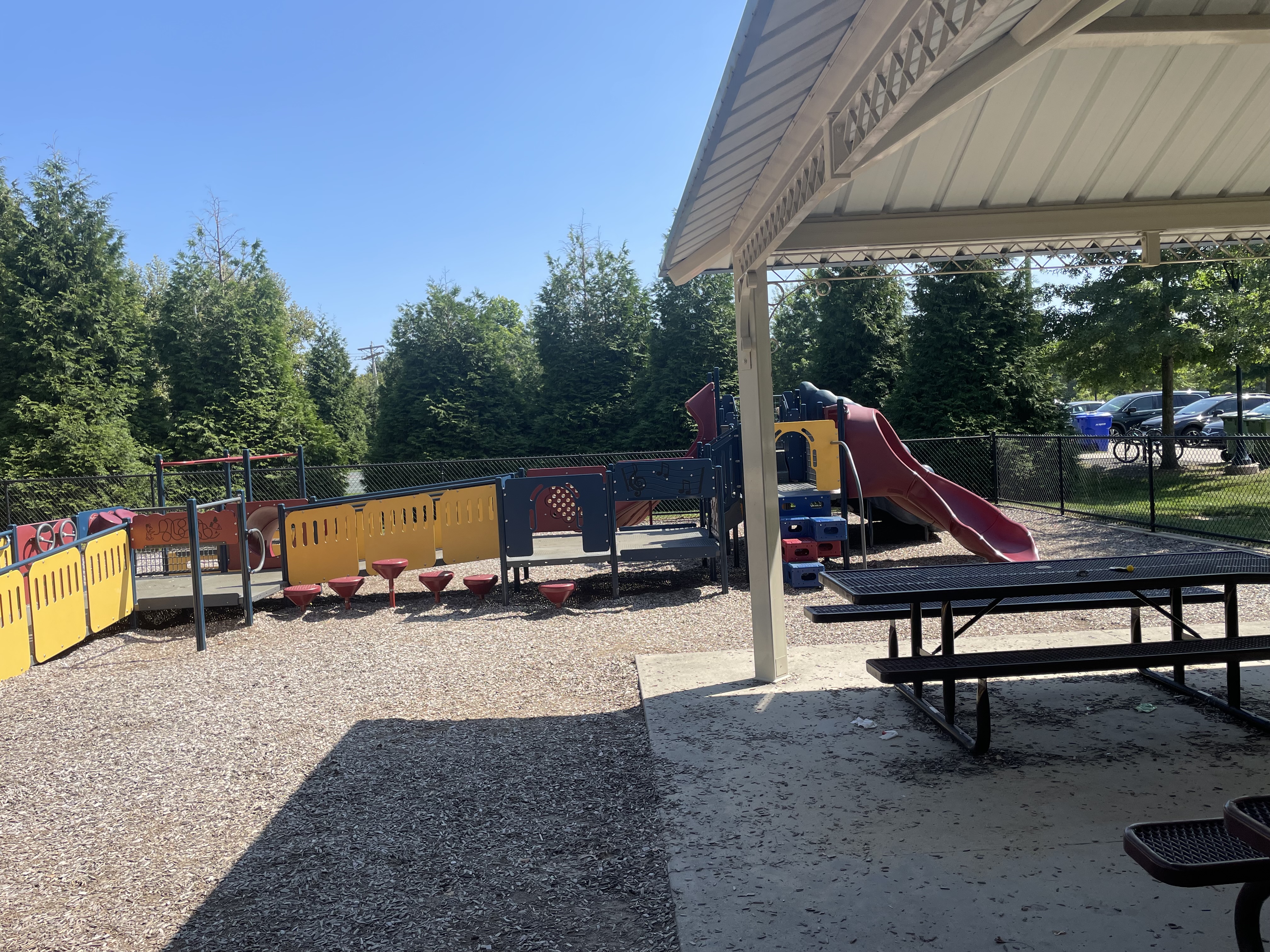
”Let’s Play”

The park cleverly has two separate play areas, across a sidewalk from each other, with each visible from either one. (My photos are necessarily incomplete since I respect kids’ privacy.) This picture shows one end of the playground specifically for the newly walking and toddling children. The area also includes a play house and a large sand pit. The designers thoughtfully placed a picnic table under a sheltering roof so parents(and many grandparents) could rest and watch the kids at play.

This was the first time I had seen two separate play sections in a park, and I love watching how parents and kids maneuver the choice. The fencing has an automatically closing gate, too complicated for the very small, so they are content to play here. As they get a little older and bolder they begin to ask for the area in the next post. This means that the littlest kids are not constantly being knocked over by the bigger ones, nor are they hurried as they very very tentatively walk up the ramp to the little slide.

I love watching the interactions between these littlest children and their carers. Most actually pay attention instead of sticking to their phones. I hear encouragement and consolation as the children explore and fall. Unlike the paved surface of my childhood, the wood shavings here provide a gentle landing. A good time for one and all(including those walking by.)

”Watch Your Step?”

We first started using this large park in the neighboring town after I took a bad fall on a local sidewalk. I tripped over a spot where two sections met with one half an inch higher than the other. I went down so suddenly and so completely that I barely knew what had happened. Fortunately I had my hands in my pockets, so I didn’t throw out my arms and break my wrists, the most common injuries with such a tumble. Nothing broke though I had extensive bruising on my knee elbow and thigh. The outside of my head was unscathed, but inside of my head my confidence was shaken.

Nothing is less relaxing than walking on a sidewalk fearing another fall. After giving up walks for a while as my body healed, I wondered where else we could go. That led us to this park and its paths and walkways. The photo above shows one of the typical paved paths around the park. Unlike some sidewalks, this one is wide enough to allow two people to pass two people going the opposite direction. The paved surface is well maintained, plowed during the winter, and swept clean during the rest of the year.

Paved walks are perfect for walking but also for baby strollers and any mobility devices. Small children also try out their first biking skills on them. It is possible to do circuits just on paved walkways without looking out for cars. They allow an opportunity to be outside, near the river, walking without worry. They provided me my first optimism about walking outdoors again.

(The hanging banner features a poem, part of a poetry in public spaces project. That will show up in a later post.)

“Successful Transformation?”

I was intrigued by the sign by the land transformed from an oil storage depot to a town park. What exactly did they mean that the place was “age friendly,” an ambitious goal for a recreational site? How might one park serve everyone from baby to elder and those with mobility challenges? And were they able to demonstrate rather than just tout the designation? To my deep delight they truly delivered on this public space by the river.

Years ago I spent time on Portland, Oregon’ Planning Commission and as its member on the city Design Commission. While neither a professional planner nor an architect, I learned much about what goes into designing a project. When I began to reflect on this new park in Connecticut, it was through the experience of that learning base.

The reclaimed land was basically an enormous clean slate and I imagine a welcome challenge to its architects. The team wisely assessed all the needs of many different citizens and ended up creating a series of “rooms’ within the expanse. And as new demands arose, the park has been modified.

In following posts I will lay out the clever way they truly met the claim to be “age friendly” as well as boat, dog, soccer, lacrosse, baseball, volleyball, kite flying, ice skating and lately pickleball accommodating. To say nothing of creating a lovely backdrop for weddings.

“Transforming”

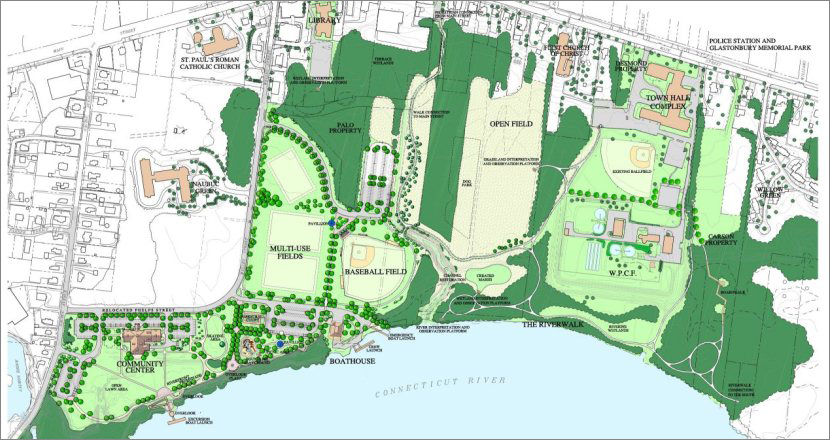
The town had a vision as depicted in the schematic above, but there was a major problem. To quote the federal Environmental Protection Agency in their discussion of the area:

This brownfield site borders the scenic Connecticut River, making it a potentially valuable public asset if it could be remediated to stringent state standards. However, changing public perception was key. To be accepted as the location of a proposed Community Center and Riverfront Park site, the public had to change its opinion of the site from a contaminated liability, to a location safe for recreational activities.

I am distressed to read that the main objective seemed to be “changing public perception.” I find the government phrasing a little manipulative to say the least. I would have much preferred the straightforward statement that “we will make this area safe for recreation.” Nonetheless, money was provided by the federal government to clean up the site.

Much contaminated soil was buried, much was removed, and protections were put in place to prevent “seepage” into the Connecticut River. The remediation process took four years, but construction of the park and community center on it could now take place.

“From the Ruins”

We walk most days in a large riverfront park along the Connecticut River. In the next few days I will write about the wonderful community asset now there. But first I wanted to share three photos of the site before it was transformed.

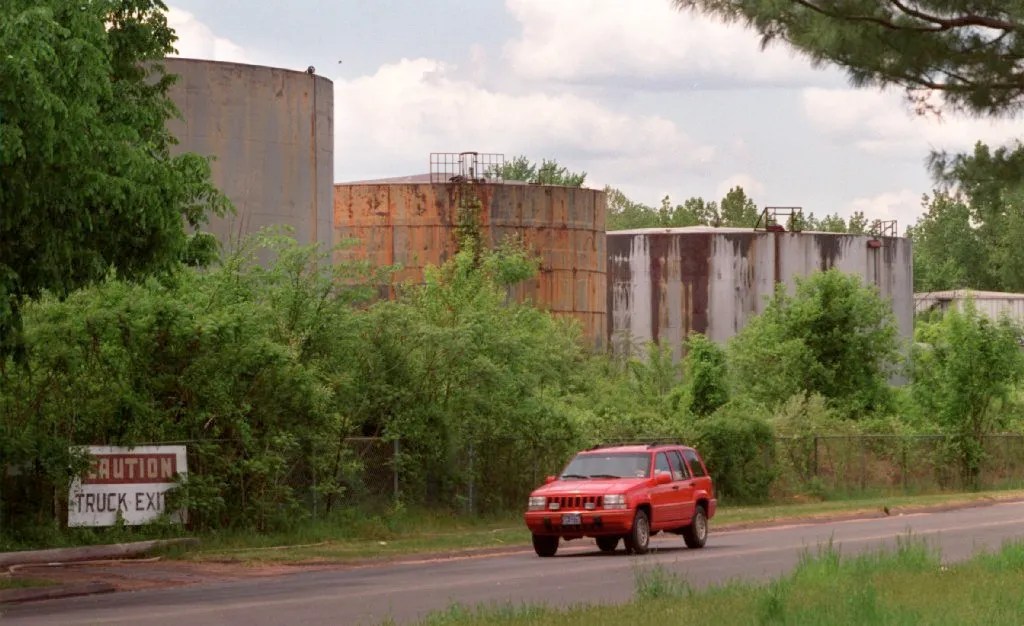
As with many river locations, the original use was industrial. In the neighborhood in Portland, Oregon where I lived, for instance, furniture factories were replaced by a park after furniture manufacturing left. In Glastonbury, Connecticut, the river provided a way to supply huge oil tanks. When we moved here the tanks were long longer in use, but the empty ones remained as the first photo shows.

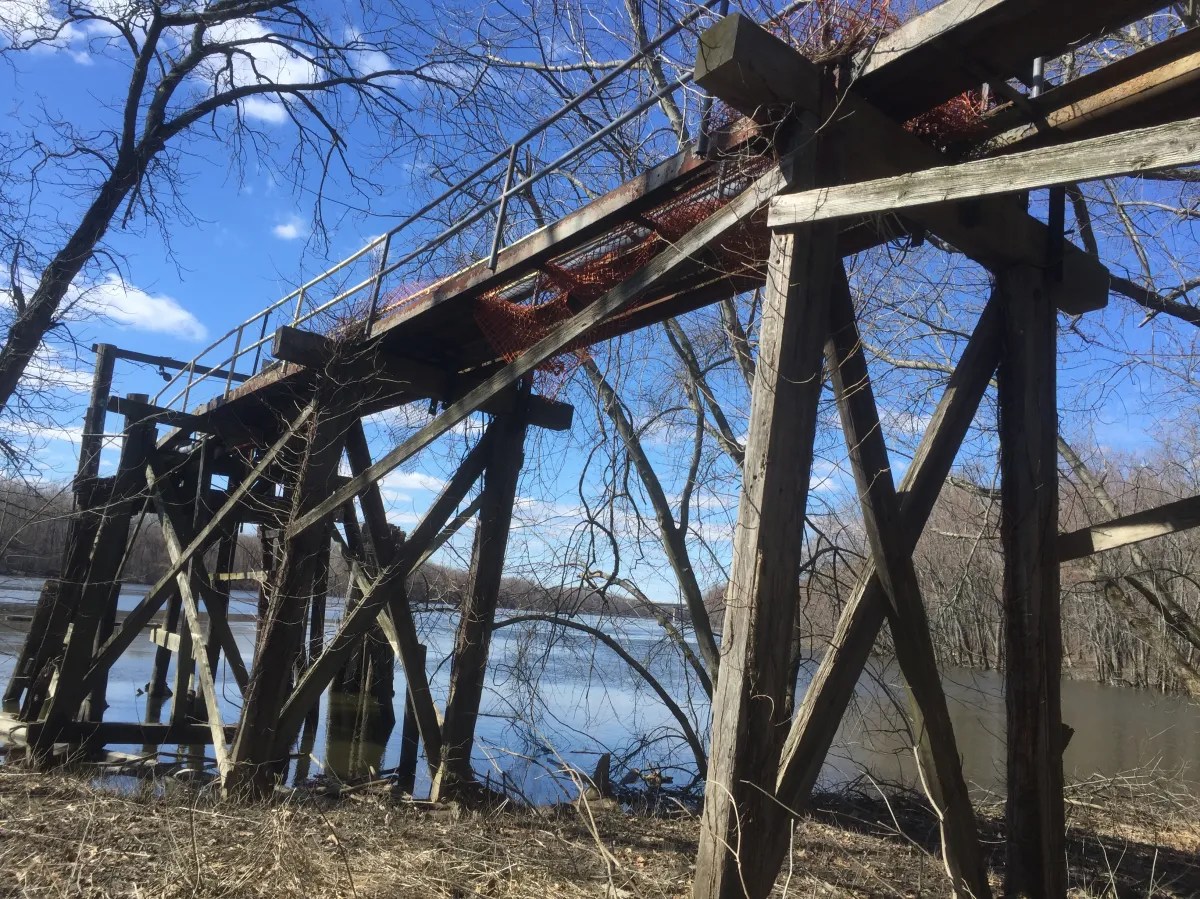
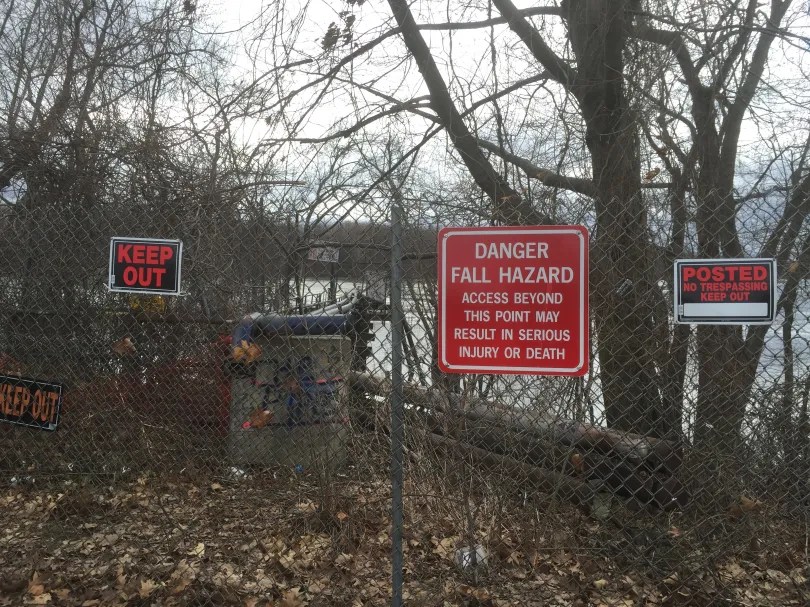
The wooden structures in the center photo used to run the hoses to the tanks were falling apart but were still a hazard since they seemed to beg to be climbed on. The third photo shows the town’s effort to keep people from exploring the ruins. Of course as with any “attractive nuisance,” they failed.

Needless to say the entire site was contaminated, labeled a “brownfield” and would need significant remediation before it could be used as a park.