”The Only Rabbit Allowed”

As a child my sympathy was clearly on the side of Peter Rabbit. What, I wondered, made Farmer McGregor chase Peter out of his garden with his rake? How could a little rabbit be a threat? At the time I lived in a neighborhood with neither gardens nor rabbits. Now I live with a lovely yard and a bevy of wild rabbits.

Spring has come late this year, with frost the last two mornings. The daffodils in the photo just opened this week. But before another batch had a chance to shine, a “wascally wabbit” beat them to it and chewed the tops off many. Charlie once again put chicken wire everywhere he thought rabbits might still be sneaking in. So far it is working. It is also preventing the inevitable rabbit-Zoe showdown which wouldn’t end well.

This ceramic bunny will have to do. Maybe it will convince any intruders that this yard is already occupied!

”Twain Revisited”

Many years ago I read Jean Rhys’ novel The Wide Sargasso Sea which reframes Charlotte Bronte’s Jane Eyre by imagining the life of Rochester’s “mad” wife who lives and eventually dies in the attic. As I thought about the two books together I was able to question some of my long held views of Rochester’s marriage. In the intervening years although I have found other novels attempting to reinterpret their sources, I have never been as startled as I was when I read Rhys.

That changed this week when I read Percival Everett’s 2024 novel James. Everett takes the widely known Mark Twain story Huckleberry Finn and reframes it through a narrative by the enslaved man known in that novel as Jim. Much criticism has been directed against the Twain book and it has appeared, disappeared and reappeared in American classrooms for years depending on the political climate at any time. Everett takes for granted a prior reading of the novel as well as the endless discussion of its place in American literature.

In James Everett manages to both embrace the tale as told by Finn and place it in an adult story rather than in one of a little boy. Suddenly any criticism of the book disappeared for me as I saw Huck as a fanciful boy seeing his life as a grand adventure with no more awareness of Jim as an adult than many of the “grown-ups” around him. But Everett sees Jim the enslaved man, sees his perilous journey to freedom, his accommodation to behaving as whites expect a slave to act and speak, and his true affection for the fatherless Huck.

As he takes the name James at the novel’s end it becomes impossible to see the diminished Jim as a stereotype in Twain’s book. Rather I got a glimpse, as I imagine Everett might have, of the larger story lying in wait to be told. I hope that future students will get to read both novels together, giving them a rich chance to contrast a boy’s imaginative adventure story with an adult’s breathtaking quest for freedom, a true adventure.

”Hardy Revisited”

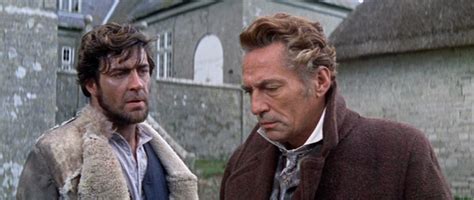
Easter Sunday yesterday marked the end of the six weeks of Lent. During that time I was basically off-line and focusing on spiritual work. But I also took a chance to rewatch the 1967 film Far From the Madding Crowd which I first saw at its debut when I was twenty. I remembered very little from that time except finding Alan Bates very attractive. I had no memory of the “old” suitor competing for the heroine’s hand.

In a marked departure from my first experience of the film, I watched it on-line. The original screened in an huge Boston movie house, taking full advantage of the panoramic scenes of farm and moors. On my device they lacked real impact. But the biggest shock was my focus on Peter Finch. At that time Finch seemed to me to be very very old and unworthy of Bathsheba’s attentions.

Time does wonders! I truly appreciated Finch’s anguish over his unrequited love. I was constantly annoyed by Julie Christie’s half-hearted acting. Even Bates had lost some of his appeal. It’s still a great film with excellent casting of extras who look as if they came straight out of the 19th century. The farm and dwelling scenes faithfully recreate copies of their originals.

My granddaughter has directed me to the 2015 remake. I asked her if it had a musical intermission. Startled by the question, she asked me what I meant. When I explained that the long movie had a built in break she allowed it was a good idea. Much better, she said, than having to rush out mid film. 32 ounce Cokes and long movies could still use an intentional pause.