”Summer Blockbuster”

Charlie and I hadn’t been to a theater to see a movie since before the pandemic. We had seen several “art house” films, but nothing main stream. Tuesday we decided to take in “Twisters” an example of one of our favorite movie genres–the disaster film. Disaster films should not be confused with apocalyptic tales where bleakness prevails. In our minds a true disaster film should involve weather, fire, oceans, or animals run amok. And the people should triumph.

The first “Twisters” movie came out in 1996 and is remembered by many for its flying cow. At the time the graphics were quite impressive. Twenty five years later the kids who watched that first movie went to art school and mastered computer graphics. Their expertise dazzles and the end credits reveal many parents were smart to support their children’s educations. There’s money in “them thar” pixels.

Plot? Mammoth tornadoes chased by scientists and You Tube fanatics. Flying cows? No. Many flying chickens though. Redeeming social value? Dubious. Comment on climate change? Not a chance. We already know about the changing climate. We live it. Massive tornadoes are a part of that change here. Nonetheless it still felt great to watch people versus wind for two hours. And we left glad that they still make disaster movies like they used to.
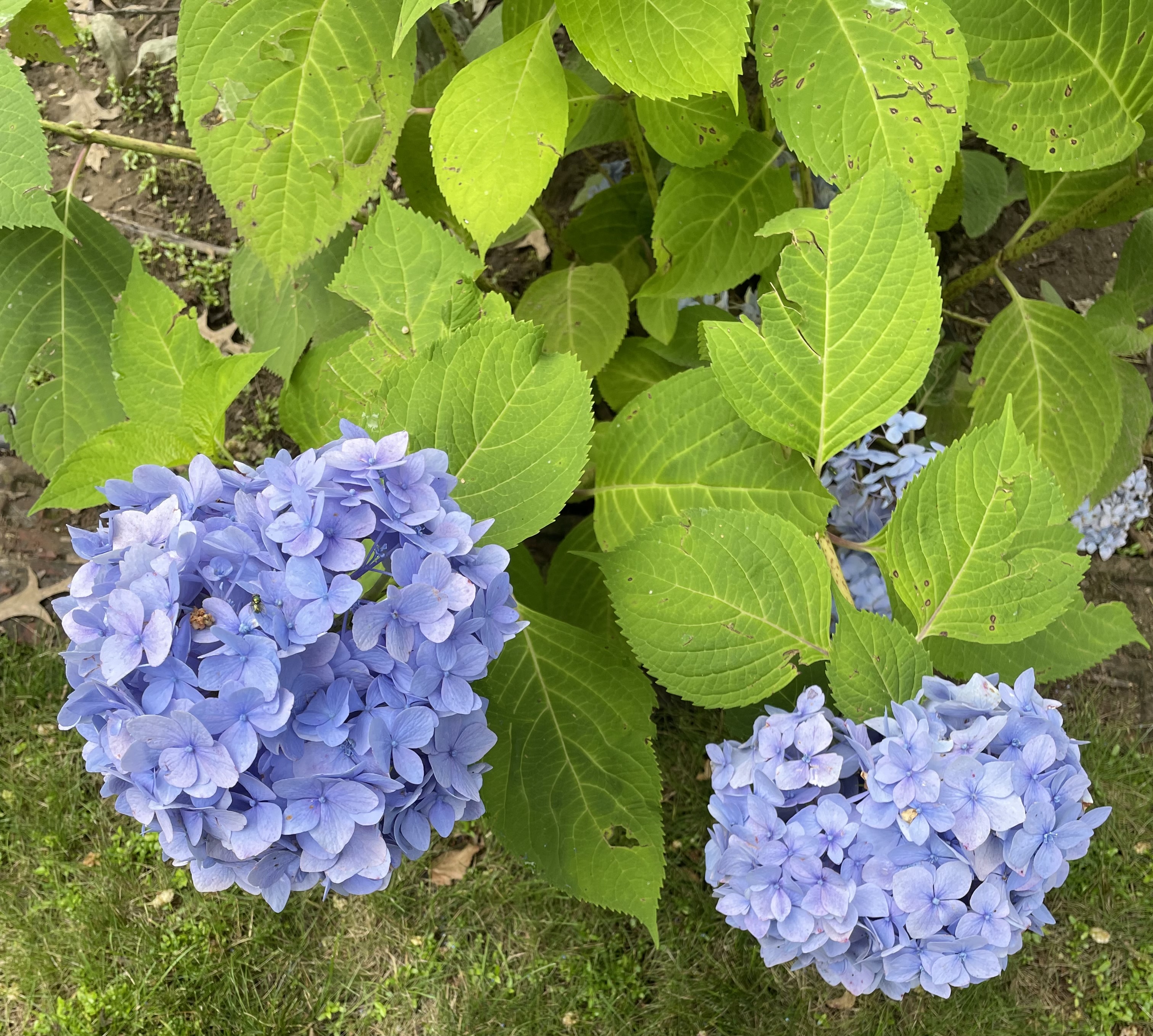
”A Grand Display”

Over the last two weeks I have seen countless displays of hydrangea blooms. Here is one of ours already fading but lovely still. I wondered why I had been oblivious to the hydrangea bushes which seem to grow in most of the yards. How could I have overlooked such blue beauties. Then I read in our local newspaper:

One blooming nice thing about this summer: It’s a great year for hydrangeas.
Those big blue, pink and purple blossoms seem to be everywhere, even places where we didn’t notice them before.
“It’s all about the weather patterns,” said Marissa Agostini, greenhouse manager at Moscarillo’s garden
center and nursery in West Hartford. 
“It’s all seasonal, so every year is going to be different, regardless of how much food that you give it,” Agostini said. “This year is what we call a surplus year. Same with a lot of things. If you notice around, the daylilies are gorgeous.”

Hartford Courant

I like the name “surplus year.” I think we are all owed one after the lean years of Covid. I only wish we didn’t all seem to be squandering it in political upheavals. At least the hydrangeas took advantage by recklessly blooming away

”Clipping Service”

At one of my first jobs I was responsible for reading the two daily newspapers and cutting out any articles that mentioned the political campaign I was working on. I was a miniature clipping service, mimicking a commercial operation hired for larger organizations. But the clipping services I am more intrigued by are the personal ones and the ways technology have changed them.

My late mother-in-law frequently sent us letters detailing her daily life and enclosing assorted newspaper clippings. I rarely understood the importance of the news articles because I had no connection with the places or people. But I failed to see past my disinterest. Now I belatedly realize that in so many words she was saying to us “I thought of you when I read this. I miss talking in person. When you read this I hope we are connecting somehow.”

Today the same phenomenon takes place, this time with forwarded articles from the internet. Whether or not the sender is correct in assuming the recipient will be interested, I think the unspoken message is the same. “I thought of you when I read this. I wish we were at the table reading the newspaper together. When you read this I hope we are connecting somehow.”

I will try to remember this next time someone sends me a forwarded story. There are many ways to say I am thinking about you.