“Music Changes Things”

peteseeger

After Kennedy’s assassination in November, 1963 and the near immediate killing of his assassin Lee Harvey Oswald by Jack Ruby,  my classmates and I began to take much greater notice of the world around us. Perhaps this was because we were now 16, or perhaps it was the times, but many of us became politically aware for the first time.

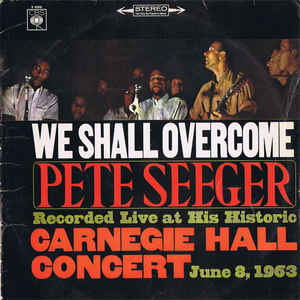
Up until now, I had enjoyed folk music, largely consisting of old English and Irish ballads. Now I became aware, first through Baez and Dylan, of the way music could be contemporary social commentary. And that led me to Pete Seeger and his album, pictured above, of freedom songs recorded in June, 1963. I bought this album that winter and listened to it obsessively.

I was introduced to the civil rights movement through music. I didn’t learn about Oregon’s racial history until later in my life, so I focused on the struggle for school integration and voting rights in the southern United States. It was a purposefully nonviolent movement, buoyed by songs, many of which I learned from this album by Pete Seeger and a crew of other singers.

The next year, 1964, Alabama’s governor George Wallace ran for the Democratic nomination for President and visited Portland. I joined many others in picketing the hotel where he was to speak. We waited in vain for his appearance, while he was whisked into the venue through an underground tunnel. He failed to win the nomination, losing to Lyndon Johnson. Protest music about Johnson had yet to be widely sung. That would come in my college years through such bands as “Country Joe and The Fish.” But I was still in high school singing “we shall overcome,” not knowing what we might have to overcome in subsequent political struggles. Our U.S. Senator, Wayne Morse, was one of only two who had the foresight to oppose the Gulf of Tonkin resolution in August of 1964 which was our entry into the Viet Nam War. I knew nothing about it. That would soon change.
“An Affair to Remember”

IMG_0111

I had been listening to Joan Baez for quite a while when she came to Portland in 1963 to perform. My good friend Margaret and I walked down to the box office after school and bought two mid row front section seats. Excitedly we arrived and settled into the auditorium.

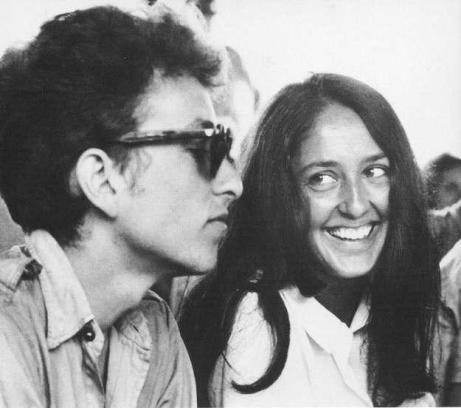
What we experienced was a startling duo of Joan and a shaggy haired mumbling guy named Bob Dylan. Clearly they were in love. Or at least Joan was smitten with Bobby. I think the picture above taken in 1963 shows their dynamic pretty accurately. But who really knows the inside of any relationship?

The evening was electric. Not literally, of course. Dylan was still playing an acoustic guitar, as was Baez. Her soprano voice sang out across us and he muttered right along. She loved old sad ballads about lovelorn maidens and heartbreaks. He just loved being in front of an audience. I guess you could predict where this relationship was headed.

Fortunately, Baez got several good songs out of the doomed affair, especially “Diamonds and Rust.

“Well you burst on the scene
Already a legend
The unwashed phenomenon
The original vagabond
You strayed into my arms
And there you stayed
Temporarily lost at sea
The Madonna was yours for free
Yes the girl on the half-shell
Could keep you unharmed”

Doomed love affairs should always leave us with such good writing material!

“I Join the Folk Music Scene(Not!)”

IMG_0110
Image by Tom Root

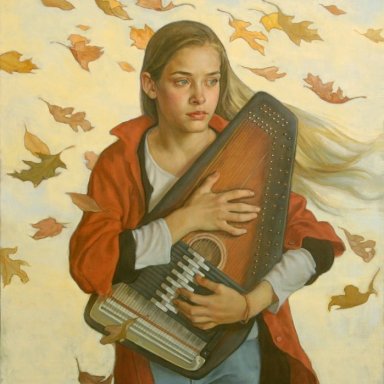
Everyone I knew was trying to learn to play the guitar or banjo. Somewhere there are probably lots of guitars and banjos gathering dust in attics from kids who learned playing was harder than it looked. I could tell right away that those strings were beyond me, so I opted for an autoharp. If you have never seen one, it is pictured above, complete with a long haired, blue eyed teenage girl who actually looks close to how I looked by the end of high school. And she has that pensive/angst look so common on every 17 year old, including me.

To play, you simply held the appropriate button down with one hand while you strummed with the other. The buttons produced various chords, similar to a guitar without you having to remember the fingering. Of course, you were supposed to learn which button produced which chord. I never mastered that skill, so my strumming had long breaks while I searched for the correct button. This made for a less than stellar musical performance.

In the end, it turned out I much preferred to listen to folk music than to play it. I had many opportunities, both at the Caffe Espresso and the Folk Singers while still in high school. I also began to collect folk music records, beginning with Joan Baez who deserves a post of her own. Meanwhile, I grew out my hair, bought black tights, and did my best to look the part of a folk singer. That would have to be enough.

“Free Coffee. No Talking”

IMG_0108

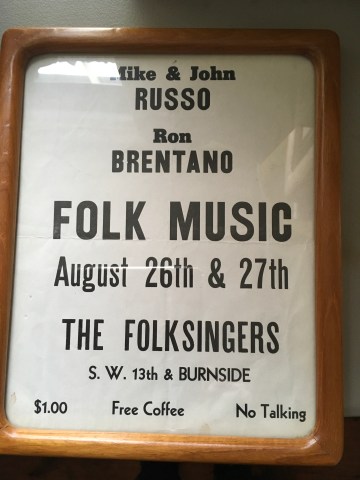
The Caffe Espresso moved uptown and morphed into The Folksingers, probably to take advantage of the scores of young people who had “discovered” folk music. Russo and Brentano, as this group was called, were local guitar and banjo players who were friends of Carol’s. We went to hear them often. Mike Russo was actually a very talented player and I found an old video of him made in Seattle. You can tell the influence of old blues singers on Mike.

Years later when I began teaching at the Museum Art School in Portland, I met his parents, Sally Haley and Mike Russo, both excellent local painters. The younger Mike painted houses to support his music playing. His art was more musical than his parents, but clearly a love of beauty ran through the family.

My little sister saved this flyer and framed it and gave it to me many years ago on my birthday. It pleased me greatly and it hangs in my library next to another poster she saved for me–a signed play bill for Pete Seeger. More about him another day.

Reading that flyer now, I am amused at how seriously the venue took the musicians. No talking! At least the coffee was free. And you can’t beat a $1.00 cover charge. Even then.

“10 Cents A Cup”

In high school, Carol and I went with other friends to the Caffe Espresso.(Turns out I had the spelling wrong yesterday.) This was the first coffee house in Portland and was, according to old newspaper articles, a hangout for “beatniks.” We didn’t think of ourselves as beatniks(though Carol did prefer black tights) but we certainly didn’t want to be seen as boring high school students. So we would walk boldly in, order our cup of espresso and listen to whatever guitarist was playing.

Up until now, I had drunk instant coffee, sometimes with milk and sometimes with evaporated milk. I stared in disbelief at this muddy stuff in a little cup, jet black with no milk. I gritted my teeth, tried my best to act normal, and sipped it. If this was what it took to be sophisticated, I would swallow the coffee with nonchalance. And it only cost a dime. The atmosphere was dark and smoky, since cigarettes were also preferred by “beatniks.” Carol joined them. I passed since at age 6 my mother’s best friend had let me take a long inhalation of her cigarette and I had promptly thrown up. It was excellent aversion therapy and I never smoked again.

I can still see me drinking coffee, listening to off key singers, surrounded by smoke. No sacrifice was too great to prove I was way too cool for school!

“Leadbelly? Huh?”

leadbelly
Huddie Ledbetter

When we graduated from our little grade school, we went to a large urban high school which drew from six elementary schools. Lincoln High brought a very diverse group of kids together for the first time. One of the schools was very affluent, but several were definitely working class. It was, for me, a refreshing chance to meet new and interesting friends.

One girl, Carol, became close and invited me over to her home on various occasions. She lived in a two bedroom, one bathroom home in a neighborhood which had been mostly torn down in the interest of “urban renewal.” But they had stopped short of the synagogue where her family, Russian immigrants, worshiped. Her mother, a waitress, always made me a cup of instant coffee and kept a can of evaporated milk in the refrigerator since I liked milk in my coffee. Her dad suffered from Parkinson’s and was a baggage handler for Greyhound. I mention all these details because it was such a dramatic change from my dancing school environment. There many people were rich and we were relatively “poor,” though my father was an attorney. It’s all relative, I quickly learned.

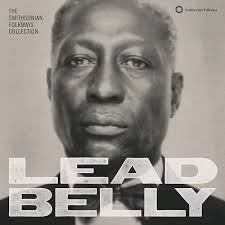
Carol introduced me to the music of Lead Belly on 78rpm records she had recently found. His voice was unlike anything I had ever heard, and I had trouble acting sufficiently enthusiastic as we listened. Still she clearly liked what she was hearing, and I liked her, so I agreed to listen to more. In a way I was back in my grandfather’s living room listening to “roots” (though we would never have called it that)music. He was the first of many singers she introduced me to. And then she invited me to a folk music coffee house–Cafe Espresso! More about that tomorrow.

“You Can Bet He’s Doing it For Some Gal”

Guys_and_dolls

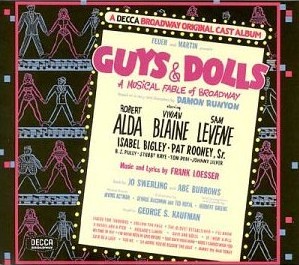
In addition to Gilbert and Sullivan, I grew up listening to Broadway musicals popular in the 40’s and 50’s. The records played over and over in our house, and I learned the words by heart. My favorites were “Guys and Dolls,” “Oklahoma,” “South Pacific,” “The King and I,” and “Carousel.” Though my piano playing never improved very much, despite years of lessons, I had a book of Rogers and Hammerstein’s music and I played and sang many of the songs I loved from their musicals. Later I enjoyed Lerner and Loewe and sang their songs too. This was not singing for any audience; I just sang away in the living room for my own delight.

I did get to attend one live musical production when Yul Brenner and Deborah Kerr came to Portland to perform “The King and I.” My mother bought me a program, a real extravagance after paying for tickets, and I treasure it still. In one very risque moment, the wives bowed and apparently they were not wearing underwear. I suppose they were wearing something flesh colored, but it got a big gasp from the audience. I had no idea what was going on since I was only seven, and I was feeling too grown up to ask.

Much to my delight, my daughter and granddaughter have both performed in musical theater, sometimes these same old classics. There is something profound in hearing my six year old descendant sing “Dites Moi, Pourquoi” from “South Pacific remembering my own singing of that same song at that same age. Not on stage for me, though.

I haven’t been to any new musicals for years. Since we live within easy driving distance of New York City, I think it is time. Maybe I will see “Hamilton” many years from now when tickets are finally available.

“Kashmir?”

kashmir

Before I started studying my family’s genealogy, I had very little ability to retain the dates of important events in United States history. Then, once it became personal, I began to connect particular relatives with particular larger events. A depression explained one family’s relocation. The Chicago fire dislocated a great-grandfather. History came alive for me.

Right now the same thing is happening to me because of this blog and the readers and writers I have connected with. One wrote about the impact of the sudden travel ban by our new President. Another is being affected by the government in The Philippines. I correspond with a graduate student in Turkey and avoid any political discussion lest I cause her trouble.

But the turmoil I was completely ignorant about is in the Indian province of Kashmir. I have been following a thoughtful Muslim young man from there who posts beliefs of Islam. That in itself has been very helpful. Even though I thought I was fair minded, I had been negatively affected by all the anti-Muslim rhetoric pervading our country. I had fallen for the negative generalizations more than I realized.

The fighting in Kashmir has been going on for a very long time, but it is at a peak right now. The Indian government has been responding with measures that are chilling. You don’t have to have a position on Kashmir independence to be distressed by cutting off internet access, shutting down Facebook and closing universities. So I am now praying for the safety of the people of Kashmir, for the freedom of their press, universities and air waves. If you know as little as I did about Kashmir, take ten minutes and check it out.


“Singing Satire”

gilbertandsullivan

One of the musical constants in my life has been the work of Gilbert and Sullivan, 19th century British operetta composers. As a child, I learned many songs from the phonograph records my mother often played of their work performed by the famous D’Oyly Carte Opera Company. I learned the songs to “H.M.S. Pinafore,” “Pirates of Penzance,” and “Iolanthe.” I was particularly intrigued by the “patter songs,” mainly spoken ditties sung very quickly with tongue twisting challenges. One of my favorites was about insomnia from “Iolanthe“. I missed most of the humor as a child, but I loved how fast the singer could go. Another parallel delight was from “Pirates” about the model of a modern major general.

When my mother went to her 15th college reunion at Oberlin, she took my brother and me along and we all say “Princess Ida,” a musical I have never seen or heard since. When I was in high school, Reed College put on one operetta a year, which is where I first saw “Patience,” made even funnier by inserted lines ridiculing some aspects of Reed.

When my daughter was in 8th grade, her school put on “Ruddigore,” a story unknown to me until then. She had broken her leg, but still played Mad Margaret. The injury actually enhanced her role, as she thumped across the stage. She and two others sang a wonderful patter trio “It Really Doesn’t Matter.

There continue to be productions of Gilbert and Sullivan today, mostly from local groups which put on one or two a year. While much of the humor was topical and might seem to be irrelevant 140 years later, it still applies. The ignorance of the modern major general seems very parallel to the ignorance of the U.S. newly appointed Secretary of Education. And insomnia will never go out of style. Many of us will finally be ready to go to sleep just when the alarm sounds for us to rise.


“Patriots’ Day”

IMG_0105
Paul Revere and The Raiders

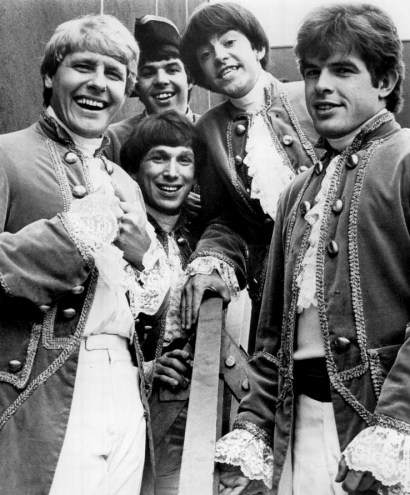
Holy Week is over, and I am returning to the very long saga of my life with music. Serendipitously enough, today is Patriots’ Day in our neighboring state of Massachusetts, a holiday which commemorates the first battle of the Revolutionary War at Lexington and Concord, Massachusetts. And I am here, as promised to one of my readers, to write about Paul Revere and the Raiders–the band.

In high school after football games featured local bands, usually not much better than what you might think of as a garage band today. But we didn’t really care about the music because we were obsessing about who would or wouldn’t dance with whom. I endured one whole year of these trials without dancing once. Whatever spark had led me to win that grade school dance contest had gone out when I failed to reach maturity until 16. I was still 4’10” as a freshman, and I looked about 11. Not a prime candidate for a dance partner, apparently.

But the one band which did grab my attention was Paul Revere and The Raiders. They played actual music and had semi-coordinated dance steps while they played. Curious to see if my memory was accurate that they would have been playing in my high school cafeteria, I looked up their history before writing this post. Sure enough,”Around this time,(1962)(I think it was 1961) KISN(remember KISN). DJ Roger Hart, who was producing teen dances, was looking for a band to hire. Hart had a casual conversation with a bank teller who told him about a band called “Paul Revere-something”. Hart obtained Revere’s phone number and they met for lunch. Hart hired the band for one of his teen dances.”(Wikipedia)

So my one of my first live band performances actually featured a group that went on to some acclaim. I can’t say the  same for any of the other musical acts!