“Get With It”

vineyard

A major change in leadership in our Friends Church led us to seek another place to worship. This time it was in a dramatically different setting called The Vineyard, where a student of mine was active. The adjustment was jarring, but we became comfortable in a very different setting. But the differences!

First, we were at least 25 years older than most of the attendees. We became parent figures, for better or worse. (Usually better.)

Second, by now we had been Christians for quite a while and were meeting many young adults with no faith background. So we became elders(in an informal sense.)

Third, the music was live and LOUD. So loud in fact that we bought economy sized packages of foam earplugs and kept them in the car to use at each service.

Fourth, there was no physical church, so each Sunday chairs were set up in a school gym and taken down and put away at the end. Fortunately most attendees were in their 20’s and handled this task.

And finally, their music went on for a very long time. And in the culture of this community, people stood, usually with their hands in the air and sang and sang. I usually sat after a few minutes and let the music be a backdrop for my silent reflection.(You can take a Quaker out of meeting, but you can’t take the meeting out of a Quaker.)

While this might seem, at first, to be very similar to the gospel worship at Maranatha, it really wasn’t. Reflecting on the reason, I conclude that the gospel songs at Maranatha were informed by a different theology–that of overcoming together with God’s help. They seemed communal. The Vineyard songs seemed to stress an individual relationship with Jesus. So even though everyone was singing together, it seemed to me that many individuals were having their own personal experiences.

I didn’t find my soul refreshed in the way that it had been both with gospel music and the old hymns, but I treasured the chance to get a glimpse into a contemporary Christian setting. And they served great doughnuts and coffee.
“Singing Quakers?”

hymnals

After leaving the community at Maranatha, I began attending a Friends(Quaker) Church at the invitation of a fellow graduate student. I knew very little about Quakers, but what I did know I valued. They had led other churches in opposition to slavery, were committed to peace, and had always valued women in worship. I also thought they were silent. In the Western United States, however, most of the Quakers are Evangelical Friends, and their service is a combination of a sermon, singing and 20 minutes of silence. During the silence, if someone feels truly led by the Spirit, that person may stand and speak what they believe God has said for the gathered group. Despite how that might sound, in general words given are few, timely and appropriate.

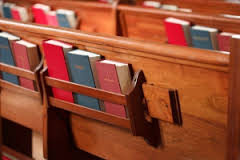
I enjoyed the silence, but the music was something very different from the free joyous singing I had left at Maranatha. There were hymnals in the back of each pew, and the number we were to sing would be announced. Then we would sing together through the verses and stop when the printed text ended. It still felt Spirit-led, but in a very much quieter(these were Quakers after all!) way.

After I had attended there, had been joined by the man who would become my husband, and been married in a Quaker ceremony, some of the elders took an interest in our lack of musical knowledge. They loved old hymns, and they thought we were missing something by not knowing them. To my enduring gratitude, they gathered us with a group of about ten and, as one played the piano, they taught us many classic songs.

Those hymns included “The Old Rugged Cross,” “In the Garden,” and my all time favorite “It Is Well With My Soul.” The theology in all of these songs comforted and reassured me in the same way that “Jesus Loves Me” had done years before. This Easter season, I pause to thank them, now all passed, for their gift to us.

“Make a Joyful Noise”

Gospel-choirs-1728x800_c

Unfortunately, this is not an image of the choir I knew, but it captures the spirit and intensity of the music at Maranatha Church in Portland, Oregon that I attended for several years when my daughter was young. Although my marriage to their son had ended, his family embraced me at the integrated, but majority African American, church they all attended. The church welcomed me wholeheartedly, and I joined a single mothers group which sustained me through some difficult times.

While it is impossible to capture even a hint of the music in such a church, I will try to tell you what I learned from such worship. First of all, there were no hymnals. It was expected that you would pick up the songs as you heard them. Fortunately, there were often refrains that I could learn quickly while I waited to absorb the rest.

Secondly, the songs had no set length. The choir would begin to sing, the drummers and piano playing behind, and the choir leader standing with a microphone. Then as the song progressed, the better everyone was singing, the longer the song went on. Even when I thought the song was over, someone would often start it up again and we were off for another few minutes. A soloist might be settling down, and a choir member would pick up the tune again.

Thirdly, it was very unfortunate that I had listened to a great deal of rock and soul music before I ever set foot in such a church. At first, I thought church sounded like the radio. Finally, to my deep chagrin, I realized that church had come first. Many of the singers I liked from Diana Ross to Aretha Franklin had come from deep church backgrounds.

Today you can hear large gospel choirs in concert settings. While they are wonderful, there is nothing like genuine gospel music sung where it came from and where it truly belongs, in church. After all it is Gospel music, and like the Bible, it spreads good news.


“Song and Dance”

jewishwedding

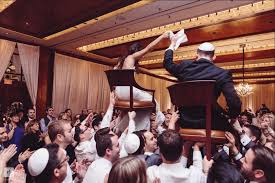
When I was a junior in college, my dear friends Ellen and David, who were graduating seniors, got married in their home town of Cleveland, Ohio. I was invited to their wedding, which took place in what, to me, seemed a very strange location. It was a large banquet hall, nothing like the church settings I was used to.

Great joy filled the hall, however, bringing the same spirit that I had experienced at Christian weddings. I was intrigued by many things that evening, including a canopy under which they wed, and a glass that David stomped on while everyone cheered.

The best part of the evening for me, however, was the singing and dancing after the ceremony. While David and Ellen were hoisted up on chairs and carried around the room, the band began to play. It was my first, though not at all my last, introduction to the wonderful tune “Hava Nagila.” I tried in vain to find a good link to this tune, but came up short. If you don’t know the song, I encourage you to find a copy of it.

As the music played, and as we all sang along, we formed a long snaking line and danced the hora around the room. I mumbled along with the words, imitating the sounds I heard. The dance steps were easier since I had done a lot of folk dancing in high school.

Many years later, I attended a wedding of a dear friend, marrying for the first time in her early 40’s. It was in an equally secular setting, this time the Oregon Forestry Center. But when the band struck up the tune “Hava Nagila”, we all joined hands and sang and danced and sang and danced. Celebrating the joy of life. Love may have come late, but it had at last arrived.

“This I Know”

jesuswithchild

In my faith tradition, this is Holy Week between yesterday’s celebration of Palm Sunday and this Sunday’s celebration of Easter. I thought I would write this week about music I have encountered in various faith settings. There has been a wide variety, as I think back about it, and worth a week’s worth of postings.

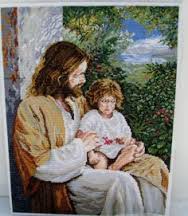
My parents were not religious, and I had minimum exposure to church. My grandfather was an Episcopal priest, but he lived 3000 miles away and was not a direct influence on my faith. The summer I was 11, however, we spent a month with my grandparents in the small town of Pike, New York where they had a summer farm. Pike was so small that our visit was announced in the town paper. My friend Gwen, with whom I daily rode bikes and swam in Wiscoy Creek, invited me to come with her to Vacation Bible School at the local Baptist Church. My grandmother was slightly suspicious of Baptists, but she agreed I could go with my friend.(Grannie was a religious snob!)

I remember little of that time, but I know I really enjoyed myself. We made great pictures with cotton balls glued to colored paper to represent the sheep that Jesus cared for. I am not sure that I understood the metaphor, but I loved those little fuzzy sheep. The one tune that stuck was “Jesus Loves Me.”(I have not inserted a link to this since the online versions have troubling lines we never learned.) We sang it every day and it sunk deeply into me. I didn’t make much sense of the line “the Bible tells me so,” that supports the idea that “Jesus loves me,” but I really grabbed onto the idea that God loved me.

My faith journey was interupted many times in the years to come, but that song stuck with me. When I moved to Connecticut and saw signs for Vacation Bible School, I called the little church in Pike. I asked them if they still did Vacation Bible School. When they said yes, I asked them what the program cost them. I sent them the $100 to run the camp that summer, to pay them back in some tangible way for the truth they had planted in me. I would never succumb to “hell fire and damnation” preaching in life because “this I know,” “Jesus loves me.”

“My Country ‘Tis of Thee”

stamp

My generation was born at the end of World War 2. There was no question about patriotism for the children of the soldiers who had fought across the world and were victorious. No nuanced understanding of history entered our schoolrooms or our textbooks. The United States and God’s will were synonymous. When I was in third grade, in fact, the Pledge of Allegiance, which we recited every morning, was changed to include the phrase “one Nation, under God.”

The songs we sang in chorus repeated the theme of freedom and God. The two songs we belted out every year were “America the Beautiful” and “America.” What I most remember about singing those songs was total joy as we all agreed that America was the best place on earth and God was for us. In “America the Beautiful” the lyrics state, “America, America, God shed his grace on Thee.” And that same idea shone from our postage stamps, shown above.

We never could have imagined that some of the kids across the country, growing up singing the same songs, would some day chant,”Hell no, we won’t go.” Nor that some would go to Cuba to harvest sugar cane in solidarity with “the masses.” Our more complex understanding of U.S. history lay years ahead. For now, we joined with our dads in celebrating the war they had won and the peace they believed they had secured for us, their beloved children.

“Every Good Boy Does Fine”

pianoplaying

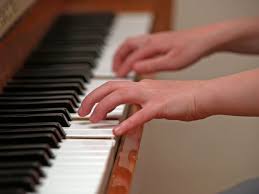
Meanwhile, while all that dancing was going on, I was taking weekly piano lessons. When we moved into our big home in 1955, there was a large upright piano in the living room. It stayed and I began taking piano lessons. I walked down the road for about 20 minutes to the home of Mrs. Pipes and learned music.

She was much more serious about music than I was, but no one ever asked me if I wanted to play the piano, so I dutifully went week after week. I practiced half-heartedly for the first few years, struggling through such uninspiring tunes as “Here We Go, Up a Row, To the Birthday Party.” I had to practice scales, and she taught me memory tricks such as the title of this post to remember the names of the notes. That phrase was for the treble lines. The bass lines were “Good Boys Do Fine Always,” and the white keys were FACE.

I did learn to play the piano enough to enjoy tunes from Rodgers and Hammerstein and Gilbert and Sullivan. I also mastered enough Christmas carols to be able to play them in subsequent years. But mainly the piano followed me from home to home, usually being used to display pictures on its top.

But, to my delight, my granddaughter is quite good on the piano, and a couple of years ago the upright made its way to her home where she practices on a regular schedule because she wants to get better. I went to her first recital last summer, and she actually plays with a sure hand which I never accomplished.

As for me, I stick to recorded music of musicians who have talent and drive, neither of which I brought to that poor piano. I am sure it is grateful that someone is appreciating it after all these years.

“But We Had Timing”

IMG_0099

It turns out that all that practice dancing Dixie and I had done was not in vain. That December we got to attend our first Christmas dance in the gym. There were two of these each year and they were attended by seventh and eighth graders together. We had dance cards, one of which is pictured above. The ribbons we used to tie the dance cards around our wrists were school colors, blue and gold.

What was a dance card, you might ask if you are younger than I am. In grade school, it was an item worn by each girl that had been filled out by someone(who knew who, certainly not a student!) which listed the ten boys you were to dance with that evening. This took the pressure off the boys, which must have been a relief, because they simply had to respond when girls showed their cards as each numbered dance was announced. The system also guaranteed that every girl would get to dance with at least ten different boys.

But the highlight of the night for me was the dance when an eighth grade boy danced with a seventh grade girl in the evening’s only dance contest. This was not part of the dance card, so it was up to a boy to ask a girl. And,unbelievably, Ralph, a boy I hardly knew, asked me to dance. The tune for the contest was “Good Timin” by Jimmy Jones. Ralph must have been watching American Bandstand, too, because we joined hands and rocked out to that song as if we had been dancing together forever. And much to every popular kid’s amazement, we won the dance contest.

That was the only dance contest I ever entered. As my father always said, “Quit while you’re ahead.” So I did.

“Do You Want to Dance?”

IMG_0098
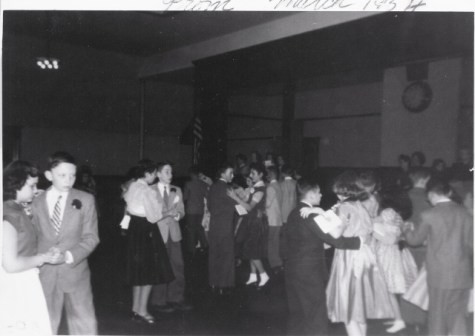
A class similar to ours

So Dixie and I had practiced every dance we could see on American Bandstand and were getting more confident in our steps. Then we entered seventh grade and that meant Mr. Billings Dance Class. For many years his class, by invitation only, was attended by everyone in my elementary school and the other elementary school in Portland attended by white upper middle class students. Everyone got an invitation. Except Mary Jo. Mary Jo was the daughter of a live in maid in the neighborhood; she was from Haiti; and she was a Negro. (at that time the socially polite word.)There already had been a stink from one mother, another transfer from Georgia to Portland, about letting Mary Jo even attend Riverdale Grade School. But we were a public school, and she lived in the neighborhood, so she had the right to attend. No one discussed Mary Jo’s exclusion from dance class, but we all understood the reason.

To our dismay, there was no correlation between American Bandstand dancing and dancing school with the Billings. It was an introduction to dancing and etiquette. We wore party dresses, black shoes with white socks and white gloves. The boys wore suits and ties. We were assigned partners who varied throughout the 90 minute ordeal. I was short, so the boys were taller than me, but many girls towered over the boys, putting their busts at eye level for their astonished partners.

We learned the box step, the fox trot, the waltz and, if Mr. Billings was feeling very sporty, the cha-cha. The lessons went on interminably every Friday night through seventh and eighth grade. At the blessed end of every night, we had to line up and thank “our sponsors” at the door, making eye contact and shaking their hands.

I would like to say that those lessons helped me in later life. They didn’t.


“Stuck in My Brain”

IMG_0096

I would be doing a great disservice I made a link to play the jingle for this ad. If you are old enough, you can sing it yourself. If you don’t know it, I will keep your brain free of its jingle. One of my recurring nightmares involves being in a nursing home with the Musak playing advertising jingles.(that would make a great horror movie.)

One of the true benefits of marrying a man my same age is that at a moment’s notice,  he can join me in an advertising song. Ok, it’s a minor benefit, but still! For some reason, my growing up years were full of musical advertisements. There was “plop, plop, fizz, fizz” for Alka Seltzer, “see the USA in your Chevrolet,” and “Brylcreem, a little dab will do you, or watch out the gals will all pursue you.” Ironically, I was not the target audience for any of these ads, yet they are stored in my brain.

One ad, though, has provided a great deal of fun for my grandkids. The original line was ” you’ll wonder where the yellow went when you brush your teeth with Pepsodent.” That just called out for a parody, then and now. At camp we made up new lyrics, and I have taught my grandkids the rhyming pattern to produce the knockoffs such as ” you’ll wonder why your mouth turned blue when you brushed your teeth with Elmer’s Glue.” Who says fun has to be expensive?