

I have been setting out our Christmas decorations and came across this trio of little figurines, each about two inches high. (It is hard to get a sense of the size in this photo.) I inherited them from my grandmother and they represent three phases of my beloved grandfather’s life. On the left is his uniform from World War I. He never went overseas, but he did serve in the Army. In the middle is his academic outfit. He graduated from Harvard with a PhD. and was a college professor throughout his life. On the right Grandpa is dressed in his liturgical robe. He never could decide between the church and academe, so he did both. He attended Harvard Divinity School and was an ordained Episcopal priest all his life.
I enjoy the smiles on each figurine. Grandpa was, as my favorite aunt used to say, “a hoot.” He loved limericks, jokes in bad taste(not terribly bad taste, just enough to annoy my proper grandmother,) “hillbilly” music and an afternoon nap. He was deaf in one ear from a mastoid infection in his childhood before antibiotics were available. The left side of his face was covered with a port wine birthmark. Neither issue ever mattered “a hill of beans” to him and so it didn’t bother us either.
When we were able to visit him at his summer place in Western New York he was always up for an adventure. He was the one who took me outside to marvel at Sputnik going by overhead. And he piled us all into the car when the town fire siren blared so we could “see what’s burning.”
I would love to hear from any readers about Christmas decorations which bring similar memories.


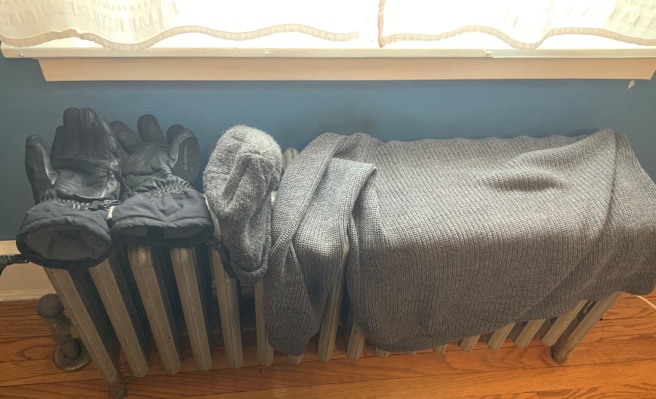 It snowed four inches last night and my husband came in after a couple of hours of clearing snow from our home, our daughter’s and our neighbors. As usual he draped his wet clothes over radiators in the dining room and living room. The sight took me back to grade school and wet wool.

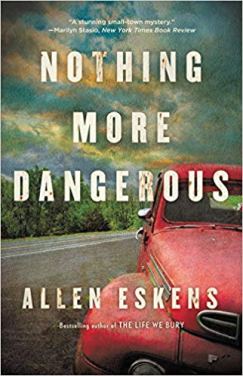 I have read each of Allen Eskens books, and I as pleased to find his newest, Nothing More Dangerous, at the library this week. The book makes a significant departure from his earlier books; it’s less a mystery and more a coming of age story with mystery elements.
 Each winter numbers of Connecticut residents head south to Florida for the winter avoiding the snow and ice. On the other coast Oregon residents flee to Arizona for the winter to get out of the relentless dark cold rain. Each group is known as “snowbirds.” Here we are visited by snowbirds of a different sort. In the last couple of weeks one of my favorite birds, the dark-eyed juncos, arrived for the winter. Apparently we are enough warmer than the Arctic to entice them south. They don’t like to pose for photographs, but I managed to catch one in the middle of picking through the discarded seeds from the feeders. Mourning doves and juncos love to eat on the ground, and the sparrows and finches leave plenty of uneaten bits for them.

