“Creating a Safe Space”

BC5C263F-0D2E-456D-B375-846C5F1E66E8

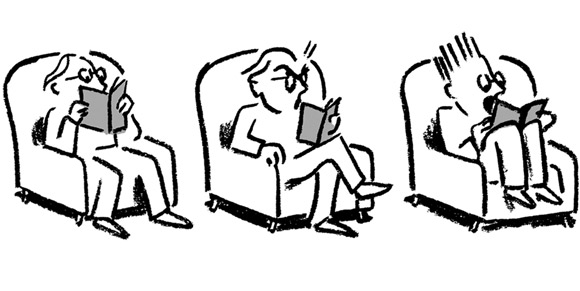
There has been much discussion recently about creating safe spaces in colleges along with trigger warnings about readings. The discussion has seemed to imply that college students need protection from reality. In my teaching experience, something more important is being touched upon, but not in a useful way.

One of the first times I taught the poetry of World War 1 in my English class, a student walked out. When he returned after class, he shared that he was a veteran of the Viet Nam War and that the poetry discussion had distressed him enough that he needed to take a walk. I felt that I needed to address such possibilities in the classes I taught from then on.

As a college teacher, I felt the need to teach a wide variety of often distressing works. I also felt a responsibility to my students. I believed that the college classroom should be a safe environment to explore controversial ideas. To ensure that, I began each semester explaining two ground rules for class. First, no student could attack another personally, nor make negative generalized statements about any religion, ethnicity or sexuality. I told them that while I was generally an observer in discussions, I would step in if that occurred. Second, I stressed that if any discussion so upset someone that they needed to leave the room, they could do so without explanation.

I never forewarned any student about any reading. There were no “trigger warnings” in my syllabus. I had no way of knowing what might affect any student, and I felt it was the student’s responsibility to handle their own responses to any readings. To my relief, students nearly always respected each other in class. And only on very rare occasions did anyone leave the room. I felt that I had, in fact, created a “safe space.”
“Blogging and Boundaries”

1948-50s 120

The ability to send words and images all over the world brings with it important decisions. As my daughter once told me, “Don’t put anything out there that you don’t mind the whole world seeing.” And I would add, “For now and forever.”

My on-line presence is limited to this blog. I choose not to participate in the other choices available to me including Facebook, Twitter and Instagram. Everyone has to make their own decision about this, but I believe many people began using these forums without anticipating the problems they might cause.

I have also made specific decisions about what I post. Some of these I have mentioned in previous posts. I do not write about living people unless they already have a public presence or they have given me specific permission to do so. I don’t write negatively about people who have died. They don’t have the ability to refute my accusations. I allude at times to difficulties in my past, but I try to avoid vitriol.

When I write about interactions with living people, I omit their names or obvious identifying details. Sometimes friends know that a given post is about them, but they aren’t publicly identified.  I also choose to not post pictures of living people other than myself. While I would love to share extremely cute family pictures, I return to my daughter’s caution and choose not to share them with the whole world.

I also moderate my comments section. I love to interact with readers, but I am uninterested in posting attacks. I think moderating comments reduces the interest of internet trolls.

It’s a new world for us all. I choose caution and consideration for other people’s privacy. I respect that bloggers have a wide range of decisions about these things. I just hope that every blogger thinks through the implications of what they share.

“A Rude Awakening”

E77775BF-248B-48EA-9475-3585B7EAAD99

In 1991, as the AIDS epidemic was just beginning to be widely recognized, a young woman named Jennifer Jako enrolled in my freshman literature class. Into the semester, she told the class that she had been diagnosed with AIDS. She actually had been diagnosed as HIV positive, but none of us were savvy enough to know the difference. At the time she shared this with us, there was no cure and the disease was seen as a death sentence.

(I feel free to write publicly about this because Jen has lived the last 16 years as a very public AIDS activist. She has even been on the cover of Newsweek Magazine when she was pregnant, discussing the safety of giving birth despite her illness.)

Jen was the first student of mine who shared her diagnosis. She also was a heterosexual young woman whose sexual experience was limited to one boy with whom she had had unprotected sex with one time only. Needless to say, this information staggered us all. To that point, most of us thought of this as a disease affecting only very sexually active gay men.

She shared freely, believing that some good needed to come from her experience. I am certain that she caused many students to consider the potential consequences of their behavior. If it could happen to her, it could happen to anyone.

Thankfully, advances in treatment have allowed her to continue to live and to thrive. She continues her activism, reminding us that the disease still exists. Reminding us to be safe. Thanks Jen.

“A Finer Day”

127D19B5-67F6-458A-A568-43DECCB33903
Kerry Gruson 2015

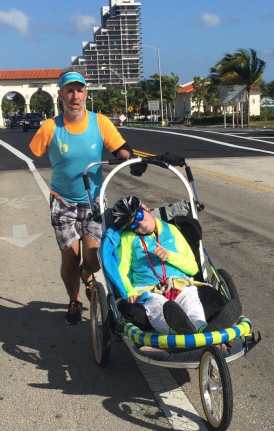
I had never looked to see if my friend from that paddling day had an online presence. To my amazement, there was a lot to see about her, starting with this video.video. I was overwhelmed to see what she had done with her life after her severe injuries. Because she has a public presence, I decided it was appropriate to bring this update to yesterday’s post. I used the title “A Finer Day” because her story is one of such redemption after an assault.

In the photo above, Kerry is in the bicycle being pushed by a man who lost both arms in an electric accident while working. They competed together in the Miami, Florida half marathon. Intriguingly, Kerry has found a way to sail on a regular basis off Miami in a specially adapted boat. Her love of water clearly persists.

Lives can go in very different directions after a devastating injury. Kerry has chosen to see her mission as teaching people how to help other people achieve their dreams. She speaks and writes of the deep value of vulnerability and the gift of asking for help. I am glad that I had a chance to catch up with her, so that her story in my mind no longer ends with the disability, but rather with the overcoming.

“One Fine Day”

9E556EB7-21EC-4986-B7D2-5E5A3500A3F1

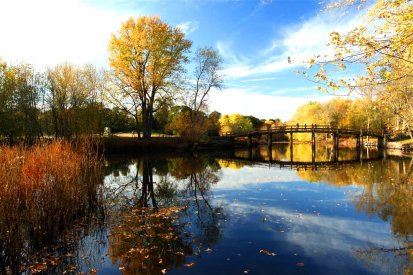
Today in New England, the sky looked just like that in the picture above and the trees had lost most of their leaves as above. The air was bracing, the first real Fall day we have had this autumn. I was transported back in time to my first year in college.

A girl I knew only vaguely invited me to go canoeing on the Concord River(pictured above) from her uncle’s house along the river. I was delighted to have a chance to get away from the city and into the real New England countryside. The paddle was refreshing, her uncle very kind, the day well spent.

That day comes to mind many years when fall really sets in. Partly it is because I reflect on how little we can foretell the future. I remember envying her having an uncle close by and her parents in New York City. My family was across the country and I wouldn’t be seeing them until Christmas. But within a few years of graduating, this same lovely young woman was brutally assaulted, suffering brain damage, cutting short the “privileged” trajectory I had imagined for her.

But that fine day, paddling peacefully down the Concord River, we both looked forward to the unfolding of our lives. We soaked in the beauty of a place famous for its history, thankfully oblivious of what hazards lay ahead.

“Dreams of Flying”

plane

People go to college for a variety of reasons, as I learned when I taught in several different colleges. The art students were there because of their passion for art. Many community college students attend to get educated in a particular skill such as nursing. But the students I encountered at the state university were often there for their parents’ reasons.

One such young man was enrolled in my English Composition course. He wrote papers that were so dreadful that I asked to speak to him during my office hours. I said that it seemed that he was working to flunk my class. I told him that I spent a great deal of time correcting his writing, but that when he handed back the revised essay the same errors still showed up.

To my amazement, he told me that he was trying to fail my class. Intrigued by his honesty, I asked him why. He said he really wanted to fly a crop duster plane. He had no interest in being in college, but his father told him he had to attend. I asked him if we could make an agreement. I would fail him and he could stop attending class. This would spare me the waste of correcting his writing and spare him the effort of trying to fail. He agreed; I failed him, and I never saw him again.

I still reflect on the folly of demanding that our grown children follow our dreams instead of their own. Perhaps later, when his love of flying waned, he would decide he wanted to study for himself. Perhaps not. But that day that young man met in me an adult who honored his wishes. And I was satisfied that I had heard him.


“Different Plans”

thanksgiving

I was talking to a friend whose son is coming home for Thanksgiving after his first year away at college. Naturally, she has expectations for that time at home, involving family get-togethers. It made me remember conversations with my first year college students who returned to class after their Thanksgiving vacation.

The comments included,”Why can’t my parents understand that I am used to making my own decisions?” “Why do my parents expect me to be home at midnight as if I were still in high school?” Why do my parents expect me to spend time with the family? I want to see my friends. I haven’t seen them since the summer!” “Don’t my parents respect my decision to become a vegan? Why are they serving a dead bird?”

It was so predictable a class after Thanksgiving, that I actually looked forward to the group complaining session. At least they had a foretaste of the long Christmas vacation to come. Both students and parents had a long period of renegotiation ahead! The students had their classmates to commiserate with. The poor parents were left on their own to wonder “why am I paying tuition for this ungrateful child?”

“A Good Question”

CD087158-E432-49B6-BF38-AC823E820911
Paul Robeson as Othello

Each year I taught a different Shakespeare play. The year I was in graduate school, I was teaching Othello to my first year students. One of them asked me what it meant that Othello was a Moor. I gave the standard answer I had learned in school, that he was a North African, but not black.

However, the question nagged at me and, since I was enrolled in a Shakespeare course myself, I decided to research the answer. This was 1978, years before internet searches existed. Research involved long hours in the library, reading academic journals and their referenced articles. I found myself fascinated as I realized that earlier critics of the play had unable to believe that Shakespeare meant that Othello was black. They wrote that would have been unthinkable. But as I studied both the specific language of the play and read about Queen Elizabeth’s edict to rid England of the “black-a-moors” I came to believe that, Lawrence Olivier’s portrayal aside, Othello was meant to be black.

I wrote my essay on my conclusions and actually won the Clark Prize for the best graduate essay of the University for that year. With the $100 prize–a large amount for me in those days–I bought my daughter a Big Wheel and took a friend out for a seven course Italian meal.

In a final ironic twist, at my Master’s oral exam, one of the examiners challenged my reading of Othello. He maintained that everyone knew Shakespeare never meant he was black. I tried to respond that the point of my essay had been to refute that. He refused to listen to me, crossing his arms over his chest, and frowning. Fortunately, I passed anyway.

“A True Gentleman”

2E4A30B8-AFFE-4A4E-9C97-C678EB187602

Harry Widman, a painter and an intellectual, taught at the college the entire time I worked there. He had come from the East after the War and was one of a group of artists who established an art community in Portland in the 1950’s. For some years, including the one when Mt. St. Helens erupted, he served as Dean, although he much preferred making art to administration.

Some colleagues are especially gracious to new faculty members. Such was Harry. Early on I needed my job and didn’t want to risk missing any days. But after I had appeared in divorce court, I was too shaken up to teach. Harry reassured me that it would be fine to go home for the rest of the day. Perhaps that sounds like a small gesture, but it meant everything to me that day. I understood that I had the support of a senior faculty member and that my job wasn’t constantly in jeopardy.

One of the most helpful things I learned from Harry was that it was not easy to spot which students would be most successful in art school from their admissions portfolios. He shared that some of the most promising looking students lacked discipline while some of the weaker ones stuck to it and succeeded. He stressed that work habits trump talent on a regular basis.

That’s a lesson that is applicable far outside of art!

“We Interrupt This Meeting”

mtsthelens

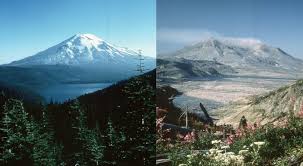
Throughout my life, I had seen Mt. St. Helens in the distance. We called it the “ice cream cone” mountain to distinguish it from Mt. Hood and Mt. Adams which we could also see on clear days. On May 18, 1980, the mountain, which turned out to be an active volcano, blew its top. Ash fell all over Portland, clogging air filters, filling gutters with heavy grit, and startling everyone.

We had a faculty planning meeting several days after that eruption. No one knew what the future held for the mountain. Was it done exploding? It was still steaming and rumbling, so scientists couldn’t get too near yet. Did the explosion of St. Helens foretell the eruption of Mt. Hood, so far dormant? What about other “dormant” sites around us.

We planned for the following school year, but only after the then dean of the college had said, “If we are even here next year.” That was not deep pessimism, but rather an accurate response to the eruption. We felt for some time that if a mountain could change so dramatically in one morning, who knew what else could happen.

The mountain did quiet down. Mt. Hood didn’t explode. And I taught there for another 22 years.