
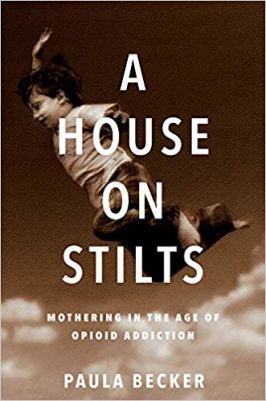
Although I do not have an addicted child, I have a close friend at church whose son in his 20’s has struggled with heroin addiction for some years. In an attempt to better understand her and to avoid all the platitudes that inundate her regularly from well meaning friends, I read A House on Stilts by Paula Becker. Becker, a writer, and her physician husband dealt with the various addictions of their oldest child for a long time. This book honestly portrays both the love they have for their son Hunter and the unending ways they attempted to help him. She struggles with the line between mothering and enabling throughout the years.
The book brought the specific pain of my friend home to me in a way that other depictions of addiction haven’t. I am not sure if it was the clarity and truth of the author or the timing of my reading, but it illuminated the anguish of a mother watching her beloved son turn into an angry, lying, stealing adult. Becker encounters denial from health professionals and school administrators for a long time as they see a white, friendly, well spoken teenager and assure her his behavior is normal. We know from what she has seen that it is not, but she struggles to believe them.
And of course the Beckers bring their own denial to the situation as would any parent heartbroken at the possibility that their bright, energetic son has become an addict. They pay large sums for treatment, continually struggle to get him food and clothing, and overlook the money and items disappearing from their home every time he is allowed in for a visit after they have banned him from the house. Relatives believe they know better and offer to help, as is the case with my friend. However, they too finally see that “tough love” won’t cure addiction.
From now on when I see young addicts on our streets or in my church’s sandwich line, I will pause to think about the mothers and fathers in deep pain over their children. And I will not judge them.






 Saved By Words