
This picture aptly illustrates my reaction to criticism. I have not learned to accept it, either gracefully or ungracefully. This post, by necessity, is very short.

This picture aptly illustrates my reaction to criticism. I have not learned to accept it, either gracefully or ungracefully. This post, by necessity, is very short.
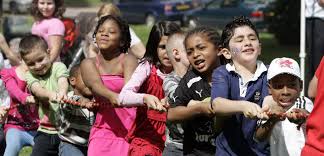
I grew up in one of the whitest states in the United States in the 1950’s in a totally white neighborhood. The textbooks we used were illustrated with white children. Magazine ads featured white models. Television shows were populated with white actors. The only exception were servants such as Jack Benny’s butler, Rochester. The crayon called “flesh” was pink. Santa was white. Jesus was white. I was white, so I had no reason to question the way the world was presented to me.
My grade school had been completely white except for one Haitian girl, daughter of a live in maid. But my high school drew from several feeder schools, and I encountered my first Chinese-American, Japanese-American and African-American classmates. But I still was pretty isolated and oblivious to the issue of race in America.
My baptism by fire came in as civil rights became a central issue in the early 1960’s. I became educated quickly about segregation and discrimination. But at the time I thought it was an issue only in the southern part of the country. Certainly it was there that governors stood in doorways to block students and police turned dogs on protestors. But the absence of true integration, evident all around me in Portland, escaped my awareness.
A lifetime later I have been consciously educating myself about the variety of human beings that share this planet. I have realized how limiting my childhood experience and education was for the world I would live in. I have read deeply about my country, its treatment of people groups from other parts of the world, and its resistance to recognizing the continuing affect of deeply held prejudices of all sorts. And as I look at Donald Trump I see a man who never learned to see, as I have, how much he had lost by isolation and how much he would gain by embracing diversity

“Listen up!” Who hasn’t heard someone in authority say that to quiet a group? “Are you even listening?” That seems to be a common question between partners. “Haven’t you heard a thing I said?” Every parent seems to ask that of their kid at one time or another. Clearly we share a challenge when we are asked to listen to another. At the same time, we need others to listen to us. We are much less forgiving of another zoning out when we are talking than we are of own own daydreaming while another talks.
I have to repeatedly relearn the art of listening. Instinctively I seem to listen to another person while simultaneously preparing my response. If I am in agreement with the other, I often start answering before she finishes talking. If I disagree, I am thinking about my point of view instead of listening to his. I have always found it much easier to talk than to listen! In fact in school I was constantly reprimanded for what they called “unnecessary talking.” (As if anything I was saying was unnecessary.)
I find it easiest to listen when there is no need for me to respond. Audio books and I get along well. Similarly, I can take in a homily in church. I find that I also deeply listen to the weekly readings. But put me in a discussion group about the homily or the readings and my “talk first listen later if at all” personality pops up.
I wonder how anyone learns to listen. My family was a constant cacophony of six people trying to get their points across. That can’t have helped. Still, I sense that there is a discipline to truly listening. It seems to require patience, tolerance and openness to another person. I continually aim to show up in each conversation willing to really listen. Now if the other person would just put down their phone!
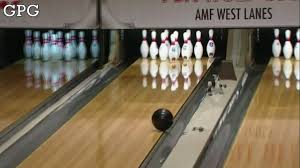
Only bowlers will understand the negative anticipation in the above illustration. Despite the player’s best intention to hit the pins, the ball is heading towards the right gutter making no points. I often think of my life in much the same way . Despite my best intentions I often miss the mark entirely. The bowler can study her grip and her stance to improve on the next roll of the bowling ball. I need to do the same if I intend to learn from my errors. Otherwise I will keep on with the same old same old.
How I respond to mistakes depends on my surroundings. As a child, mistakes were unacceptable in my home, so shame clouded any missteps. I have had to learn how to benefit from mistakes instead of heaping more scorn on my already disappointed self. It has helped immensely to encounter new responses to errors. Most helpful lately has been my experience in the gym with my trainer. If I am doing an exercise incorrectly I am likely to injure myself. Here I get an immediate reward by adjusting my approach. My trainer and I can share a laugh about my convoluted way of trying to follow his instruction. The stakes for making a mistake are nonexistent.
In more important areas mistakes can have bigger consequences. But as I accept that I will make mistakes, some even serious ones, I can acknowledge my shortcomings without shame. As a added benefit, I find that I can accept others’ errors without condemnation or judgment. I can truly say that, despite all of our best intentions, we all do make mistakes. And sometimes we can even learn from them. But that won’t prevent future mistakes. It turns out no one really is perfect, including me.
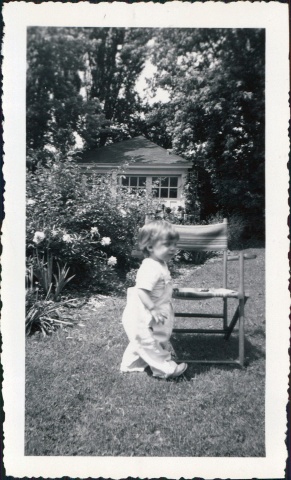
Our first balance challenge comes when we try to move from hands and knees to walking upright. While an essential skill, it doesn’t come easily, and we land on our behinds frequently trying to figure it out. After that we try running, usually before we are quite successful at stopping, and often fall forward when we try to stop.
Eventually balance on two feet becomes second nature, so we learn to balance on various devices. Bicycles challenge us to remain upright while moving our feet in circles. Roller skates demand that we align two sets of wheels and move only forward, while trying to avoid doing the splits. Ice skates further try our balancing patience trying to glide on two long metal pieces. We rush down ski slopes on two wooden boards. Then we walk over creeks on logs, balance on railroad tracks, and teeter on the tops of walls. We have achieved an amazing array of balancing skills with some patience and perseverance.
And then one day late in life we find that something has gone awry. A skill we took for granted–balancing–seems as challenging as it did years ago. We use handrails going down stairs, after wondering for years what they were for. We accept a hand on slippery surfaces. We begin to think about broken bones when we consider ice skating and roller skating. Our bravado about balancing seems to have evaporated.
Fortunately, as I wrote a few months ago, there are exercises such as balancing on one foot while brushing our teeth, that restore balance. While I wish I could take balance for granted as I did for so many years, I now concentrate on maintaining it. It’s a lot farther to the ground if I fall now!

Each year on the Oregon coast sneaker waves sweep unsuspecting visitors to their deaths. At other times tourists are killed with large driftwood logs rolling over them. Both happen because these people don’t possess local knowledge acquired naturally by those who live near the ocean.
Here I sit on a large log on very dry sand far up from the water. I absorbed lessons very early from my first visits to the beach. The first was to never turn my back on the ocean. This was reinforced before I had any idea of its importance since my parents were on the lookout for unexpectedly large waves. By the time I explored the beach on my own the lesson was firmly entrenched.
I was also cautioned to never climb on driftwood that was on wet sand. Clearly the log had been washed there by the waves and could just as easily be washed away, injuring me. Plenty of driftwood accumulated high on the beach left during winter storms but not at risk of moving in normal weather. We played on it.
I was also taught to distinguish between the tide coming in and going out. If it was going out I might be able to reach a rock and play on it. But I needed to watch for the tide returning and stranding me on the rock. In my childhood people stranded on rocks had to wait for the tide to turn to return to shore. In recognition, I guess, that so many travelers don’t understand tides, the Coast Guard now rescues people stranded on the largest rock, Haystack, at Cannon Beach, our favorite spot.
It’s easy to forget that what is “common” sense for some was actually locally acquired and is not “common” at all.

One of my major learning challenges came in first grade with my first pair of saddle shoes. I had worn other tie shoes before this, but there was usually an adult around to help out. I struggled to learn to tie the things. Then I struggled to make a knot that would hold. Then I struggled to tie the oft-suggested double knot designed to make sure the knot held. Of course after that I had to wrestle with the impenetrable knot that resulted when I tried to undo the double knot. My mother possessed what was to me a magical power to untie things. I have a clear memory of deciding I could never be a mother because I could never successfully remove tightly bound knots.
In Camp Fire Girls I was challenged to tie a square knot in the kerchief that came with our uniform. I consistently tied a slip knot instead of a square knot and never could get the hang of the appropriate kerchief display. Thankfully I never was a Boy Scout. My brother had to learn all sorts of knots as part of the Scout culture. I also grew up without boats so I never had to master nautical knots. In college I was in awe of my sailing friend who effortlessly handled the ropes and the requisite knots.
As I tied my shoes the other morning for what must be one of the thousands of times I have done it, I marveled that at some point it had become second nature. I still lack any more advanced knotting skill. Fortunately I married a man who flawlessly ties things to the top of the car as if it were the easiest thing in the world. And he definitely knows the difference between a square knot and a slip knot. If it were left to me, those car top parcels would be long gone.

Waiting doesn’t come naturally to children. Whether it’s the incessant “are we there yet?” or the pleas of “when’s dinner?” children want time to speed up. I remember riding my bicycle up to my elementary school in August to see if the class lists were posted yet. These held special importance for me and my friends since they let us know not only our next teacher but also our next classmates. It took several bike rides until I finally got to see the list taped on my fall classroom door. And who among us couldn’t wait to be “grown up?”
As adults we need the capacity to wait, and it appears many adults don’t possess it. From the person huffing and mumbling behind me in the checkout line to the car behind me in slow traffic, other adults are impatient. The culture caters to this at the moment. On a drive last week I passed a billboard which displayed how long I could expect to wait in the hospital’s emergency room. I can’t imagine rushing an emergency to take advantage of the short wait time!
Waiting is seen as so unpleasant that in every place I will need to wait someone has installed a television. So the doctor’s office, the airport, the gas station and the grocer store sport televisions. If a transaction takes a couple of minutes a clerk will almost always apologize for making me wait, fending off my potential criticism I guess.
Mindfulness seems designed to teach people to wait. It encourages them to be in the moment, not in the future. I didn’t need to take it up to learn to wait. I had many years of experience waiting while I grew up. Now I treasure those times of stillness, when they aren’t interrupted by a television, when the only thing that I have to do is wait.

My daughter’s rescue pups have learned to share the couch. They could each take a side, but they prefer to share one end. They worked this out over time with a few growls, nips and tussles, but they found a solution that suited them both. We learn to share in much the same way.
Growing up my life offered many opportunities to learn to share besides formal school settings. In our first home five people shared one bathroom. Eventually we owned one television. I shared a room with my little brother for many years. When I rode the bus I shared my seat with whoever sat down next to me. I went off to college and shared my room with a stranger that I first met on the day we both arrived. After college I shared an apartment with a friend. By the time I married and had children the habit of sharing was well established.
I don’t think sharing comes naturally to children, but that is the best time to instill the habit. By the time we are adults, we ought to take other peoples’ needs into consideration at most times, whether on the road or in the grocery store. I wonder if some of the people around me demanding full attention despite other peoples’ existence never learned to share. Perhaps they had their own bathroom, their own room, and their own television. Perhaps they even got to dictate their choice of roommate.
I imagine many of us could benefit from remedial education in sharing. Unfortunately I suppose those who most need it would never sign up!
Many years ago Robert Fulghum wrote a short book “All I Really Need to Know I Learned in Kindergarten.” As I began reflecting on education, I realized that throughout our lives we learn many things in many different ways. This series of posts, rather than chronological, will instead reflect the variety of teachers and lessons we encounter as we age and, preferably, mature.
Fulghum’s first rule he learned at five years old was “share everything.” All around me I see entitled people acting as though they were the only ones with needs. I would say that this is merely the grousing of an older person complaining about the young, but it is just as often older people acting like this. American culture seems to be teeming at the moment not with “America First,”(Donald Trump’s slogan) but with “Me First.” Of course it is possible that there is a connection. At least the first reinforces the second.
Back in kindergarten we were taught both that we needed to share and also that there was enough for everyone. Somehow both lessons seem to have gotten lost along the way. With the “quantities limited,” “hurry in now before they are all gone,” and “be the first to own…” we are being taught the opposite. We are encouraged to focus on meeting our needs first. We also are being taught that there is “not enough.”
I remember Miss Hilen’s kindergarten classroom with great affection. We shared. We had enough. We learned that together we were one terrific bunch of kids.
 Saved By Words