“Bells, Bells, Bells, Bells”

spl_32_20170604161337_2

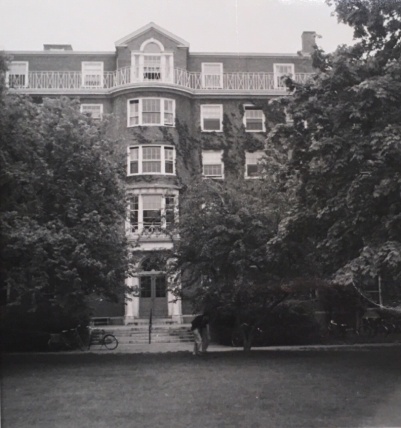
It’s hard to tell in this photo of the back of Cabot Hall, but it was covered with ivy, hence the name Ivy League(really I don’t know if that is the origin of the name!) Living in the dorm meant getting acquainted with 100 girls, dorm parents, and many specific rules and routines.

One practice that everyone had assigned to them was sitting on the “bells desk.” These shifts lasted three hours, usually a couple of times a month. You sat at a desk in the lobby and greeted anyone who came into the dorm. Girls were allowed to go upstairs at any time to visit with friends. Boys, however, were a whole other story. Boys were only allowed upstairs for 3 hours on Sunday afternoon. Otherwise, they had to announce their presence to the person on “bells.”

The desk person then rang the hall phone on the floor of the girl being visited and told whoever answered that someone had a “gentleman caller.” Yep, we actually had to say it that way. We also had the unpleasant assignment of letting a boy know that a girl was out. Bells also sorted the mail, answered the phone and took messages for girls that were out.

The building was locked at 11 on weekdays and 2 on weekends. If you were later than that getting back, you were out of luck. It was amusing on some evenings to see huddled pairs of students getting in their last few minutes of “conversation” before the building was locked.

As for those three hours on Sunday afternoon, alone in your room with a boy,  you were required to have three out of the four feet in question on the floor at any time. That rule continues to baffle and amuse me.
“The Cabots Speak Only to God”

img_0513.jpg
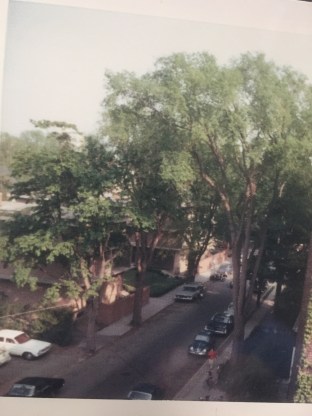
View From My Room In Cabot Hall

When I got my dorm assignment for my first year of Radcliffe College(now totally part of Harvard, then separate housing), it was for Cabot Hall. My grandfather, ever the wit, promptly told me a little ditty:

“Here’s to the town of Boston, The land of the bean and the cod, Where the Lowells speak only to Cabots, And the Cabots speak only to God.” He was quite amused that he finally had an audience for that poem. It took me a while to realize that it refers to the deep snobbery of the Boston elite.

I had a double room on the corner of the 4th floor. My roommate and I shared a bunk bed and a closet. We each had a dresser, a desk and a chair. We needed pole lamps, since there was no room for a floor lamp. The dorm had been built for single rooms, but had been changed into doubles, hence the bunk bed. The two sets of windows on the corner made positioning the bed challenging. We moved it around from time to time anyway.

The bathroom was down the hall with four stalls and three little rooms with bathtubs. I had shared bathrooms and bedrooms for most of my life, so it wasn’t too hard of an adjustment. However, some of my classmates were extremely wealthy, and I imagine it was a major step down for them.

Many aspects of dorm living were new for me, and I will post more about it. Suffice it to say that my first jolt came as I was moving in and heard a girl yell,”F____k” at the top of her lungs. I had never heard a girl use that word, and I knew I wasn’t in Oregon any more.


“You Say Creek; I Say Brook”

C4F131

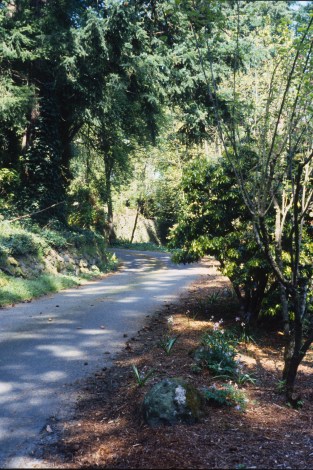
The little stream that ran along the bottom of our property was called a brook by my mother, but a creek by some of my friends. Some people in Oregon even pronounced it “crick.” Writing about this spot yesterday made me think about the regional differences in words that still seem to persist, despite our national mobility.

I took a quiz a few months ago that gave me a series of noun groups and asked me to choose the one I was most likely to use. The groups included things such as “purse, handbag and pocket book.” I had fun completing the quiz and was interested to learn what part of the country my word usage represented. I had, remember, spent 50 years living in Oregon. Amusingly enough, my vocabulary positioned me in Buffalo, New York.  It is true that my mother grew up in Buffalo and my grandparents lived there for most of their lives, but I had only spent occasional visits there. Apparently, my mother’s vocabulary had the greatest influence on my word choices. No wonder I preferred “brook”  over the more  Western “creek.”

Now that I live in New England, I have had to adjust my vocabulary sometimes to be understood. “Pop” is called “soda” here. “Dark coffee” means “light cream,” not “dark roast.” When I say I don’t need a “sack” at the store, I have had clerks look at me with puzzlement. I have better luck with “bag.”

It’s time to put on my “sneakers” and take a walk. Let me know about your word choices.


“Happy Trails to You”

C4F138

When I was a kid in this new neighborhood, the houses were far apart and kids were scattered over a much larger area than on my previous little street. I had to travel to see any of my new friends. I had two available modes of transportation: my feet and my bicycle. We lived at the bottom of a steep hill and many of my friends lived up the same hill, sometimes far up the same hill. The road below us sloped down to the river where one of my best friends lived. In between me and another good friend were woods.

I look back now and am amazed that we kids knew the trails throughout the neighborhood, allowing us excellent road-avoiding short cuts. One ran through the woods to my friend’s house, even though it meant I arrived in the middle of her rhododendron hedge. Another led down to the railroad tracks, across them, then along a cliff to the abandoned water works along the river. My feet were the best transportation on those outings.

The long hill up from our property provided a tough choice. It was easier to walk up it, but it took a long time walking back. If I could push my bicycle up it(most of it was too steep even standing up on the pedals to pump), I could very quickly coast all the way home. This allowed me to stay longer at my friend’s house, so I usually took my bike.

I usually walked to school, through the woods and across a highway to get there. Kids who lived closer, walked or biked. I knew no one  whose mother took them to school, nor anyone whose mother chauffeured them anywhere. We were expected to get ourselves places. So we did.


“The Great Outdoors”

C4F125

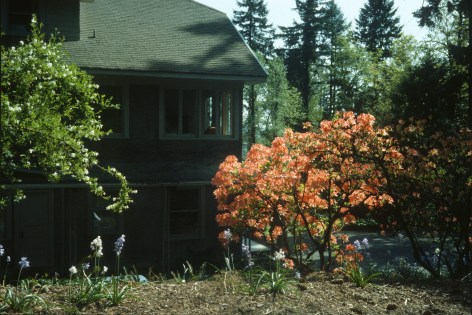
While the inside of the house was fascinating at first, the real joy of the next years came from the immense yard around the house. There were two acres of neglected landscaping, perfect for hiding, building forts, and camping out. Eventually there was a large lawn edged by a steep hill perfect for rolling down in the summer and sliding down in the winter. A huge 500 year old maple tree sat at the bottom of the yard and had branches my brother found excellent for climbing. I have never taken to tree climbing, so I mostly watched.

The yard was full of indigenous plants, particularly violas, johnny-jump-ups, ferns and blackberries. The estate had once employed a gardener, and as I grew older I enjoyed finding terraced garden areas, stone benches and hidden staircases. The yard got very little sun in the only flat area, so we were never able to recreate a vegetable garden as I had experienced as a young child.

The best part of the yard was a small brook that ran across the bottom of the property, draining a large pond of the neighbor’s before it went under the road and railroad tracks and emptied into the Willamette River. The neighbor, Ruby, was rumored to be a witch, and we never went on her property. She had a sign warning that trespassers would be prosecuted. For many years I thought that it meant we would be persecuted. The only persecution I was aware of in those days was of the Jews in Europe, and I was convinced, by combining the notion of her as a witch with her warning sign, that she intended to put us in ovens if we trespassed. This horrifying concern  never  totally left me even after I realized what the sign actually meant. I never even saw Ruby in all the years we lived next door. And I never wanted to!

I wonder now if all neighborhoods in those days had one reclusive resident that children were wary of .  And I wonder how many of those recluses were tagged witches.

“Room To Roam”

C7 photo_00055A

You might wonder how my mother filled this huge house with the furnishings from our smaller one once the Salvation Army had hauled everything away. She didn’t. We had our beds, dressers, one sofa, dining room set and toys, but little else to start with. The living room, which was so large it could fit four 9’X12′ rugs, had a bare floor. We rode tricycles around in it. The kitchen still had a large wood burning stove, but we had our electric stove from the old house, and it went into the same huge room.

For my mother, eight months pregnant when we moved in, this was far from an adventure. For us kids, however, it was a lot of fun. The house had two staircases from the first to the second floor. The kitchen had a huge pantry next to it. There was a special room called a linen closet  holding hundreds of sheets from Miss Nelson.(The Salvation Army had missed them.) My brother and I still shared a room because Norman had the run of the third floor.(Remember Norman came with the house!) But we had our own bathroom!

The house needed a lot of work, and my parents took out a loan equal to the cost of the house to do the needed repairs. It took many years before the house was entirely full of furniture. In fact, it wasn’t until my senior year in high school that the living room was redone. But my good memories of that house were the games of hide and seek we played when we first moved into the very unfurnished enormous place. Our own private kingdom with much room to roam.

“Room For Us All”

C7 photo_00063A

Now my mother was pregnant with baby #4 and we were still in a two bedroom, one bathroom house with my brother and me in the attic. Our next door neighbor, Don, came over with a promising proposition. His aunt Lela had just died and left her his house. His aunt was a recluse and a hoarder who had once used the house as  a home for mentally limited adults. Don had a poor relationship with his aunt and a phobia about setting foot in the house. If my parents would buy it directly from him without him ever having to go in the house, they could have it for a very reasonable price.

The house was enormous, three stories, five bathrooms, set on two acres of property. It was also in a very exclusive neighborhood with an excellent public school. My parents took a look at it, acknowledged the issues facing them with the purchase, and bought it. I only saw it once before we moved in. The house was full to bursting with newspapers, magazines and who knows what else. My mother made a deal with the Salvation Army. They could have every thing in the house if they took every thing in the house. Three whole moving trucks later, there was room to move our family in.

Oh. By the way. There was still one person living in the house–Norman. He came with the house. It turns out that was part of the deal.

“Gimme Shelter”

C4G 026

As I got older, camping was a little less fun and a lot more challenging. Here I am washing my hair with a bucket of water to the side of our camp spot. In those days, Oregon campgrounds had no amenities. No running water, no chopped firewood, no outhouses. We hauled water from a rapidly flowing stream. My father chopped up dead trees. We dug latrines off in the woods. There were no designated camp spots either; we just set up near the lake and not too close to anyone else. For my 16 year old self, it was getting old.

Clearly I was still worried about my appearance, at least enough to wash my hair, despite the fact that no one I knew was around. However, this is some outfit! Cutoff jeans with knee socks with my tank bathing suit and red Keds.

Activities at the lake that used to intrigue me now were bo-r-r-r-ing. The little camp store(really just a person renting rowboats and selling Hershey’s candy bars) lacked interest. I was able to rent a rowboat, row myself out to the middle of the lake, hunker down on the floor of the boat and be alone. As I recall, being alone when I was 16 was preferable to being with my younger siblings.

I longed for easier accommodations. Hotel anyone?

“Tent City”

1948-50s 076

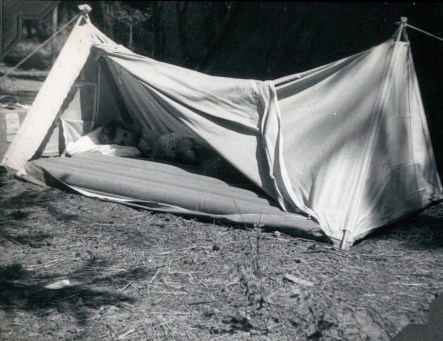
One of the constants of my growing up was tent camping. Here, at age two, I have been bedded down in my own little pup tent, just large enough for a single air mattress, even though I only fill half of it. My parents shared a larger tent for the two of them. In fact, whenever we went camping the kids were in one tent and my parents in another. Eventually the kids were in two tents and my parents were in the station wagon. When we asked them why they preferred the car to a tent, they told us they liked to listen to the car radio!

We had a favorite place to go camping in central Oregon called Three Creek Lake. Today it is easily accessible from the now booming town of Sisters. In the 1950’s Sisters was a small ranching town and the road up to Three Creek was dirt and barely navigable. The ruts were very deep, and my parents had to balance the wheels to the sides of the ruts to drive on the road. To drive in the ruts ensured what they called “bottoming out” which apparently was a very bad idea.

C4F022

For us kids, the drive was well worth the difficulty. We would watch our parents pitch the tents next to the lake, put on our bathing suits and jump in. Here I am floating on another of those war surplus air mattresses that we had plenty of. The lake was utterly freezing since it was at an altitude of 6550 feet, but we loved it. Only when we were shaking with cold and spouting blue lips did our mother insist we get out. “But Mom, we’re fine!”

“Last Drive to Pike”

oldfaithful

In 1963, my mother drove the four of us kids to Pike in our trusty “B-mobile”, a Ford station wagon. We stayed one night at the Old Faithful Lodge in Yellowstone National Park and watched the Old Faithful geyser erupt from our room window. I remember being delighted that there was actually a schedule of the geyser’s displays of steam. It really was as predictable as its name implied. Other highlights of the trip were the Craters of the Moon(a desolate odd park) and Wall Drug Store. If you have never driven from Portland to New York via Wyoming and South Dakota, you may not know about the Wall Drug Store. It is the only thing for miles, and billboards endlessly advertise its approach. Cars also display bumper stickers saying “Visit Wall Drug Store.” Of course we had to stop there! Ice cream and ice cold soda pop was enjoyed by all.

I was 16 by then and restless at Pike, no longer content to ride a bike and swim. I missed my friends, and had been invited to visit one in Arlington, Virginia. My grandparents arranged for a train ticket to Arlington from Pike via Washington. The closest train station was a flag stop in the near by town of Arcade. It turns out that the name is literal, and the station master actually waved a large flag to stop the train to let me on. I remember being amazed that the train would stop just for me to board.

I returned to Pike, but not until 2002 when my visit included a stop at the cemetery where my grandparents and aunt are buried. I needed directions to their plot and stopped at the little Red and White Grocery Store I remembered from my childhood. When I asked about my grandparents(who had died in 1971 and 1978) the butcher remembered them forty years later and directed me to their graves. Such are among the blessings of small towns.