Solace

E_00016A

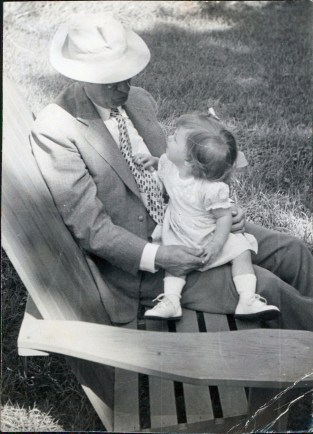
Comfort is such a universal need, and we can seek and find it in others. My grandfather seems here to have relied on the universal facial look of “sh, sh, it’s all right.” May we be solace to one another. With words or just with a quiet look of compassion.

Just Thinking

1948-50s 281

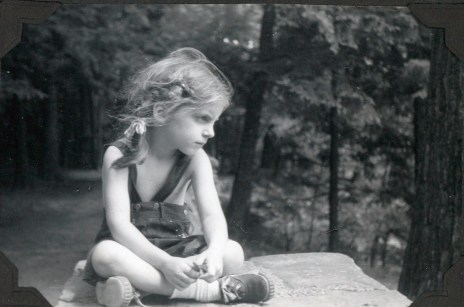
We sometimes think that kids don’t notice what is going on around them, and that they are only wrapped up in their child worlds. We are wrong. All this vicious rhetoric swirling on television, on the radio, on the internet and in “grown-up” conversations has a damaging effect on children. When I was little I was taught,”if you can’t say something nice about a person, don’t say anything.” Arguing over ideas is a healthy part of a democracy.When we demonize one another we poison our childrens’ world. It isn’t healthy for grown-ups either!

Transitus

image.jpeg

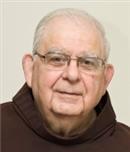
Until I attended a church staffed by Franciscan Friars, I had never heard of the term transitus. Simply put, it means,”the time of passage through death to life.” Last night our beloved senior Friar, Father Andrew, passed from this life into the next. He was celebrated a few weeks ago with a street party to honor his 60 years of service in his order.

Occasionally, one meets a person who lives out St. Francis’ words to “Preach Jesus, and if necessary use words.” Fr. Andrew was such a one. To be with him, or to watch him focus completely on the person in front of him, was to get a glimpse of how we are meant to be one to another. He gave full attention, as if there was all the time in the world, to the child wanting a stuffed animal blessed or to the elderly parishioner sharing her ills.

Tomorrow we observe the 800th anniversary of St. Francis receiving a special permission from the Pope to use his Chapel for pardon and healing. Today, all Franciscan Churches provide a yearly opportunity to come together for the same purpose. May all of us, whatever religion or none, seek pardon for our failings as a nation and healing for the divisions so blatant among us today.

Executive Order 9066

images

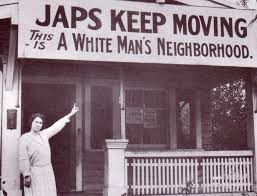
In 1942, President Roosevelt signed an order allowing the rounding up and imprisoning American citizens of Japanese ancestry. I grew up in Oregon, and went to high school with students whose parents and relatives had been rounded up and shipped to places like Idaho for the duration of World War II. I was astonished to think that “ordinary” Oregonians hadn’t protested the removal of their fellow citizens. Although Germany was also an enemy of the United States, there was no roundup of American citizens of German ancestry.

At that I reassured myself, falsely it seems to me now, that we could distinguish between American citizens and enemy soldiers. After all, many Oregonians of Japanese ancestry were third generation Americans. In fact, some of these Oregonians were fighting in our military forces.

As current events unfold, I say what I was not alive to say then. American citizens are American citizens. No one has the right to question their religion, their race, their political views or their clothing. Terrorists are terrorists, but they come in all religions, all races, all political views and wear all sorts of clothing. Let’s not repeat the view that allowed Executive Order 9066 to be issued.

Built to Last

IMG_0375

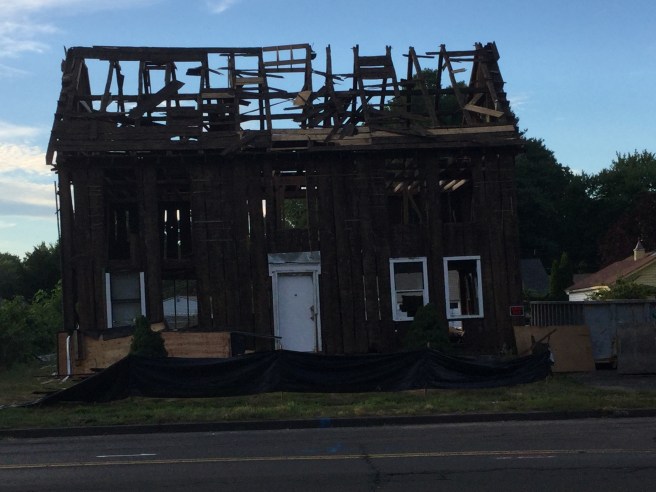
A fire did irreparable damage to a house across the street from us, but it had stood for 250 years. Now it is being dismantled and the beams and boards are being salvaged so that they can be reconstructed in another home. The builders had a different idea of longevity than we seem to today. They expected the houses to outlast the builders; they built for the generations to come.

I hope that we can regain that sensibility and think beyond our own needs. What are we building to last?

New York, New York

C4F006

I have always loved New York City. Although I was born in Brooklyn, I spent the majority of my life in Oregon. My father took his family west while his brother stayed in New York. We went “back East” every few years, including 1952 when I was five.  Then in 2001 my husband and I moved to Connecticut, just a train ride from “THE city,” as I have always thought of it.

We went to a Yankees/Red Sox game on September 10, 2001, a gloriously blue sky day and I felt I was finally back where I belonged.  This old picture captures that optimistic safe at home sense I felt that fall day in 2001, just 18 hours before it was shattered.

It is still a wonderful city. I still love it dearly. Today I thank all the people who go ahead with their lives, refusing to bow to fear. Refusing to scapegoat all the immigrants who saw this city as a gateway to their new lives. Refusing to blame all followers of a religion for the crimes of a few. Here I stand, I seemed to say. Here I stand, I still say.

Wounding With Words

When I was nine and subject to teasing, my father taught me to reply, “Sticks and stones can break my bones, but words can never hurt me.” It wasn’t true, of course. Words can do real damage, often invisible, unlike that caused by sticks and stones.

I am familiar with the ways other people’s words wound me, but I am becoming more aware of the way my words can wound me as well as those around me.I am frequently tempted to make snarky comments, since words come easily to me. I want to spit poisonous rhetoric back at offensive words. Yet as I am tempted to respond in kind, I overlook the the effect that the retort is having on me. I diminish myself in my attempt to diminish the other. I add to the noise that is furiously boiling around us these days. Sometimes I even repeat the offensive words as I refute them. Now I have put the ugliness back out there.

When I was growing up, civil discourse was seen as a virtue. “Civil discourse is engagement in discourse (conversation) intended to enhance understanding,” according to the dictionary. I am trying, in my own life, to retrieve an ability to have conversation intended to enhance understanding, both my own and the other person’s.