“Bolt of Lightning”

I have often used the phrase “hit like a bolt of lightning,” but it was real, not metaphoric, several nights ago. We had a very intense thunder storm in the middle of the night and we were awakened by a large boom. I went to see what had happened just as a bolt of lightning hit. It was so close I knew it had grounded very near us. Since my daughter lives next door, I quickly went to see it it had hit her trees.

She and we had avoided the direct strike, but it had hit in the next yard down, felling a giant limb from a very old tree. Taking the neighbor’s car window out, landing on the wires, and dislodging the support beams of the wires, the tree had done serious damage without injuring any people. We were grateful that it had happened in the middle of the night.

The storm was so isolated that of the roughly 1000 customers without power that morning, 450 of them were on our street. This meant that three electric company crews, one tree company and one police officer(to block off the street) promptly set up camp outside our house. The tree crew was fairly inept and we ended up waiting about three hours while they removed the limb. During that time we got to know the electric crews and the police officer. My daughter brought coffee and doughnuts for all.

I don’t want to leave the impression that not much ever goes on in our neck of the woods. I will admit, however, that the neighbors down the street, the man across the street, the man two houses down from us and a man well known to me all pulled out lawn chairs and supervised the goings on. They must have done the job because the power was finally restored, just in time for lunch.

“Just Caws”

American Crow on left Fish Crow on right

I have written previously(August 2 and 3rd, 2021) about the Merlin app for the phone put out for free by Cornell University. It is invaluable to identify both birds and bird sounds. Late yesterday afternoon there was a long loud cacophony of bird sounds in the back yard. For a time I thought it might be a battle between crows and a red tailed hawk, a common spat here. But it sounded different somehow.

I opened Merlin and sat on the deck to discern what was happening. It turned out that a great conversation was raging between fish crows and American crows. Never having identified fish crows, I turned to my reference book. As you can see from the photos, it is hard to distinguish them. Only their sounds seem different enough to notice. Not only were these two supposedly(according to the reference book)compatible birds arguing, but they were being joined by a blue jay, a northern cardinal, a sparrow and a chimney swift.

Charlie’s blueberry crop flourishes and he left off the netting this summer since we still have so many berries in the freezer from last year’s bumper yield. Perhaps they were sharing the good news. Perhaps they were arguing about a fair distribution scheme. Sadly Merlin doesn’t allow me to translate “bird” into English. Maybe such an app is currently being developed by Google!

“Getting Back To It”

Charlie and me on July 4th

I have been on an extended break from my blog as I reconnect with what matters to me and what doesn’t. I love connecting with others around the world through this forum. I love learning about people, places, gardens, families, pets, books and ideas. However the United States is a hard place to live in for me right now. Too much of the internet, including social media, is full of hyperbole, terror, dissension and fear. Much of it is appropriate in small doses. But it takes its toll, no matter how little I let myself be exposed to it. Abortion, guns, sedition, lying, graft, grift and more fill the air right now. It reminds me of the 1960’s and 1970’s, years I already lived through. I was younger then with more stamina and more hope.

So acknowledging all that, I return to this place to express my thoughts. I am fully conscious of all the turmoil. However, I plan to continue to write about more ordinary things. There is much good to share. Think of my writing, as I do, as a balm for the weary.

From my religious tradition the words are “Peace I leave with you; my peace I give you. I do not give to you as the world gives. Do not let your hearts be troubled and do not be afraid.” Whatever your world view, I wish you the same.

“Bergman Redux”

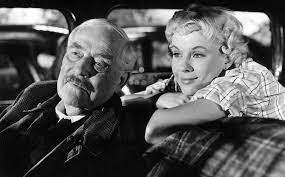
Wild Strawberries

In 1969, the last semester of my senior year at college, I took a course from Erik Erikson on the stages of life. For each stage Erikson proposed a central question to be confronted. I was 21(intimacy vs isolation.) Ingmar Bergman, the film director, was 51(generativity vs stagnation.) Erikson was 67(ego integrity vs despair.)

Professor Erikson screened a recent Bergman film for us, “Wild Strawberries,” to illustrate the last challenge in life. The retired teacher in the film faces the same challenge Erikson confronted as he showed it. Looking back I realize he had gone to great trouble to obtain the film, a projectionist and a room to screen it in. No tapes, DVD’s or computer sources for in-class movies in those days.

The film baffled me. A very old man, a trio of young people, scenes from the past, strawberries, and an award ceremony all fitted into 91 interminable(to me) minutes. Having already been confused by every Bergman film I had seen up to then, I promptly catalogued this one as incomprehensible and never thought about it again. Until last week.

Now at 75, much closer to Erikson’s age in my college class, I screened it again on my computer. I found it deeply moving, the symbols quite clear, the switching back and forth in time completely familiar to my current experience of life and deep compassion for the old professor(the focus of the film.) Of course I also reflected on how meaningful it must have been for Professor Erikson who had gone to all the trouble to share it with us.

A very belated thank you Professor Erikson. I was too young to have a clue!

John C. Mehrling, 1941-June 11, 2022 — Ordinary Time

I know that many of my readers also follow Anne Mehrling’s lovely blog of life and family. I wanted to share this piece written by his cousin today.

St. Thomas Choir of Men and Boys, Saint Thomas Choir School, New York City, 2011 My cousin, John Calvin Mehrling of Waynesville, N.C., died unexpectedly Saturday, in a one-car accident on his way home from a live steam train outing across the mountains in Tennessee. Our extended family is scattered over two continents and (at […]

John C. Mehrling, 1941-June 11, 2022 — Ordinary Time

“Natural Consequences, Covid, and the U.S.”

From Montessori Rocks

One major challenge of parents is allowing children to experience natural consequences of their behavior. A classic example is letting a child know she needs to bring snacks on a road trip. If she fails to do this, she may demand them en route. At that point a wise parent will let her figure out she is experiencing natural consequences–hunger–from her choice to ignore the advice to bring snacks. Unpleasant, but not risking serious illness, hospitalization or death.

A majority of Americans, despite a five fold increase in Covid cases over this time last year, have decided that Covid is over. Large in person gatherings, indoor and out. Parties. Restaurants. Concerts. No masks. No staying home with “little symptoms.” Why miss out on all the fun?

The information in the previous paragraph shows the natural consequences of such behavior, namely a huge increase in disease, hospitalization and death. In New England, even though vaccination and booster rates are high, the new variant continues to sicken many people. Soon, following its previous patterns, this variant will move to the interior of the nation.

Just like the kid who says “I won’t get hungry on the road trip, so I don’t need snacks,” adults who say “I don’t need to be careful; I won’t catch Covid” are ignoring reality. Sadly whether or not Americans are sick of Covid, Covid couldn’t care less!

Your masked, socially distanced, consumer of food to go sends love to my readers.

“Bartleby and Me”

One of my favorite stories to teach college freshmen was Bartleby the Scrivener written by Herman Melville in 1853. Here our central character simply refuses to work any more, repeatedly stating “I prefer not to.” Of course this supplied those same students with an ongoing chance to excuse their lack of preparation for class. They calmly would say, “I prefer not to.” At least they will never forget Bartleby.

But my great great Aunt Lucy, also born in 1853, has become the source of my research and writing lately. I have discovered much that fascinates me about her, the places she lived and the work she began in middle age that took her from rural Wisconsin to the Chinese section of San Francisco and on to China itself.

I have become so engrossed in aspects of this research that I realized that I had the makings of a book. In order to make some semblance of order out of the myriad of bits I am collecting, I chose to buy the software Scrivener to help me put the pieces together. For the last couple of days I have been learning how to use the application. Rather than following my usual practice of leaping straight in and missing 95% of what any given product has to offer, I have been systematically learning how to apply it to my particular purpose. Endlessly flexible, Scrivener will help me in a way that I find unexpectedly necessary.

I will continue to blog, but probably more about life in general, as I did before I found Lucy. Please let me know if any of you have used Scrivener for a large project and what hints you might share with me.

“Archaeologist At Last”

When I was a kid I wanted to be an archaeologist when I grew up. I loved the idea of uncovering lost civilizations and the items of their everyday life. As an 11 year old I gazed in wonder at the treasures excavated from Egypt on display at the Metropolitan Museum of Art in New York City. While I found the mummies unsettling, I did like the jewelry.

In high school I passed on the opportunity to go to camp in Eastern Oregon on fossil digs. That part of the state gets sizzling hot and the reward of rock held insect specimens held no appeal. But well through my teens I harbored a secret desire to travel to some exotic place and dig. Needless to say, that never happened.

In college I became seriously ill my senior year and was unable to complete the optional thesis project in my field. I had a lingering sadness about never having had the chance to spend countless hours in the Harvard library stacks acquiring arcane knowledge to bolster some original idea about poetry between the world wars.

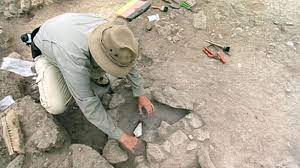
Now, however, I find that doing this work with Lucy Durham seems to be satisfying both previously abandoned passions. Working as an archaeologist I am uncovering things long tucked away in files and on microfilm. As an avid researcher I am able to peruse academic journals at my leisure, enjoying such titles as She Hath Done What She Could: Protestant Women’s Missionary Careers in Nineteenth-Century America.

It turns out it is never too late to have dreams come true!

“Genealogical Hunt”

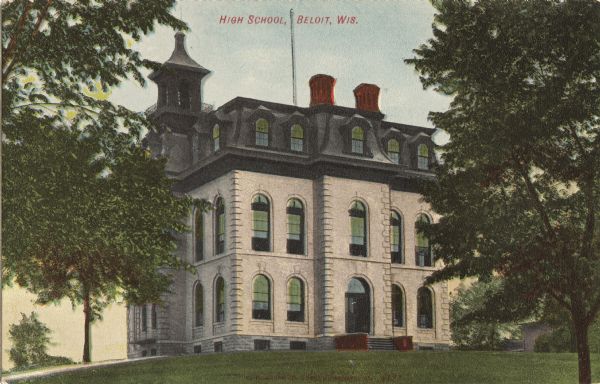
Beloit, Wisconsin High School

While the large internet web sites can be full of mistakes, they do make available images of the United States Census reports. Although they can have incorrect spelling or errors from the interviewed family members, they are fairly close to primary sources. In the 1860 census I first found Lucy Durham in Beloit, Wisconsin. William Clark Durham’s account of our family history fleshed out this entry for me.

He had told me that she had been born June 13, 1853, in Beloit, Wisconsin, the 12th child of Benjamin and Elizabeth, attended Beloit High and then went to Chicago to the Chicago Art School. Here she took special training and stayed in Chicago from 1873 until 1892 working as an artist. For the next ten years “she gave herself to missionary labors among the Chinese in San Francisco, learning the language and preparing herself for work abroad.”

From these two initial bits I was given an opportunity to explore her life further. First, what was the “Chicago Art School” in 1873? Secondly, where would she have been for those ten years in San Francisco? My current primary source research is exploring those two openings.

I have located the school of the Chicago Art Institute, perhaps the forerunner of the Chicago Art School. The internet provides access to numerous archives, such as that of the Art Institute, and I am currently connecting with the archivist there to see what was offered in 1873 and also what “special training” might have entailed. I enjoy the connection with my own history of years teaching at a museum connected art college.

I also found an address in the 1900 census for Lucy in San Francisco. Using Google to locate the address, I learned that it is currently the home of the American Chinese Presbyterian Church. It also now houses the American Chinese Presbyterian Missionary Society. This would seem to validate the comment about the “missionary labors among the Chinese in San Francisco.” Now to ask the archivist at the American Chinese Presbyterian Missionary Society what they may have somewhere about Lucy Durham.

The first time I read Durham’s book I had merely skimmed over these details. Looking back now I see the first two major clues pointing me toward further pieces of the story of my great-great-Aunt Lucy. As you can tell from this post, there is nothing quick about research. But I delight in the work and look forward to being able to resurrect more of the story of this intriguing woman.

“A Mixed Blessing”

A genealogy site

When I began researching my family’s history I relied on print sources and microfilm. This was time consuming, but it ensured that the information I found was as accurate as possible. I was able to note the source for each discovery as I went. I also wrote back and forth to historians in small towns and they xeroxed things for me and I for them. In the case of Lucy, one correspondent let me know that there was a compiled family history of the Durhams written in the late 1940’s and available in reprint.

In “The Name and Family of Durham.” assembled by William Clark Durham, I came across my second mention of Lucy Durham. Here he chronicled a good deal more of her story. However, at the time I was still trying to reconstruct a broader picture of the family and I set the resource aside for several years.

In the meantime internet based genealogy took off, led by the Family Search site of the Church of Jesus Christ of the Latter Day Saints(commonly called Mormons) and a paid resource, Ancestry. I began to use both extensively and was able to get a more fully fleshed out sense of several of my family lines.

Here, however, I discovered a major difference between my early paper based research and on-line information. I soon learned that to a great extent people were simply copying other peoples’ findings without bothering to site sources. Not surprisingly, bad information was interspersed with good information. For instance my great-grandfather was mistaken for his father based on a faulty assumption that “he couldn’t have started a hotel in his 20’s.” (He did in fact do this.)

Now that I have settled on a thorough exploration of Lucy Durham and her work with both American Chinese and those in China, I am back to original source material. It is slow going but much more satisfying. As I come across such findings, I will share both the source and the findings with you. For those hoping to compile accurate family histories, I hope my current practice will prove a useful example.