“Changing Tastes”

2hopewell

A few times a year my husband and I like to go out for a fancy dinner, and last night it was celebrate(belated)my birthday. We chose a quiet small place where we have frequently enjoyed a superb meal with excellent but not intrusive service. The noise usually is a solid low murmur of other diners who, as you can see from the photo of the interior, are quite near by.

Sadly, while I was looking forward to chatting with my husband, I learned the following: “I don’t like people my age. I’m old for 29.” “I always need to sit with my back to the door.” “We are in a book club with older women in their 50’s.” And on and on and on. Yes this too old for 29 young woman trying, perhaps with success, to impress her partner’s parents talked loudly enough for all of us to hear her life story. And it wasn’t even, as I confided to my husband, an interesting life story! She was completely oblivious, failing to read the room and adjust herself accordingly.

After spending upward of $100 for a meal, we left disheartened as well as broke. We agreed that we would have had a much nicer time with a meal I cooked sitting alone at our own table. We show every sign of being well on our way to curmudgeonry!

“Electives?”

These photos from my high school yearbook of 1963 show that while I was enrolled in Latin, French, Biology, English, Social Studies and Algebra, other students were taking Home Economics(the girls) and Shop(the boys.) No one I knew took either class. What was going on? While theoretically I could have chosen Home Economics instead of Latin as my elective, I was never given a choice by either my parents or school counselors.   Sadly, we judged the girls who did take Home Ec as inferior to us. The boys had the same attitude towards Shop and I knew no one who took it. Eventually these two courses, probably some of the most useful classes for regular life, disappeared from many schools altogether.

I still don’t understand this condescending attitude to these classes that prevailed in my high school. We girls were definitely expected to be able to run households when we were grown. The boys were definitely expected to be able to fix things when they were grown. But apparently learning these skills in well equipped classrooms with master teachers was considered “below us.”

I cook every day. I never use Latin. Which elective would have been a better use of my time?

“Required Reading”

juliuscaesar

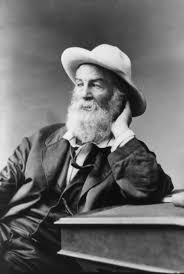
I have wandered back around to my focus of earlier this month, education. I began thinking about required reading in high school English classes after Pete(beetleypete)commented that Whitman wasn’t read much in England. I wonder what any of my readers were assigned in their English classes.

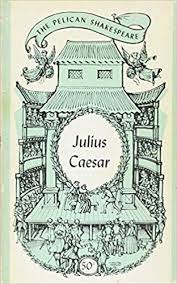
We read one Shakespeare play each year. Julius Caesar, Macbeth, Hamlet and King Lear in that order. I assume that they thought each play was a little harder than the one the year before. No one ever connected them with each other. We got no background for the plays and stumbled through them wondering why we were reading them. But they were required.

When I got to college I realized that my high school had made no distinction between American and English authors, referring to them all as English. This was a little embarrassing to find out when sitting in an English survey and understanding I really wanted the American survey. That basic distinction would have been useful information in high school, but it was never made.

Other required reading that I remember included The Scarlet Letter, The Mayor of Casterbridge, and  The Rime of the Ancient Mariner. I still have no idea why these particular works were considered essential in the early 1960’s. Thrown into each with no context, we plowed ahead because they were required.

Please share any books you were made to read in high school. I am very curious about the variety–that is if there was any.

“Meeting Walt Again”

waltwhitman

When I studied literature both in high school and again in college, the main critical approach was New Criticism. This meant looking at a piece of writing as an object, free from biographical and historical information. By calling itself “New” this method hoped to get away from the biographical and historical emphasis when reading a work which had preceded it. Needless to say, while I loved literature of all kinds, I rarely had a solid understanding of the cultural, biographical and historical influences on the authors.

When I was in Philadelphia, I stumbled across an exhibit in City Hall of contemporary artists reflecting on Walt Whitman for his 200th birthday. Reawakening my interest in Whitman, this display sent me back to his writing once I got home. This time I decided to read Walt Whitman’s America: A Cultural Biography written by David S. Reynolds. While I am very familiar with Whitman’s poetry, I had a very limited sense of the milieu out of which he wrote. This book continues to fill out the background and increases my appreciation of Whitman, an author I already truly enjoyed.

And why Philadelphia for the exhibit? It turns out that for the last fifteen years of his life Whitman lived in Camden, New Jersey, a bridge away across the Delaware River from Philadelphia. Who knew? Certainly not this literature major!


“Contradiction At The Heart”


Philadelphia highlights the opposing truths at the start of the United States. On the one hand, the Liberty Bell with Independence Hall behind it shows the lofty ideals of the United States Constitution as written there in 1781. On the other hand, as a wonderful new exhibit in the Museum of the Constitution highlights, there was no freedom for the 20% of the population that was enslaved. As for the Natives, they were not considered citizens, so were not entitled “life, liberty and the pursuit of happiness” as spelled out in the 1776 Declaration of Independence from England.

These are hard truths, and often Americans try to disguise them by saying things like “that was then, this is now.”  But  the appalling resurgence of white “nationalism” shows that many citizens really don’t grasp the truth that this was never a “white nation.” I am grateful that in Philadelphia, at least, there is an attempt to paint the whole picture of the reality at the start.

My reading continues as I try to fill in all the gaps left by my very whitewashed presentation of history in the 1950’s and early 1960’s. I recently finished a massive biography of Frederick Douglass, and was gratified to find at the museum his original “pass” allowing him to travel in slave states since he was a free man. I also purchased a coffee mug with his face and the quote “Without struggle there is no progress.” It’s a good reminder that my country has a ways to go to reconcile truth with the myth of its beginnings.

“Philadelphia By Day”

E0E40A19-24BF-4301-BAFF-F50D912C100C

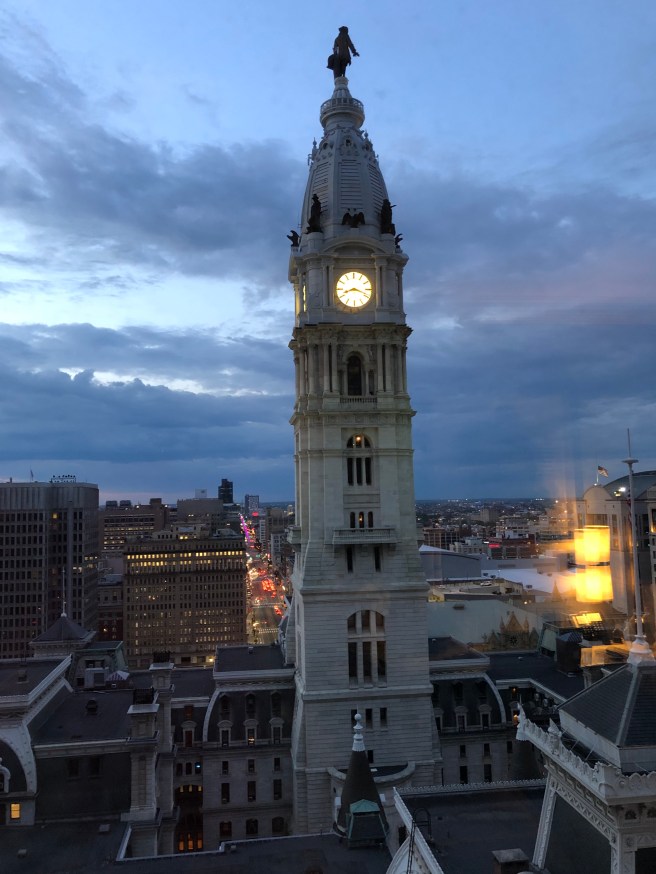
I had a great time in Philadelphia, exploring the city on my own while my daughter worked. This statue was a few blocks from our hotel and frames an avenue of flags from every nation that was the original home of a Philadelphia citizen. Clearly, the city is full of a diverse population of immigrants from all over the world.

I had somehow never been to Philadelphia, although I had been to every other major city in the United States. I tried to soak up as much as I could in two days, first by walking and then by taking a 90 minute double decker bus tour. Yes I was one of those silly tourists sitting on top of a bus looking around! But it did give me a preview of the many attractions I want to see on another visit.

I decided that Philadelphia is a combination of Boston and Chicago. The colonial buildings and historical landmarks echo Boston. The diversity, open spaces, abundant street art and friendly people reminded me of Chicago. It is less like New York City than I first imagined.  Here people actually wait for the walk light before crossing the street.

I’ll be back. After all, I didn’t even try a Philly cheesesteak yet.

“A New Venture”

Cupcake with Two Candles

I have been taking a couple of days to start a new blog. After a very helpful consultation with Pete Johnson(beetleypete) I decided to keep my present blog with its mostly secular focus and start another one with a more spiritual focus. I spent my professional life in a secular college and had no trouble connecting with all kinds of students, religious, nonreligious and antireligious. My blog followers include all faiths, lack thereof and points of view on matters spiritual. So, just as I explored spiritual matters away from work, so I will explore more specifically spiritual ones on my second blog.

I forgot how much work setting up a blog entails. I am presented with all sorts of themes again and the necessity of finally using Gutenberg. The themes are more confusing than Gutenberg. I will let you know when it launches and how to access it. Beyond that, you are free to just keep up with this one. I am trying to ensure that posts from the second one only go to those requesting it by checking “follow this blog” on that site. There may be a few glitches, so I count on my readers to let me know of them.

Tomorrow I go to Philadelphia, courtesy of my daughter, who has bought our train tickets and our hotel. She is celebrating my 72 birthday by taking me to the one large U.S. city I have never seen. When she heard, much to her shock, that I had never been to Philly, she quickly set about to remedy that. I will try to post a picture of the cracked Liberty Bell. It seems particularly appropriate at the moment!


“What to Believe?”

liar

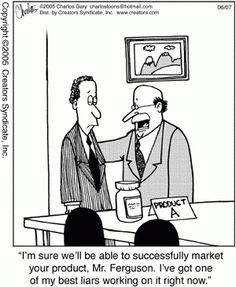
First of all, I believe in facts and by extension I believe in truth. I don’t discount the reality that different people can draw different conclusions from the same set of facts, but I also believe that some truthful statements can be made in any situation. Even in such a contentious scenario as a divorce, it can truthfully be stated that the marriage didn’t survive. When we get into the territory of blame, clearly different conclusions can be reached, preventing us from saying it was all one person’s fault. More facts may give us an increasingly detailed picture of the facts of the marriage, but the truth of the marriage, while existent, cannot be definitively reached by anyone.

Why am I going on so about facts and truth? At the moment in the United States facts and truth seem to be up for debate. Partly, in the case of historical narratives, I think this happens because we become aware of other facts and other points of view. In Plymouth, for instance, I learned much more about the indigenous people living in the area as the Pilgrims arrived. Clearly one truth is that it was very disruptive for the first inhabitants. That truth was hidden when I was presented a scene of a peaceful first Thanksgiving with everyone happily sharing a meal. More facts challenged this narrative. But truth didn’t suddenly disappear.

What about opinion? Here we need, I believe, to have plenty of humility. You and I may both be presented with a set of facts, for instance about trade with China. We can study exports, imports, tariffs and other sundry bits of information. At the end each of us can have an opinion. I may think tariffs are a bad idea. You may think they are beneficial. No matter how strongly either of us makes our points, neither of us will have THE truth on the subject. The only truth available at the moment is what has happened so far. No one can accurately state the truth about the future. We can only hold an opinion.

Sadly, we are presently heatedly yelling at each other over opinions. Yes, it is difficult to know the facts of the Mueller report since we haven’t been allowed to read it. We are caught like children in a divorce with only each parent’s side available. But at some point I hope the American people will have access to a well documented, lengthy examination of the effect by Russia on American elections. We need to know. We are voting again next year. And that is the truth!


“You Could Never Understand!”

fullsizeoutput_18f2

One of the hallmarks of teenagers is the line “you could never understand,” hurled at their parents to make a clear distinction between their world and that of adults. I think it is appropriate at that age to try to carve out a niche for oneself that makes one stand apart from parents. However appropriate for teenagers, the stance seems to have seeped its way into American life. There it causes much unnecessary division because it cuts off conversation and sends people into opposing corners, ready for a fight.

It is true that my particular experiences limit my understanding of the experiences of many other people. For example, I have no idea what it would be like to be a man. Similarly, I have no idea how anyone could believe that Donald Trump was sent by God to save the United States. But if I just park myself in the corner marked “female Donald Trump opponent” and maintain that neither a man nor a Donald Trump supporter could ever understand me, I am stuck listening to my own limited thoughts.

One of my favorite books in recent years was written by Arlie Hochschild, a sociology professor at the University of California at Berkeley called Strangers In Their Own Land. Hochschild realized that she lived in a liberal “bubble” and had no understanding of conservative America. She set out to correct that by spending months really getting to know people in Louisiana whose views were polar opposites to her own. She wrote with compassion and concern about the world so different from her own. She was willing to get past the idea that she could never understand. So did they. It is a stance worth taking, particularly now as the American obsessive focus on self and slights at every turn threatens to drive us even further apart.