“Safety In Numbers”

621D877C-A385-4D66-8DA8-C13B8CD53CD4
4th Grade

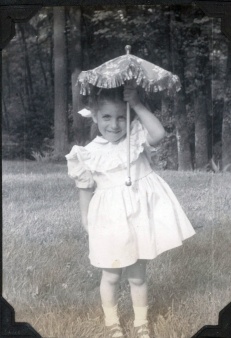
As I reflect back on my summers as a kid and talk with other friends my age, I am struck by a common theme. We all spent a lot of time outside without any parental supervision with a lot of other kids. I was thinking about my fourth grade photo above and realized that I don’t think any of my classmates was an only child. Families in my grade ranged from two to seven children, with four being the average. That meant that at least one sibling and usually more were around at all times.

We all walked to school, so we were used to the distances around the neighborhood and how to get to each others’ houses. When we wanted to play, we would get together at the school or at someone’s house. We walked or bicycled there. Our mothers were busy at home and we didn’t expect rides.

That means that at all times mothers were home and kids were roaming the streets. When people say that kids don’t have the same freedom today, I think that is because so many homes are vacant during the day and there are fewer kids in the neighborhood. On my street, however, there is still one vestige of my kind of childhood. We live two blocks from a city pool and during the summer groups of kids walk and bike together, without parents, to go swimming. At the pool itself many children swim happily for hours under the lifeguards’ watchful eyes.

And sometimes, in the dead of winter, a small group of kids materializing from who knows where, arrives at our door offering to shovel our walks.

“You’re All Wet”

2AEEDEE4-91FE-4774-ADCE-58CD8D0AB2A6

At my feet is the round lawn sprinkler that would soon be linked to the hose. It looks as if I am demanding that my mother attach it right now so I could play. Now that summer is suggesting that it may just possibly arrive in New England, I am remembering the joys of running through the sprinkler.

In Western Oregon, there was never a lack of water, so we could play in the sprinklers as long as we wanted. One of them went around in a circle, and we could chase it. Another threw out a large arc and you could duck under the water for fun. For some reason, we never had one of those little wading pools, so we contented ourselves with sprinklers. No one I knew had an above ground pool, though one very wealthy neighbor had a full in ground pool with bathhouse. The water was never heated, however. In fact I don’t remember ever encountering a heated swimming pool until I was an adult.

A second badge of honor besides skinned knees as a kid was what we called “summer feet.” My siblings and I had a contest each summer to see who could get the toughest bottoms on our feet. We spent all summer barefoot, and it was important not to wince when stepping on a rock or twig. Eventually we would demonstrate our achievement by walking up our gravel driveway.

When they say kids can make up their own fun, I think of sprinklers and summer feet.

“The Good Old Days?”

polio
Iron Lung For Polio Victims

I am in the middle of a series of posts about things that have disappeared from today’s world. I am enjoying remembering these, sharing memories with other readers, and introducing younger readers to earlier times. However, I do not mean to imply that the old days were the “good old days.” I am not nostalgic for the past in the sense that I wish I were living there. Instead, I am highlighting pleasures and activities that were common then.

I think it is too easy to look wistfully back on earlier times while forgetting some of the sober realities present then too. One of the biggest dreads when I was child was polio. I remember once having my legs ache when I was 9 and fearing I had  contracted polio. It was a terrifying disease with no cure and devastating consequences for those children who survived it.

I remember very clearly going downtown to the local high school with my brother and sisters and swallowing a sugar cube with vaccine  to prevent polio. I believe I was 13 or so. My littlest sister was only 5. My parents could not believe that they no longer had to fear summer gatherings of children, potential sources for the spread of polio.  Dr. Salk and Dr. Sabin had made the future brighter for children.

That is to remind us all that that the “good old days” had many perils today’s children are spared.

“Jacks Anyone?”

5E735857-6FE2-4508-817F-45BBF885E24E.jpeg

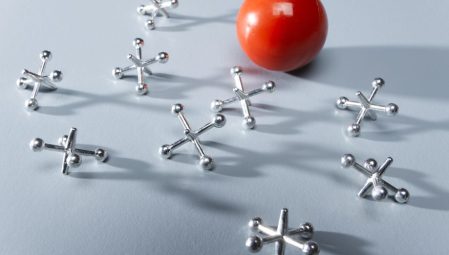
In my childhood, boys played marbles and girls played jacks. These were a set of 10 little metal objects and one red rubber ball. While it was possible to play jacks alone, the only reason I ever did that was to hone my skill. The real fun was playing with an opponent.

Reading up on the subject, I learned that there were actually a variety of ways this game was played. All I remember was THE way jacks was played in my neighborhood. You would find a flat surface and drop the jacks from your hand onto the ground. Then you would bounce the ball, pick up one jack and then catch the ball as it came back. If you were successful at that you went on to pick up two, then three, and so forth. When you erred, the other girl got a turn.

Of course, the wider you scattered the jacks and the higher you bounced the ball, the more likely it was that you would be unable to achieve the perfect ten pickups. I mostly remember gales of laughter as the ball went flying or jacks went spinning.

A few years ago I tried to find a set to teach my granddaughter. I could only find plastic ones, which felt all wrong in my hands. I see that now they are available in very expensive “retro” packaging. Apparently they are after the “nostalgia” market. I am not particularly nostalgic about jacks. I just think they were a great inexpensive way to spend an afternoon.

“Teddy Bear, Teddy Bear”

94154275-3B0F-4589-A306-A30384FB44C0.jpeg
Photo from Life Magazine

If you can recite the poem that follows the title, you will also remember the jumps that went with each verse from “climb the stair,” to “say your prayers.” If you have no idea what I am talking about, this was the most common jump rope rhyme with its requisite hand and feet gestures made while one jumped.

I love the photo above because it accurately captures the way we waited in line to be the next jumper. We would have been wearing dresses, saddle shoes and white anklets too. Group rope jumping was a favorite morning recess activity. Afternoon recess usually had us playing other games. Two girls would swing the rope and another would run in from the side, perfectly timing her entrance to the arc of the rope. Then the chanting would begin as the girl tried to do all the moves and not trip. If a girl tripped, she became one of the rope swingers and the game went on.

A challenging variation of jump rope involved two ropes swinging in opposite directions. This was especially hard to time. First one girl went in and having established a pace was joined by a second jumper. I learned that it was important to simply run in and not think about the challenge ahead.

Jump roping was done on asphalt, so falls hurt and were another reason to get skinned knees. Fortunately, the school nurse always had plenty of Mercurochrome and Bandaids. Now not only were our knees banged up, they were also orange!

“Can You Name This?”

skatekey

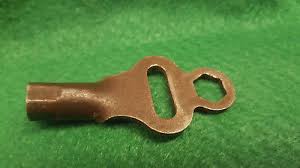
Why would an eleven year old girl have one of these on a string around her neck all summer long? I think you have to be a certain age to answer this question, though I am not sure what that age might be.

My grandparents’ house in Buffalo, New York had blocks and blocks of flat sidewalks. I lived in an area without them, so I was thrilled by the joys opened to me when we went East. I particularly fell in love with roller skating up and down the walks for hours.

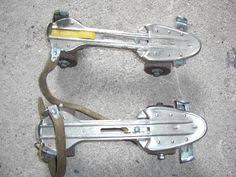
In those days, roller skates went on over your shoes and were adjustable to fit various shoe sizes. That was certainly practical when there were so many children in families making it prohibitive to buy skates for each one. The object above is a skate key, allowing you to adjust the sliding sections back and forth by first loosening and then tightening the nuts. The other end was needed to tighten other parts on the skate, especially over the toe.

skates
Metal skates like the ones I wore

The skates were bone jarring, since the wheels were metal. They constantly loosened and had to be retightened. I continually fell over, skinning my knees. But in those days, every one I knew had skinned knees. There were a sure sign that you were a kid and it was summer!

“The Idiot Box”

1955-Philco-4119-21in

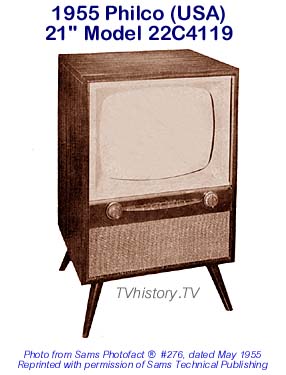
My family got our first television set in 1955. It looked similar to the model above. My daughter once asked me about “back when you were a child before there was color.” She had seen early television programs in black and white and assumed that there had been no color in the world then. I thought that was a reasonable conclusion for a four year old! Of course our TV was in black and white. In fact, my family didn’t own a color television until 1962 and that was a major extravagance purchased as the family Christmas present.

Portland had only one station, and it went off the air at 11 pm, displaying a symbol on the screen until the morning. Television was generally frowned upon and considered a waste of time. It was also presumed to dumb down viewers, hence the name “idiot box.”  While the content of shows was pretty limited, it was actually trying to tune the picture that turned people into idiots.

The picture continually rolled, either horizontally or vertically. Accordingly, dials adjusted both the horizontal and vertical picture. The signal was weak and needed the addition of “rabbit ears,” a set top antenna. Supposedly one could turn the “ears” different directions to improve the signal. Great disagreements broke out over who had “moved the rabbit ears from their perfect position.” As if there were such a position.

The one advantage to the old set was the absence of a remote control. No one could surf the channels. But of course, there were no channels to surf!

“You Say It’s Your Birthday”

1948-50s 192

I have been reflecting on the differences between birthday celebrations when I was a kid in the 1950’s and today. This was sparked by seeing a brochure at the grocery store full of “party planners” and “party events.” Apparently you can now hire someone to plan and run your child’s party. You can also hire a bounce house, a magician, a makeup artist, a clown and who knows who else.

Our birthday parties were all the same. Hand made invitations were given to the same number of friends as your age. 8 years old, 8 guests and so forth. The meal was always the same: cake, ice cream and Kool-Aid. The games were always the same or variations of the same. There was pin the tale on the donkey, bean bag toss, remember the items on a tray before it is covered up, and various simple word games. Prizes were awarded for the first place winner in each game. Then the birthday child opened all the presents in front of the other guests, practicing her best good manners of being appreciative no matter what. After about 90 minutes, mothers picked up the guests.

Now parties give each child a goodie bag to take home so that no one feels left out. Similarly gifts are opened in private to avoid comparing presents so that no one gets their feelings hurt. Many parties are given at places especially designed to hold them. Our craft store hosts parties. The trampoline park holds parties. The movie theater holds parties.

All I can say is that parties were a lot less expensive when I was a kid. No planner was needed since the parties were identical. And no one appears to have worried about the feelings of the guest. After all, it wasn’t their birthday!

“In Alphabetical Order”

card catalog

One of the most dramatic changes during my life as a student, then professor, now as a genealogy researcher has been the change to necessary research skills. Hard as it may be for some of my youngest readers, THERE WAS NO GOOGLE. In fact, THERE WAS NO INTERNET. While the pervasive presence of both of these has changed many ways of doing things, today I am focused on research.

The first skill, drilled into us from a very early age, was alphabetization. We were given lists of words and asked to put them in order by alphabet. As young children, the task might involve words with different initial letters. Eventually, the demands were more complicated, requiring us to know how to position words with more common beginnings, such as research and reset. We were then equipped to use the card catalog.

Perhaps I needed to write a paper about India for my sixth grade class. I would go into the library and look for the drawer in the card catalog that would hold the appropriate alphabetical section. I might need to remember that Idiot-Incomplete would not hold the card. I would need Incompletion-Indifferent. Within that drawer I would find subsections about India including general books, travel books, history books and so on.

After copying the number of the book down, I would go in search of it. Usually I would have to return to the card catalog numerous times as I narrowed my search. This did have the exercise benefit of walking a lot!

My favorite card catalog moment came when I was in high school. I wanted to see what the library owned about sex, a common high school interest. It was such a common interest that the cards in the “sex” section were all laminated in plastic. Apparently they were wearing out from constant use!

“Leftovers Anyone?”

IMG_0378

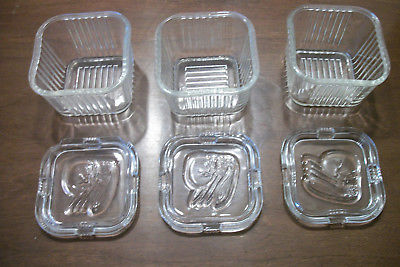
I have a neighbor who refuses to eat leftovers. I have no idea why a grown man would take this stance, but it probably goes back to his childhood experiences. In my family there were rarely leftovers. My mother never quite got the knack of cooking enough for us and we ate up all that was offered. But there were times of big dinners, such as Thanksgiving, that we had leftovers. Those were put into the refrigerator in the kind of glass containers pictured above. Some of ours were bigger and some that size.To reheat the leftovers, you would put them in a saucepan or frying pan and gently warm them up.

I have over corrected for my mother’s approach, and I constantly cook more than we can eat. I no longer have these little glass containers, so my food goes into bowls and is covered with—you guessed it—plastic wrap. Then when one of us wants to have some, we put it on a plate and reheat it in the microwave. There is even a setting on the device called “dinner plate.”

That short comparison highlights how much things have changed in just 50 years or so. My mother was not trying to be eco-friendly by using those containers. They were the standard solution for storing extra food. We didn’t have the option of immediately reheating food, and so we never thought anything about waiting while it warmed. Now I would have to be intentional to search out these containers(the photo items were at a “vintage” site.) Then I would have to “wait” while the food heated on the burner.

Clearly the planet was better off without the choice of plastic. At this point it would take widespread reform so that I reached, without having to think about it, for a glass storage dish for leftovers. As for microwaves, I still have no idea if they are safe or not. But they sure are convenient!