“At Seventy”

9F543364-90FD-414C-89B3-9A50B5D62A98
Great-grandmother Jennie Nash

It is a lot of fun to see where I got my tendency to “fill out” in my later years. But it is also lovely to see the demeanor of my great-grandmother who seems to have an almost smile as she sits for this portrait. I often have a hint of a smile, though I am trying to keep a straight face.

Anyone who has arrived at seventy will notice that time does funny things. Parts of it stretch out endlessly, such as late at night. Other parts zip by as grandchildren, only recently babies, approach adult height. I learned long ago that the Greeks had two words for time: chronos and kairos. Chronos seems to refer to time in our ordinary use of the word. Kairos has a more clear sense of the perfect moment. The following short poem shares my reflections as I turned seventy.

Seventy

And so I join them

out walking mornings,

lingering at checkout stands,

smiling at babies.

Taking time.

Chronos a fabrication.

Kairos the only solid ground.
“What’s a Meta-for?”(bad pun)

crossstitch

One of my students’ loudest complaints about poetry was the use of metaphor. “Why didn’t poets just say what they mean? Why did they have to “hide” their meanings?” As I have mentioned before, poets aren’t by and large intentionally obscure. Rather they are doing their best to communicate an image or an observation to the reader. So why use metaphors anyway?

I find that many times in regular conversation we will speak in metaphors without realizing it. We will say we have a “killer” headache, when we really don’t think we will die from it. Rather, we are saying that the intensity of the pain is like someone trying to kill us. So poetry uses the same device to help the reader understand something. (I realize that many people already know this. I am addressing the reader who is put off by poetry because of the “hidden meaning” stumbling block.)

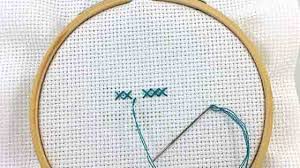
In the little poem that follows I am using needlework, a hobby of mine, as a way to comment on the difficulties of contemplative prayer. In this case, the literal mistakes on the canvas reveal my lack of concentration on the task at hand.

Contemplation 101

You may think

you kept your focus

without wavering.

One glance

at the needlework

under your fingers

reveals the folly.

Thoughts drifted off.

Stitches record the detour.

“A Tribute”

breastcancer

The wife of a colleague of mine at work learned that she had a genetic predisposition to getting breast cancer. She chose to have a prophylactic mastectomy–the removal of two healthy breasts. I was moved by her decision and wrote her this poem.

For Laura

Needing a steady place

to rest her bow,

the Amazon woman

sacrificed her right breast.

Fair trade, she thought,

for good aim and clear direction.


You, now, warrior yourself,

flatten the playing field

altogether.

Hoping, we know,

for a steady place

for E and J

to grown and gain

your good aim and clear direction.

“Take a Chance”

lottery

Connecticut is a strange state. Rather than having counties as the seat of government, here we stick to the 169 towns which originally made up the state, many begun in colonial times. This means that there is great disparity between adjacent towns. A very wealthy town can butt up against one with great poverty. I live in such a town–the poorer one–and take note of the differences. In the next town over, people walk for exercise and ride bikes with their kids for fun. In my town, people walk many places and what bikes there are carry adults to work or stores. The following poem comes from my observations of the many people who walk by my house every day.

EAST HARTFORD

Here we walk to get somewhere.

We long for the day we can drive,

Park right at the store,

Load our trunks to overflowing.

Instead we buy what our arms can carry

From overpriced stores within reach,

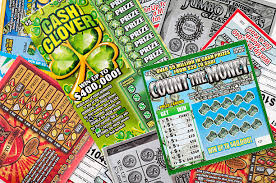
Dropping used scratch-it tickets–

Our one hope of transport–

Like crumbs along our way home.

“I, Too Dislike It”

poetry

The title quote is from Marianne Moore’s poem “Poetry” where she agrees with those who find poetry obscure, but also defends the writing of it. Since I have been choosing which poems of mine to post, I have been thinking about the barriers between poetry and readers. Poetry was never meant to be full of “hidden meanings.” (Well, I take that back. There are poets who are intentionally obscure. I am not one of them, nor do I have any interest in reading them.) English teachers often do poetry a disservice by implying it is something that you have to “figure out.” Worse are the teachers who ask leading questions which only have one answer–their answer–about poems.

I like poetry because it has a unique way of putting words and images to experience. Many times poems will help me to see something I have overlooked. Other times I feel companionship when I read a poem, feeling that at least one other human being understands something I understand.

In the following poem I reflect on the neighborhood boys who spend hours shooting baskets down the street from my house. I admire their perseverance, a trait I sometimes lack.

Practice

Mostly they miss,

Those boys endlessly

Trying, trying, trying

To make the ball

Swoosh lightly through the

Battered, wobbly, rusty hoop.


They dream, too.

And, more willing than I,

Keep aiming

Keep missing

Till sundown.

I hope that as you read this you can tell that my neighborhood isn’t wealthy(see the description of the hoop.) I hope that you think about boys whose one avenue out of the neighborhood might be sports. I hope you admire their sticking to it, no matter the odds against them. But I would rather you come to these ideas on your own just from reading my words. There is no right way to read this little poem. I just hope to communicate something about those kids to the reader.

“Poetic License”

garbageman2

I reviewed my “about” page and learned through comments that others don’t start with reading it. Nonetheless, I thought it was a good time to reexamine my initial decision to separate my poems from my daily blog. I decided to begin to include some of those poems in my daily posts.

In formalist theory, poems stand by themselves and need no introduction, biographical, historical or contextual. However, whenever I have attended a poetry reading, I have been immensely helped by the casual introductory comments the poets make before they read. They will often relate the occasion which prompted the poem and add explanations that the reader might overlook. I thought I would adopt that stance when I include my poems.

When we moved to East Hartford, Connecticut from Portland, Oregon, I was very aware of my new surroundings and the ways they differed from my previous home. At that time, the garbage men(always men) hung off the trucks and threw the garbage, overhand,  into the trucks. When my town switched to trucks that picked up the garbage without needing the men, I wrote this poem–an elegy to the garbage men.

Collection Day


I miss them


Those muscled men who


Hoisted the cans up and over the truck edge.


Their arms first grew slack


Merely tipping into the compressor bed.


Then, finally, their biceps smoothed altogether


Replaced by mechanical limbs


Reaching disgracefully over and up.


“About About”

1940 Family_00039A

After I answered the Liebster questions posed by waterforcamels, I looked back to my initial “About” page on my blog. I wrote it 18 months ago and have never changed it. I realized that the “About” page is one I regularly read when considering following a new blog. Many times there is simply a WordPress place marker saying something along the lines of “this is an example of an about page.” Usually that means that the blogger is just starting out with a series of posts and hasn’t yet added some other useful features. I ordinarily wait to see if that writer fleshes out their blog further before deciding to sign on.

Other times, I get a good sense of the intentions of the writer and often some autobiographical details such as location, gender, age and professional background. Peoples “About” pages vary dramatically, but I find them a good entry into their blogs.

So what has changed between my original intentions for this blog and my present writing? Does my “About” page still ring true? How about my “Home” page? Does it reflect my actual writings? Does it give a potential follower an accurate idea of what she will find if she follows me?

I would say that I have done much less poetry writing than I thought I would and almost no genealogical writing since I began. But I recognize that my poetry writing has always been unpredictable, so I still want to leave a section on the Home page to share it. Similarly, my genealogical individual portraits are still an intention, so I am not ready to remove that heading from my Home page.

But “About” is no longer an accurate description of what I am doing. Tomorrow I will tackle an edit and share the results when I post. Have any of you had to rework your introductions to reflect your actual blog?

“Answering waterforcamels”

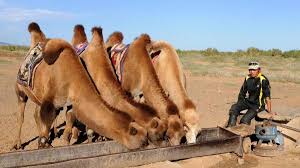
waterforcamels

Angela, who writes the blog waterforcamels, nominated me for a Liebster award. While I don’t participate in these awards by passing them on and nominating others, I wanted to respond to her thoughtful questions. I think it is always interesting to learn more about someone you read, so here goes.

“Who was an early influencer in your life?” My next door neighbor Grace  introduced me to hospitality and sewing. Both have been important in my life.

“How did you realize you wanted to become a writer?” Clarissa Pinkola Estes says it best when she says, “We do not become writers. We came as such. We are. Some of us are still catching up to what we are.”

“Do you prefer writing poetry or prose?” I seem to alternate. While I thought this blog would have a lot of poetry, at the moment it is pretty prose heavy.

“Who is your favorite poet?” Too many to choose. Perhaps today Adrienne Rich. Tomorrow maybe Robert Frost. Tuesday T.S. Eliot.

“What is the hardest barrier for you to overcome in order to write your blog?” Boundaries about what I should include and what is either too private, involves someone else, or is too unnecessarily upsetting.

“What current social crisis is near to your heart?” General ignorance and a willingness to ignore truth. Today probably the truth of racial injustice and its history in this country.

“What would you like to be remembered for most when you are gone?” An open, loving, listening ear and heart.

“If you could have dinner with anyone who would it be and why?” Pope Francis. I don’t speak Italian or Spanish, but I would like to pray with him. And then laugh.

“What is your kryptonite food?” Cookie dough ice cream.

“What is your birth order?” First. Obviously.

“Why did you start your blog?” I was tired of talking to myself.

Thanks Angela. That was fun.


“Raw? Water?”

8C2D4D7A-8288-4E7E-ABBD-FA86069C6F6B.jpeg

A new craze has hit California–raw water. I wish I could say that I was inventing this, but a long article in the New York Times confirms that I am not. Apparently some people have decided that the only water fit to drink comes from mountain streams, lakes, rooftops, and other places and is unfiltered, untreated and therefore “raw.”

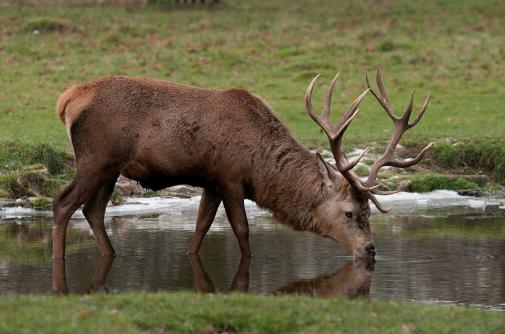
I grew up in Oregon and knew better than to drink from “clear” mountain streams. As pictured above, wildlife drink from these same water sources and are not particular about where they leave their “waste products.” The most common backpacking acquired illness–giardia–comes from such animals. A nasty bug, and no one who has ever endured it would be naive enough to tout the advantage of untreated water.

I think the supreme irony is that 900 million people on earth have to drink “raw” water because they have no access to safe water. They get to “experience” the health benefits of “raw” water, including cholera and dysentery.