“Learn By Watching”

77E2D5B9-F07B-4FBD-8B7E-D80AD6408E6D

The internet gives us a mixed bag, including benefits, conveniences, trolls, disinformation and crude images. A friend years ago told me that WWW. stood for World Wide Waste of time, and it can certainly seem like that sometimes when I have wandered away from my original intent to smile at pictures of puppies. But with the advent of YouTube it has become possible to learn how to do many things.

I have always learned best by watching someone do something, whether it is cook or sew. But there is not always someone around who knows how to do something that needs doing. And I certainly don’t want to hire someone to make or fix something I could do for myself if I had the know how. Enter YouTube. In addition to endless videos of children making faces, cats falling down and people doing inane stunts, there is a treasure trove of how to films.

Among the things we have looked to YouTube for are how to prune blueberries, how to build a small shed, how to make a solar oven, how to sous vide, and  how to repair a leaking gasket on a freezer. I must admit that the last one was something I attempted. When the repairman came after all he remarked “did you try fixing this with the YouTube video?” Apparently so do many others, making his visits more profitable than they would have been without the DIY effort. Oh well.

Here’s to the corners of the internet where people share their time and talents, first among them YouTube. Mostly the advice is sound, and it is always free.

“A Timely Read”

3664E360-66ED-4F96-8100-976B64C2029D

Lots going on in the United States at the moment as our legislators debate the behavior of the President. Emotions run high, names are called, slurs are common, all decorum seems to have disappeared in places, such as the Congress, where it is most needed. I took a break these past few days and immersed myself in the book pictured above, Gods of the Upper Air. I saw this book at the library and thankfully didn’t mistake the title for a discussion of higher deities. The title repeats a quote by Zora Neale Hurston, but it doesn’t help a reader understand the purpose of the book. For that one must read the bottom description: “How a circle of renegade anthropologists reinvented race, sex and gender in the twentieth century.”

Despite the hype of the subtitle, the book does an excellent job of presenting a group of anthropologists, including Franz Boaz, Margaret Mead, Ruth Benedict, Gregory Bateson and Zora Neale Hurston. The early part of the American twentieth century was flooded with “scientific” proof of the superiority of Northern European people over the rest of the “races” of people. The concept of race was touted as eternal, supported by such various measures as head size, height and the newly invented I.Q. test. Social eugenics promoted sterilization of the “feeble-minded” and Margaret Sanger promoted birth control for  immigrants from Southern Europe.

The anthropologists mentioned refuted all this with field studies of their own. They asserted the value of many cultures and spoke of the “mind blindness” of many American scientists who could only see hierarchy between cultures rather than the results of different people living in different places with different solutions to human problems. Living among other cultures they realized and documented that while all people attach to others and bear children, there is no agreement about such arrangements. Some valued monogamy, others didn’t. Some encouraged the artistry of men, some of women. Some had set gender ideas, some found gender more fluid.

Intellectual history at its best, Gods of the Upper Air provided me with a solid refutation of the resurgence of white nationalism now cropping up with the endorsement of one of the top White House advisors. I am grateful that there are always people willing to speak truth to power.

“I Better Hurry Up!”

This past week I saw several of these books at the library. I am not sure who the market is supposed to be for them. I try to imagine reading one of the 1000 books on an airplane going to one of the 1000 places while avoiding the airline screening of one of the 1000 movies. I contemplated tallying up how many hours would be required to finish all these lists. Clearly unlike Methuselah I don’t have that many left.

Then I saw that the 1000 places to see before you die was in a revised edition. I pondered the poor person who was methodically working her way through the list only to discover that she had visited some places in vain.

I am looking for the series for women in their 70’s. Maybe five places within driving distance to see before you die–God willing.

“Easy As Pie?”

81F3A974-10A3-4915-BA53-2FD723E5BDD9

My granddaughter was doing homework over the weekend and talking it over with me. She was exploring idioms, explaining what they meant and using each in a paragraph to show she understood how to use them. As she called out phrases to me I started to wonder about their origins and also how much sense they would make to a urban student in 2019.

The first was “don’t count your chickens before they’re hatched.” Living on a farm, a school child would have no trouble understanding that a set number of eggs didn’t guarantee the same number of baby chicks. That idiom would arise naturally from the chicken coop and be understood by anyone who heard it used in any similar situation. Now she was having to learn what it meant in order to use it. Similarly with “don’t put your eggs in one basket” a rural child would know the risk of putting all the gathered eggs in one place for fear of tripping over something in the yard and destroying them all. Now a child has to imagine a basket, the gathering of eggs and the possible peril.

Some still made instant sense to her. “Don’t bite off more than you can chew,” especially after Halloween, is easily translated to its corollary of don’t undertake a task too big to finish. In fact as she started making her science fair project she realized she needed an adult’s help. Otherwise the idiom could have been used to scold her.

Which brings me to one which has me perplexed “easy as pie.” I don’t think that this phrase is meant to be ironic, but I find nothing particularly easy as pie making. Pleasant, yes. Satisfying, certainly. Rewarding, absolutely. But easy? Not in my kitchen.


“A Partner in Pie”

24EB2B0A-4C66-4B9F-B449-FB3D55B11A3A

Thanksgiving Day will be here in less than three weeks and I am beginning to buy the ingredients for our dinner. As I have written in past years, our dinner provides each person’s favorite dish including turkey and tofurky; cranberry sauce; broccoli and green peas; and rice and potatoes. In previous years the only pie has been pumpkin since it is everyone’s favorite. Everyone but me; my favorite has always been mincemeat pie. Sadly over the many years of hosting dinners, I have never had another diner want any mincemeat pie. I stopped baking them since I can’t eat a whole pie by myself.

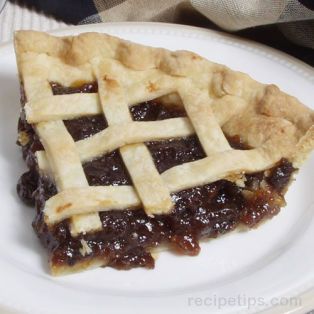
Growing up I always chose mincemeat pie and now figure it was on the table because of a tradition coming from my English great grandmother. I loved its lattice top which I learned to make by age 12. I liked its bite, provided by the brandy. It wasn’t too sweet and it made a fitting end to the turkey dinner. Some other adults ate it also. The taste was too strong for my younger siblings, though.

This year I invited some friends to come over for pie on Thanksgiving. When I asked one of them what were his favorite pies, he replied pumpkin, pecan and MINCEMEAT! I was ecstatic. A fellow mincemeat fan. Now I had a reason to make the pie I had been missing for years. The only problem I immediately encountered was the lack of mincemeat in any local grocery stores. Apparently it has fallen out of favor in general.

I actually had to resort to mail order! A jar of brandy flavored mincemeat filling should arrive on my doorstep in plenty of time to make a pie. I can’t wait.

“Calls and Waiting”

4B5D0BC3-13AA-492D-84EB-AC92EC655435

Growing up I often heard “Stay off the phone, I’m waiting for a call from…” This might be referring to my father, the doctor, the pharmacy or another adult. At any rate, the person demanding that we stay off the phone was my mother.Apparently if one of those people heard a busy signal(the sound a phone used to send to the caller if someone was talking on it) that person would NEVER CALL BACK. A life or death sense seemed implied by this information. So we stayed off the phone.

Somewhere in the last twenty years or so the telephone company came up with added features. Of course they also increased the cost of phone service. One of these features was “call waiting.” While you were talking to someone a loud buzzer would alert you that someone else was trying to reach you. Now we had an etiquette challenge. What were we supposed to do with this buzzer? An eventual solution was to state if we were waiting for a call from a spouse, a doctor or a pharmacy and “switch  over” to the other call. Otherwise it was very poor form to go see who else was calling, implying whoever it was might be more important than the present caller. It took a while and a few bruised feelings to come up with this behavior.

The latest feature is “call waiting caller id.” This allows you to hear the buzzer, check to see who else is calling(all the while trying to keep up with your present conversation) and decide what to do. Present etiquette seems to suggest it is permissible to “switch over” for a spouse, a doctor or a pharmacy. Otherwise it is polite to ignore the second call. Sadly, in the case of our phone service, the other person keeps hearing the phone ring until they hang up, never knowing why it wasn’t answered.

I guess this is an advancement in waiting for phone calls. But it sure has forced me to invent new social skills. It was easier when all I had to do was “Stay off the phone.”

“Advances in Answering Machines?”


I realize that for many even the answering machine above on the right is obsolete, replaced by systems built into cell phones. Still, we still use the machine and I have been thinking about the way it replaced and changed the practice of answering the phone and taking a message.

When I was a child, we had one phone on the first floor of a three story home. Eventually my parents added a phone in their room on the second floor. Throughout my growing up, one frequent yell was “Will someone please get the phone,” followed by an adult shouting “Will someone pick up the g…d… phone!” Eventually one of us four kids would answer the obnoxious unceasing ring.

Now the problem, which each of us had avoided by not answering the phone, arose. We were to say(though we rarely remembered) “Hello, this is the L…. house, Betsy speaking.” Then we would hear a request to speak to one of our parents. We would find a parent who would ask, “Who is it?” Running back to the phone we were to say “Who should I say is calling?”(another phrase to forget.) Then back to the parent who would replay, “Take a message.” Then back to the phone with “May I please take a message?” Then the frantic search for a pencil and paper while the caller waited. And waited. And waited.(maybe there was a pencil in the mixed-up drawer.)

Finally, pencil and paper in hand only to discover that either the caller had hung up, tired of waiting, or the caller said,”Never mind, I will call back.” The reaction when we returned without a message was to be avoided. No wonder no one would ever answer the phone!


“Hence the Name”

Saturday night we had the first “killing frost” of the fall. I thought that those of you whose weather remains among freezing would like to see the results of such a frost on my annual zinnia bed. Overnight, the plants die and the flowers wither. On the left is the July view, on the right the view this morning. I take a deep sigh and realize that winter is around the corner for sure.

My husband has swapped out all the screens for the storm windows. This is an annual November ritual which brings both the joy of the quiet and the recognition that the cold is settling in. He also puts all the wooden strips he made a few year ago to seal the edges of our old windows. They are lovely with their wood frames, but used to let quite a lot of cold air in. The air conditioners are stored until next May. We turn the furnace up in the mornings, having it turned down while we sleep. We haven’t converted to a digital one, preferring to set it ourselves.

The snowblower is ready in case the snow forecast for this Friday actually occurs. The lawnmower hasn’t been stored yet since my husband uses it to chop up leaves into mulch. But soon it will be drained of gasoline and the blades taken of to be sharpened. The afternoons are dark around 4:30 and it will be a many months before the grass will grow enough to be cut.

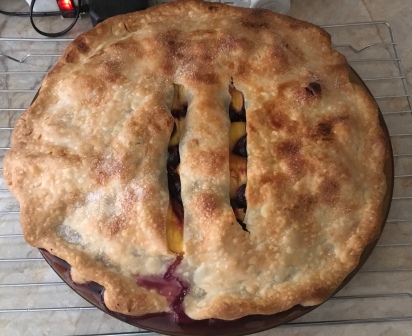
I made an apple pie to reward my master gardener, but also as a signal that fall is really here. Soup tonight and maybe a stack of good books for the long evenings to come.

“Private Chats”


I am not used to all the conversations I hear around me everywhere I go. People talk on their cell phones as they walk, while eating in a restaurant, sitting on the train, and especially waiting in the doctor’s office with its prominent “PLEASE SILENCE YOUR CELL PHONE” sign. The only time I am spared overhearing people is when they are  driving in a car along side mine. Of course then I have other concerns.

For most of my life talking on the phone was seen as a private experience. Special indoor phone booths with doors that pulled shut were scattered everywhere. I remember a bank of them at the airport. My college dorm had one such on each floor. Clearly we didn’t need our friends listening in on our chats. Outdoor phone booths provided similar privacy.

The house phone had a hand set that curved toward the mouth and was able to pick up whispered words if anyone was lurking about.(Such as a younger sibling.) Apparently today’s cell phones lack this ability. Some people shout into them. Others put the conversation on speaker phone. Now I have the privilege of hearing BOTH sides of the discussion.

I can’t fathom what has changed in the general population. But clearly all the things that we thought were private are now freely aired in public. I have learned about fights, medical conditions, misbehaving children, adultery and shoplifting. I still haven’t figured out the proper behavior when standing near such talk. Am I supposed to pretend I haven’t heard? Am I supposed to comment since the person has shared the details with me as well as the person on the other end of the phone?

Please advise.


“Nature and Hubris”

The ancient Greeks understood something about humans and named the quality “hubris.” In its simplest sense it means overwhelming self-confidence. I have been reflecting on that watching fires, floods, droughts and other natural events happening across the United States.

I grew up with tales of Bayocean, pictured on the left at its demise. In the early 1900’s a developer put a whole seaside community on a sand spit, drawing vacationers from inland Oregon to the Pacific coast. It washed away. Later, supposedly wiser developers built houses on another sand spit pictured in the center photo. As you can see, they weren’t as wise as they supposed. Finally, on the right is a current photo of a large “ocean front” beach house on the Oregon coast. I suspect they didn’t intend to be this close to the ocean.

Some facts of nature are persistent. Cliffs erode. Deserts lack water. High hot winds blow from the east to the west of California every year. The oceans are rising. Bears live in the woods. Alligators live in swamps. Nonetheless builders keep enticing people to build homes as if these realities didn’t exist. And people keep buying the homes. Houses fall into the ocean. Even getting rid of water intensive plants can’t change the fact that one lives in the desert, soon too hot to support life. Fires burn down water starved plants taking homes with them. Seaside homes regularly flood. Bears break into houses. Alligators eat little dogs.

And we act surprised. The Greeks didn’t have a monopoly on hubris.