
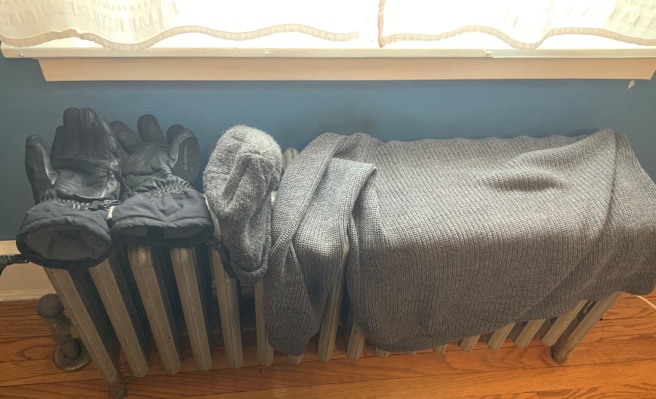
 It snowed four inches last night and my husband came in after a couple of hours of clearing snow from our home, our daughter’s and our neighbors. As usual he draped his wet clothes over radiators in the dining room and living room. The sight took me back to grade school and wet wool.
My elementary school was heated by radiators warmed by a giant furnace fed with sawdust. Long radiators spanned the length of each classroom, providing great ledges for wet clothing. We covered them with wet wool hats, wet wool mittens, wet wool gloves and wet wool jackets when we arrived at school. Today few winter clothes are made of wool, having been replaced with all sorts of polyester fleece and down alternative fillings. But any readers of my age can easily summon the very particular smell of wet wool on a radiator. Not as unpleasant as wet dog, but equally distinct.
Sawdust as fuel for a furnace was fairly normal in the 1950’s in Oregon. Timber was the biggest industry, and sawdust from the lumber mills was abundant and cheap. Our odd school janitor took care of the furnace, surfacing only to clean up when a student “lost his lunch.” One day in fourth grade in fact, Jim stood up to start the Pledge of Allegiance and promptly was sick. The janitor hurried in and sprinkled the mess with—sawdust!
Coal, sawdust, oil, and natural gas have all been used to fuel furnaces throughout my life. But radiators have been a constant. Here’s to the smells of winter, not just of Christmas cookies and pine trees. Let’s pause a minute to remember wet wool drying on a radiator.

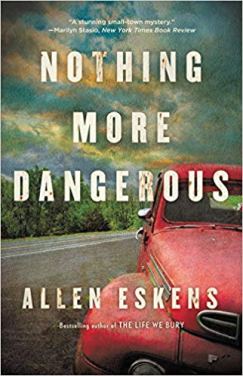 I have read each of Allen Eskens books, and I as pleased to find his newest, Nothing More Dangerous, at the library this week. The book makes a significant departure from his earlier books; it’s less a mystery and more a coming of age story with mystery elements.
 Each winter numbers of Connecticut residents head south to Florida for the winter avoiding the snow and ice. On the other coast Oregon residents flee to Arizona for the winter to get out of the relentless dark cold rain. Each group is known as “snowbirds.” Here we are visited by snowbirds of a different sort. In the last couple of weeks one of my favorite birds, the dark-eyed juncos, arrived for the winter. Apparently we are enough warmer than the Arctic to entice them south. They don’t like to pose for photographs, but I managed to catch one in the middle of picking through the discarded seeds from the feeders. Mourning doves and juncos love to eat on the ground, and the sparrows and finches leave plenty of uneaten bits for them.



 Saved By Words