“Confusing Word Pairs(or is it pears?)”

C70ADDC9-1E84-4E58-AB9B-66A226E45ED4

Writing my post yesterday I realized that I was confused between the words “flaunt” and “flout.” It doesn’t make much difference when speaking because the words sound so similar. I hadn’t really taken time since preparing for the SAT tests in 1964 to tell the two words apart. That was the last time I had to “flaunt” my vocabulary skills. But since I was posting on line, and since I have mentioned that I am a retired English professor, I thought I better get it right.

It made me think about all the words that confuse both me and others. “Capital” and “capitol” have been my undoing on numerous occasions. Then there is “its” and “it’s” which never confused me but seemed to be the bane of my students no matter how often I tried to explain which was which. They also regularly mixed “their,” “there,” and “they’re.” Lest you excuse their mistakes as coming from learning English as a second language, I need to stress that these students all had English as their first tongue.

I have given up on the subtle difference between “aver” and “avow,” and look for synonyms when either might do. “Accept” and “except” seem pretty distinct to me, but others mix them up sometimes.  But “affect” and “effect” can still throw me off if I am not vigilant. “Complement” is so often spelled “compliment” in print that I suspect the two spellings may be on their way to merger.

“Who’s” to blame for all this confusion? It depends on “whose” etymology (not entomology) you consult.

“Oak Park Neighbors”

E8D2E342-51A8-48F3-9DF4-968626734F51

While reading my latest biography, this one on Frank Lloyd Wright the architect, I kept seeing references to Oak Park, Illinois. Finally my brain cells woke up and I connected the book to my own genealogy studies. My maternal grandmother, the little girl on the left of the photo above, was born and grew up in Oak Park. She was one of four little girls and lived, I knew, on North Grove Avenue in Oak Park. Her dad was an attorney in Chicago, and Oak Park was a lovely suburb.

I looked up Wright’s house on Google Maps and learned that it was two blocks from Grannie’s. She was born in 1890, so she would have been the age of his children. She also lived a few blocks from the woman, Mrs. Cheney, that Wright ran off with, leaving his wife and five children. Apparently, before they decamped, they rode around Oak Park, a scandalous display flouting all social norms. My grandmother would have been 13 at the time, and I can imagine her talking about the outrage with her friends.

Her house, in fact, lies within what is now the Frank Lloyd Wright Historic District, the scandal having been excused I guess. But looking at the map I also saw that Ernest Hemingway’s childhood home was on the block behind Grannie’s. Suddenly I remembered a story from years ago. She said she heard Mrs. Hemingway in the back yard yelling various boys’ names until she settled on Ernest. It seems to have been possible after all since Ernest was nine years her junior.

I wish that we had lived closer to my grandparents, but they lived 3000 miles away and we saw them rarely. I never had a chance to really gather stories from them. At my last visit, however, during the Watergate inquiry, Grannie was quick to remind me that there was nothing new about government scandals. “You wouldn’t believe the Tea Pot Dome affair!” she calmly told me. I wonder what she would make of Trump, scoundrels having been around since she was a child!


“Mine Eyes Have Seen…Less These Days”

Cataract_FeatImage_2-550x330

Many years ago my blue eyed grandmother had cataract surgery. She recounted the ordeal, including time spent in the hospital with her head surrounded by sand bags so she couldn’t turn it. Needless to say, I developed a deep seated fear of the operation.

Wednesday my eye doctor said that I have now passed the criteria for cataract surgery on my left eye. She used the “glare test” which measures how long it takes to see the eye chart after looking at a bright light. I passed with both eyes which was not good news. Basically it explains why I have stopped driving at night. But my right eye still functions well enough to wait for a procedure on it.

In April I meet with an ophthalmologist to explain and schedule the replacement of my own lens with a plastic one. My doctor keeps telling me that it is nothing like the process of fifty years ago. No matter how calmly she explains that today it is a quick operation, not requiring hospitalization or sand bags, my old anxiety has come back. I would love to hear from any reader about their experience with cataract surgery. No horror stories please. I have enough of them floating around in my mind already. Thanks.

“Snowflakes?”

1A5F9B4D-614E-4485-B41B-975EE4FAC53F

I had certainly been familiar with “flakes,” people who let me down, who didn’t show up for a repair when they said they would, people who neglected to return books I had lent them, and ones who ignored social niceties. But recently, having heard people called “snowflakes,” I started to wonder what the name meant.

At first I figured that snowflakes are intricate and lovely, but that didn’t seem to go with the way the word was being used as a criticism. Then I thought that they melt easily and wondered if that was the quality alluded to. Finally I went to the internet and read up on the word. Sadly, I left somewhat confused.

Apparently one use of the word refers to the uniqueness of any given snowflake. A child can be seen by parents as incredibly special, one of a kind, and treated as royalty. Thus a spoiled child can grow into an entitled adult.

Another use seems to refer to the fragility of a snowflake. In this instance it is used in a derogatory fashion about young adults who are easily offended or triggered or demanding special treatment.

I think that if a word is this confusing perhaps people my age should avoid using it. As my grandson so pointedly told me last week “You are not up on modern culture, are you?” No, I’m not. Although I can make frequent use of 60’s slang, for me “snowflakes” will continue to refer to the stuff falling from the sky.

“Emotions and Issues”

4EA47F75-1FAD-4B9A-AD1C-C77375D04A88

Pictured above are some of the people hoping to gain the Democratic Party nomination for the Presidential election in November 2020. Primary elections throughout the country, followed by a national Democratic convention beginning July 13 in Wisconsin, will determine which of them actually runs against the Republican candidate. Presumably that will be Donald Trump again, but who really knows.

I read two national newspapers every day, The New York Times and the Washington Post. Each one has comprehensive coverage of the various campaigns and reserves its own positions for the editorial page. Despite being maligned as “fake news,” each adheres to what I have known throughout my life as journalistic standards. They are a refreshing change from cable news programs which are designed to entertain as much as to inform.

I have always tried to keep informed on the candidates and the issues. As a lifelong Democrat, I have much to consider. I thought I was veering towards one particular candidate. But the Washington Post ran an interesting quiz yesterday with ten questions about where I stood on issues ranging from health care to trade agreements. After answering the queries, the paper told me which candidates must closely matched my views.

And it turns out that I, like so many other Americans, had been choosing with my emotions not my positions. I have a near match with two candidates and am far removed from a couple I was leaning towards. In our very heated and partisan political scene, I had been swept along with image, photo ops and slogans. I owe it to myself and to my citizenship to pay more attention to what really matters. The issues, not the personalities.


“These Rooms”

25B70469-C32C-44BF-9C47-1BDB5232CC29

Yesterday at church I sat behind a woman who doesn’t have a home. For a while she lived in a shelter, but she told me that she was now sleeping outdoors. I know her name and her age–early 60’s–and that she is clearly an addict. She was twitchy and shaking in the pew as Mass went on. My compassion for her was deep, but I thought about what I had learned in what those who know call “these rooms.”

Anonymous programs exist to provide people a chance to share experience, strength and hope with others. Some of these are for people who live with addicts, some for addicts themselves. I have spent hundreds of hours in such places processing and learning about the addicts I grew up among. Slogans are a key part of these rooms, and one in particular came to me as I sat behind and prayed for her. “You need to accept life on life’s terms.” It’s a counter message to the “visualize and it will come to be” so prevalent in much of the culture.

I had to accept that she was self destructing. I had to accept that her mind was consumed with needing a fix. I was careful to take my phone with me when I went up for Communion. Did that mean I didn’t trust her? Yes, it did. I care about her and I wish the best for her, but part of life on life’s terms is that in her need for a fix she might have seen my phone and taken it. Not because I wasn’t kind to her. Not because I don’t call her by her name(which I do.) No because she is an addict, kicked out of a shelter and not asking me for help beyond money. Our priest has asked us not to hand out money directly but put it into the poor box. He knows all these street people and can discern actual need.

It is extremely painful to watch people self-destruct. The only thing more painful is to mistakenly believe that I have magical powers to cure them. I didn’t have them as a kid and I don’t have them now. I learned that in “these rooms.” I am forever grateful.

“Why Read Biography?”

When I was in grade school we had to write reports on books with various topics and styles each year. Teachers were trying to make sure we didn’t stick to our preferred genres, but ventured out into other types of reading. I loved fiction and would have happily read only that, but I dutifully read from the list of other kinds of books each year. As a result, I read a biography each year as a kid. Otherwise I don’t think I would have been interested. After that required reading, I rarely ever picked up, much less read a biography.

Typical of what I read was a volume of the Landmark History Series, a story of Molly Pitcher, brave Revolutionary War heroine. (I just read about her and learned there was no such person!) Biographies for kids were, I think, meant to inspire us in the 1950’s to pursue patriotic, heroic, brave and outstanding lives. They didn’t present a rounded picture of anyone, and they seemed more propaganda than history. I made the mistake of never considering that adult biographies might be different, especially ones written in the last 40 years.

I read many autobiographies and memoirs throughout my adult years. At least they were first hand accounts, however skewed through the lens of the writer. But recently I noticed that I have read three lengthy biographies this year, the ones pictured above. What changed? I have become old and am intrigued with the long arc of another person’s life. I no longer demand simplistic accounts of people who have made a mark on their worlds. Instead I crave the complex reality of a long life with its failures and successes. A good biographer, working with countless primary sources, attempts to present such a story.

To all my friends who asked me over the years why I didn’t read biographies, this post stands as an answer. You were right. They are fascinating and I am trying to catch up with all of you. 600 pages at a time!

“Learn By Watching”

77E2D5B9-F07B-4FBD-8B7E-D80AD6408E6D

The internet gives us a mixed bag, including benefits, conveniences, trolls, disinformation and crude images. A friend years ago told me that WWW. stood for World Wide Waste of time, and it can certainly seem like that sometimes when I have wandered away from my original intent to smile at pictures of puppies. But with the advent of YouTube it has become possible to learn how to do many things.

I have always learned best by watching someone do something, whether it is cook or sew. But there is not always someone around who knows how to do something that needs doing. And I certainly don’t want to hire someone to make or fix something I could do for myself if I had the know how. Enter YouTube. In addition to endless videos of children making faces, cats falling down and people doing inane stunts, there is a treasure trove of how to films.

Among the things we have looked to YouTube for are how to prune blueberries, how to build a small shed, how to make a solar oven, how to sous vide, and  how to repair a leaking gasket on a freezer. I must admit that the last one was something I attempted. When the repairman came after all he remarked “did you try fixing this with the YouTube video?” Apparently so do many others, making his visits more profitable than they would have been without the DIY effort. Oh well.

Here’s to the corners of the internet where people share their time and talents, first among them YouTube. Mostly the advice is sound, and it is always free.

“A Timely Read”

3664E360-66ED-4F96-8100-976B64C2029D

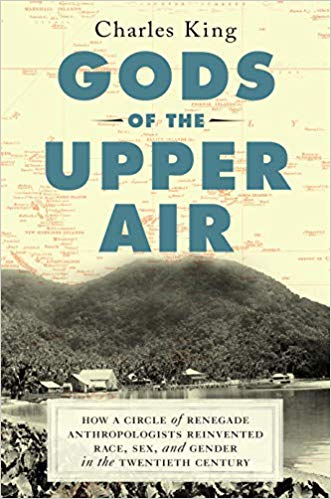
Lots going on in the United States at the moment as our legislators debate the behavior of the President. Emotions run high, names are called, slurs are common, all decorum seems to have disappeared in places, such as the Congress, where it is most needed. I took a break these past few days and immersed myself in the book pictured above, Gods of the Upper Air. I saw this book at the library and thankfully didn’t mistake the title for a discussion of higher deities. The title repeats a quote by Zora Neale Hurston, but it doesn’t help a reader understand the purpose of the book. For that one must read the bottom description: “How a circle of renegade anthropologists reinvented race, sex and gender in the twentieth century.”

Despite the hype of the subtitle, the book does an excellent job of presenting a group of anthropologists, including Franz Boaz, Margaret Mead, Ruth Benedict, Gregory Bateson and Zora Neale Hurston. The early part of the American twentieth century was flooded with “scientific” proof of the superiority of Northern European people over the rest of the “races” of people. The concept of race was touted as eternal, supported by such various measures as head size, height and the newly invented I.Q. test. Social eugenics promoted sterilization of the “feeble-minded” and Margaret Sanger promoted birth control for  immigrants from Southern Europe.

The anthropologists mentioned refuted all this with field studies of their own. They asserted the value of many cultures and spoke of the “mind blindness” of many American scientists who could only see hierarchy between cultures rather than the results of different people living in different places with different solutions to human problems. Living among other cultures they realized and documented that while all people attach to others and bear children, there is no agreement about such arrangements. Some valued monogamy, others didn’t. Some encouraged the artistry of men, some of women. Some had set gender ideas, some found gender more fluid.

Intellectual history at its best, Gods of the Upper Air provided me with a solid refutation of the resurgence of white nationalism now cropping up with the endorsement of one of the top White House advisors. I am grateful that there are always people willing to speak truth to power.

“I Better Hurry Up!”

This past week I saw several of these books at the library. I am not sure who the market is supposed to be for them. I try to imagine reading one of the 1000 books on an airplane going to one of the 1000 places while avoiding the airline screening of one of the 1000 movies. I contemplated tallying up how many hours would be required to finish all these lists. Clearly unlike Methuselah I don’t have that many left.

Then I saw that the 1000 places to see before you die was in a revised edition. I pondered the poor person who was methodically working her way through the list only to discover that she had visited some places in vain.

I am looking for the series for women in their 70’s. Maybe five places within driving distance to see before you die–God willing.