“Easy As Pie?”

81F3A974-10A3-4915-BA53-2FD723E5BDD9

My granddaughter was doing homework over the weekend and talking it over with me. She was exploring idioms, explaining what they meant and using each in a paragraph to show she understood how to use them. As she called out phrases to me I started to wonder about their origins and also how much sense they would make to a urban student in 2019.

The first was “don’t count your chickens before they’re hatched.” Living on a farm, a school child would have no trouble understanding that a set number of eggs didn’t guarantee the same number of baby chicks. That idiom would arise naturally from the chicken coop and be understood by anyone who heard it used in any similar situation. Now she was having to learn what it meant in order to use it. Similarly with “don’t put your eggs in one basket” a rural child would know the risk of putting all the gathered eggs in one place for fear of tripping over something in the yard and destroying them all. Now a child has to imagine a basket, the gathering of eggs and the possible peril.

Some still made instant sense to her. “Don’t bite off more than you can chew,” especially after Halloween, is easily translated to its corollary of don’t undertake a task too big to finish. In fact as she started making her science fair project she realized she needed an adult’s help. Otherwise the idiom could have been used to scold her.

Which brings me to one which has me perplexed “easy as pie.” I don’t think that this phrase is meant to be ironic, but I find nothing particularly easy as pie making. Pleasant, yes. Satisfying, certainly. Rewarding, absolutely. But easy? Not in my kitchen.
 

“A Partner in Pie”

24EB2B0A-4C66-4B9F-B449-FB3D55B11A3A

Thanksgiving Day will be here in less than three weeks and I am beginning to buy the ingredients for our dinner. As I have written in past years, our dinner provides each person’s favorite dish including turkey and tofurky; cranberry sauce; broccoli and green peas; and rice and potatoes. In previous years the only pie has been pumpkin since it is everyone’s favorite. Everyone but me; my favorite has always been mincemeat pie. Sadly over the many years of hosting dinners, I have never had another diner want any mincemeat pie. I stopped baking them since I can’t eat a whole pie by myself.

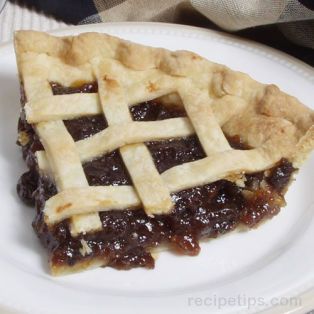
Growing up I always chose mincemeat pie and now figure it was on the table because of a tradition coming from my English great grandmother. I loved its lattice top which I learned to make by age 12. I liked its bite, provided by the brandy. It wasn’t too sweet and it made a fitting end to the turkey dinner. Some other adults ate it also. The taste was too strong for my younger siblings, though.

This year I invited some friends to come over for pie on Thanksgiving. When I asked one of them what were his favorite pies, he replied pumpkin, pecan and MINCEMEAT! I was ecstatic. A fellow mincemeat fan. Now I had a reason to make the pie I had been missing for years. The only problem I immediately encountered was the lack of mincemeat in any local grocery stores. Apparently it has fallen out of favor in general.

I actually had to resort to mail order! A jar of brandy flavored mincemeat filling should arrive on my doorstep in plenty of time to make a pie. I can’t wait.

“Calls and Waiting”

4B5D0BC3-13AA-492D-84EB-AC92EC655435

Growing up I often heard “Stay off the phone, I’m waiting for a call from…” This might be referring to my father, the doctor, the pharmacy or another adult. At any rate, the person demanding that we stay off the phone was my mother.Apparently if one of those people heard a busy signal(the sound a phone used to send to the caller if someone was talking on it) that person would NEVER CALL BACK. A life or death sense seemed implied by this information. So we stayed off the phone.

Somewhere in the last twenty years or so the telephone company came up with added features. Of course they also increased the cost of phone service. One of these features was “call waiting.” While you were talking to someone a loud buzzer would alert you that someone else was trying to reach you. Now we had an etiquette challenge. What were we supposed to do with this buzzer? An eventual solution was to state if we were waiting for a call from a spouse, a doctor or a pharmacy and “switch  over” to the other call. Otherwise it was very poor form to go see who else was calling, implying whoever it was might be more important than the present caller. It took a while and a few bruised feelings to come up with this behavior.

The latest feature is “call waiting caller id.” This allows you to hear the buzzer, check to see who else is calling(all the while trying to keep up with your present conversation) and decide what to do. Present etiquette seems to suggest it is permissible to “switch over” for a spouse, a doctor or a pharmacy. Otherwise it is polite to ignore the second call. Sadly, in the case of our phone service, the other person keeps hearing the phone ring until they hang up, never knowing why it wasn’t answered.

I guess this is an advancement in waiting for phone calls. But it sure has forced me to invent new social skills. It was easier when all I had to do was “Stay off the phone.”

“Advances in Answering Machines?”


I realize that for many even the answering machine above on the right is obsolete, replaced by systems built into cell phones. Still, we still use the machine and I have been thinking about the way it replaced and changed the practice of answering the phone and taking a message.

When I was a child, we had one phone on the first floor of a three story home. Eventually my parents added a phone in their room on the second floor. Throughout my growing up, one frequent yell was “Will someone please get the phone,” followed by an adult shouting “Will someone pick up the g…d… phone!” Eventually one of us four kids would answer the obnoxious unceasing ring.

Now the problem, which each of us had avoided by not answering the phone, arose. We were to say(though we rarely remembered) “Hello, this is the L…. house, Betsy speaking.” Then we would hear a request to speak to one of our parents. We would find a parent who would ask, “Who is it?” Running back to the phone we were to say “Who should I say is calling?”(another phrase to forget.) Then back to the parent who would replay, “Take a message.” Then back to the phone with “May I please take a message?” Then the frantic search for a pencil and paper while the caller waited. And waited. And waited.(maybe there was a pencil in the mixed-up drawer.)

Finally, pencil and paper in hand only to discover that either the caller had hung up, tired of waiting, or the caller said,”Never mind, I will call back.” The reaction when we returned without a message was to be avoided. No wonder no one would ever answer the phone!


“Hence the Name”

Saturday night we had the first “killing frost” of the fall. I thought that those of you whose weather remains among freezing would like to see the results of such a frost on my annual zinnia bed. Overnight, the plants die and the flowers wither. On the left is the July view, on the right the view this morning. I take a deep sigh and realize that winter is around the corner for sure.

My husband has swapped out all the screens for the storm windows. This is an annual November ritual which brings both the joy of the quiet and the recognition that the cold is settling in. He also puts all the wooden strips he made a few year ago to seal the edges of our old windows. They are lovely with their wood frames, but used to let quite a lot of cold air in. The air conditioners are stored until next May. We turn the furnace up in the mornings, having it turned down while we sleep. We haven’t converted to a digital one, preferring to set it ourselves.

The snowblower is ready in case the snow forecast for this Friday actually occurs. The lawnmower hasn’t been stored yet since my husband uses it to chop up leaves into mulch. But soon it will be drained of gasoline and the blades taken of to be sharpened. The afternoons are dark around 4:30 and it will be a many months before the grass will grow enough to be cut.

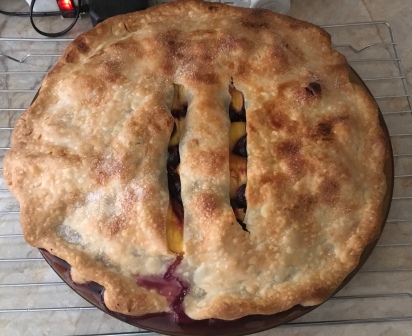
I made an apple pie to reward my master gardener, but also as a signal that fall is really here. Soup tonight and maybe a stack of good books for the long evenings to come.

“Private Chats”


I am not used to all the conversations I hear around me everywhere I go. People talk on their cell phones as they walk, while eating in a restaurant, sitting on the train, and especially waiting in the doctor’s office with its prominent “PLEASE SILENCE YOUR CELL PHONE” sign. The only time I am spared overhearing people is when they are  driving in a car along side mine. Of course then I have other concerns.

For most of my life talking on the phone was seen as a private experience. Special indoor phone booths with doors that pulled shut were scattered everywhere. I remember a bank of them at the airport. My college dorm had one such on each floor. Clearly we didn’t need our friends listening in on our chats. Outdoor phone booths provided similar privacy.

The house phone had a hand set that curved toward the mouth and was able to pick up whispered words if anyone was lurking about.(Such as a younger sibling.) Apparently today’s cell phones lack this ability. Some people shout into them. Others put the conversation on speaker phone. Now I have the privilege of hearing BOTH sides of the discussion.

I can’t fathom what has changed in the general population. But clearly all the things that we thought were private are now freely aired in public. I have learned about fights, medical conditions, misbehaving children, adultery and shoplifting. I still haven’t figured out the proper behavior when standing near such talk. Am I supposed to pretend I haven’t heard? Am I supposed to comment since the person has shared the details with me as well as the person on the other end of the phone?

Please advise.


“Nature and Hubris”

The ancient Greeks understood something about humans and named the quality “hubris.” In its simplest sense it means overwhelming self-confidence. I have been reflecting on that watching fires, floods, droughts and other natural events happening across the United States.

I grew up with tales of Bayocean, pictured on the left at its demise. In the early 1900’s a developer put a whole seaside community on a sand spit, drawing vacationers from inland Oregon to the Pacific coast. It washed away. Later, supposedly wiser developers built houses on another sand spit pictured in the center photo. As you can see, they weren’t as wise as they supposed. Finally, on the right is a current photo of a large “ocean front” beach house on the Oregon coast. I suspect they didn’t intend to be this close to the ocean.

Some facts of nature are persistent. Cliffs erode. Deserts lack water. High hot winds blow from the east to the west of California every year. The oceans are rising. Bears live in the woods. Alligators live in swamps. Nonetheless builders keep enticing people to build homes as if these realities didn’t exist. And people keep buying the homes. Houses fall into the ocean. Even getting rid of water intensive plants can’t change the fact that one lives in the desert, soon too hot to support life. Fires burn down water starved plants taking homes with them. Seaside homes regularly flood. Bears break into houses. Alligators eat little dogs.

And we act surprised. The Greeks didn’t have a monopoly on hubris.


“Yikes! T.M.I.”

FB30F89E-A26A-4C2A-9E7F-4DB17FFB8C85

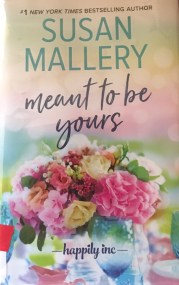
I read widely, including American history and literary fiction. But I also enjoy quick “beach reads,” books with covers like the one above. The photo usually has beach chairs, beaches, flowers or little cottages pictured. I can be sure to read a formulaic story about a man and a woman with various barriers keeping them apart, usually failed earlier relationships. In the end, or in later books in a series, I can count on a peaceful resolution.I picked up the book pictured above which displayed every indication of being such a book. Sometimes these quick romantic comedies help me fall peacefully asleep. (American history can put me to sleep also. That’s why I read it sitting up!)

When my daughters were teenagers I learned the phrase “TMI” or too much information. Of course the phrase was tossed around freely when I tried to relate my teenage angst to theirs. But the phrase came roaring back to me a few chapters into Mallery’s book. Suddenly I was being confronted with very specific, very graphic details of the man and woman getting together. Yikes! TMI! Why on earth was this included in this book? Did some editor think this would attract more readers? If so, readers looking for these details would be unlikely to choose a book with the flowery cover.

I am well aware of the specifics of physical connection.(I am trying to avoid using any words which would be searchable and attract readers looking for such topics.) I have never wanted to either read about other peoples’ behavior or witness it in a movie. My imagination and memories far surpass watching or reading about others.

I guess I need a rating symbol for my beach reads from now on.


“October Swan Song”

F9E501CD-1F72-4C86-BD73-80DA494CADBC

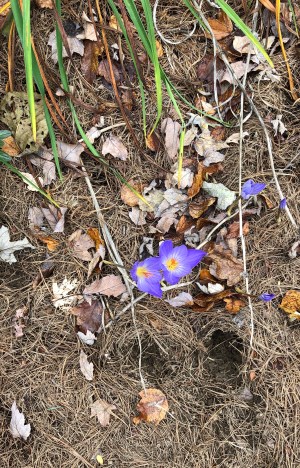
My husband planted some fall crocus bulbs, and they bloomed this week. I love the contrast they make with the fallen leaves, the pine straw and the fading stalks of the day lilies. In the foreground of the photo you can see two little holes in the pine straw. These were made by squirrels who went around after he planted bulbs, dug them up and ate them. These bulbs were reputed to be squirrel resistant, but no one remembered to alert the squirrels.

The leaves are mostly down now and the town is ready for its annual leaf collection. Any leaves piled on the curb are sucked up by the town’s large vacuum hoses and taken to the dump where they are made into compost. My husband embarks on his annual leaf collection also. We have very few leaves of our own, so he takes ones from the neighbors to chop up and use as mulch. His steadfast habit of leaf chopping accounts for the rich soil which  produces my splendid annuals. The pine straw he brings home from the neighborhood leaches into the soil around the azaleas bushes, enabling them to thrive.

I have stocked up on candy ready for the parade of kids likely to come to our door for trick-or-treating on Halloween night. I enjoy the costumes on the little ones and their delight of taking a piece of candy. They unfailingly say thank you, often on their own or after a gentle parental reminder.

Saturday night we return to standard time. It will be dark at 4:30 and my husband will reluctantly head into the house to read and plan for next year’s garden. The year turns cold and dark for a while. But it is spring somewhere. Probably where some of you live. Enjoy the increasing daylight!

“Finally Settled”

tuna

Recently I received a postcard in the mail worth “$5.03 towards the purchase of any StarKist product.” Here that is the equivalent of about three and a half tins of canned tuna fish such as pictured above. I couldn’t remember why I was sent this coupon, so I looked up the lawsuit that was being settled in this manner.

A number of years ago, some consumers sued StarKist accusing them of putting less than the stated weight of tuna in each can. I must admit it had never occurred to me to study the contents of the tin, so rushed was I to add mayonnaise and make a sandwich. But apparently someone with more free time had determined a consistent shortage of fish. When the cheated consumer went to a law firm, the lawyers must have quickly realized they had a real “catch” on their hands. After all, many Americans eat StarKist and most likely had also been shortchanged. Class action lawsuit in the making thought the legal team.

You may have seen television ads urging you to contact a law firm if you have used some medicine or had some surgical procedure or worked with asbestos. They want you to join in a class action lawsuit because “millions and millions of dollars have been set aside to reimburse people.” In the StarKist case, twelve million dollars was settled upon. Four million of this went to the legal team. The other eight million was divided among everyone who had filled out a claim form on line that they had bought StarKist. I must have filed a claim that way, “lured” by the promise of big money.

$5.03. Not bad for a grievance I didn’t even know I had.