“Room For All, Money for None!”

applevalley

So we needed a home on land and we had very little money. We asked a real estate agent to find us a place in Scappoose(we had gotten fond of the rural life) that was under $20,000. Even though this was 1975, that was still very little money to use to buy a house, but it was all we could afford. We didn’t want to live in a trailer, just a house.

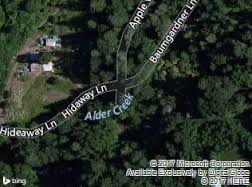
Sadly, not completely to my surprise, the house we bought is no longer standing. The best I can do is to give you a picture of the forest that surrounded us and the road and creek we lived next to. The house was on Apple Valley Road and along Alder Creek. Mr. Baumgardner owned the farm at the top of the road named for him.

The house had been assembled from pieces of other old houses that the owner’s grandfather had cobbled together. They had built a new house for their family on the property next door, and were selling the old house with five acres for $19,000. The couple was our age and had a child the age of our now ambulatory daughter. We were somehow actually able to obtain a mortgage for the property and moved in. My father promptly sold the houseboat to a childless couple.

We moved ourselves that spring of 1976 into our new home and began to learn many of the reasons it had sold for $19,000. But we were young, new parents, and now had a home of our own. The  creek  was too far away from the house for our daughter to stumble in easily. The woods were “lovely dark and deep,”(Robert Frost) and we were blessed to have them all around us. Most of the area for miles was owned by a timber company and was uninhabited. The nights were dark, the stars were bright, and we were content.
 

“And Baby Makes Three”

spl_32_20170615133710_3

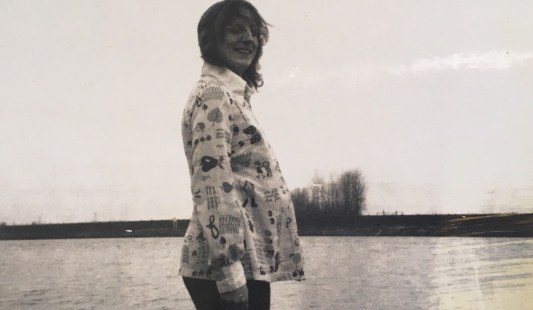
Houseboat living was indeed idyllic. My obstetrician had warned me that it might take me a while to become pregnant. He was wrong. Soon we were expecting a baby in the spring of 1975 and we were, as you know, living on a houseboat. As in, surrounded by water. Deep water. Water with a current.

No children lived at our moorage. We talked with the Browns, owners, and asked them what they knew about raising children on houseboats. I should add that ours was a one floor house with a loft bedroom, a combined living dining room, a kitchen at one end of said combined room and a bathroom. Even not surrounded by water, this was going to be a tight squeeze.

The Browns said that had seen kids raised on houseboats and that kids ALWAYS fell in, no matter how vigilant the parents. They said we had two choices; leave a life jacket on the child at all times or tie a rope around the child to haul her out when she inevitably fell in. We gave it about 15 seconds thought and realized that we were going to have to move to land. We figured we could make it as long as our baby wasn’t ambulatory, but after that our rocking life was over. Pun intended.

“Sitting on the Dock…”

crawdad

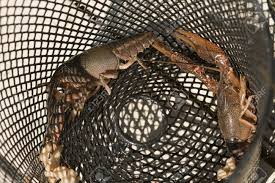
Needless to say, living on the houseboat made fishing very easy. There was a variety of species in the channel, including very large carp. Carp are bottom feeders and are pretty unappetizing. However, they make terrific crawdad bait. We had a crawdad trap that we would bait with a carp and simply drop over the side of the houseboat. After a couple of days, we would haul up a trap full of those ugly crawling bugs, boil them and devour them. We could just toss the shells overboard when we were done.

Salmon ran through in the spring, and my husband was able to catch one off the little salvaged dock we had attached to the front deck of the houseboat. He also caught trout, catfish, crappies and bass, though the warmer water fish were more plentiful across the channel on Sauvie Island.

Friends who lived on the main arm of the Columbia River had a completely illegal set line and came over once with a sturgeon which they cooked for us. The best sturgeon hole was next to the newly built nuclear power plant, and people were pretty dubious about fishing there.

We lived near Steinfeld’s, a pickle and sauerkraut canning operation. On a late summer night we would sit out on our deck eating fresh corn, drinking beer, and cracking crawdads, surrounded by an overwhelming smell of fermenting crops. Such was the houseboat life.


“Getting My Sea Legs”

IMG_0132

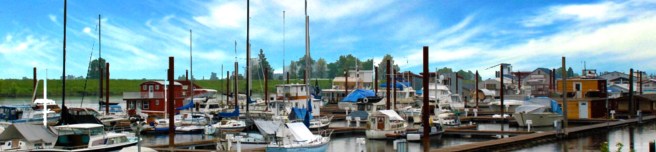
This view of our moorage from the dike side shows you the channel of water between us and Sauvie Island in the background. The main arm of the Columbia River ran on the other side of Sauvie Island, and that was where the majority of boat traveled. Our little back water was ideal for canoeing and little outboard motor boats, one of which we borrowed from my brother in law.

The first time I stepped on our newly finished houseboat and felt the movement under me, I panicked. What if I got seasick? I had never been troubled by being on boats before, but I was still anxious. It turns out that I actually had the opposite problem. After our years on the water, I would have trouble adjusting to living on the land.

A few things took getting used to. When the house rode a little low in the water after we filled it with our furnishings, we had to have additional floats installed. A special machine came along side our house and shot huge Styrofoam barrels under the house. As they floated up, they lifted the house to a seaworthy height. We didn’t need to have our deck sloshed by every passing boat.

The other adjustment was to the rising and falling river level depending on the season and the rainfall. Our house was connected to the large posts you can see in the photo. When the water rose, our house lifted up; when it fell, we dropped. Only once did it look as if the water was rising so high that we might get unmoored. The owner fixed large cables from the moorage to the shore in case they were needed. They weren’t. However, years later in a massive flood year I watched a houseboat moorage float down the river and crash into a bridge in Portland.


“Staying Afloat”

IMG_0131.PNG

I had always wanted to live on a houseboat, and my father’s good friend had a son who had always wanted to build a houseboat. My father contracted with him to build one which he would rent out to me. The challenge was to find a moorage that had a slip available. At that time(1972) Portland had put a moratorium on new moorages and the only way to get in one was to buy a used houseboat.

I looked all around and finally found a moorage with space available on the Multnomah Channel, an arm of the Columbia River which goes around Sauvie Island north of Portland. Brown’s Landing, as it was called after its proprietor, had an active canoe business and about 20 houseboats stretched out in a line at the base of the dike protecting the farm land from flooding. The town was Scappoose, Oregon, and was about a 30 minute drive from Portland.

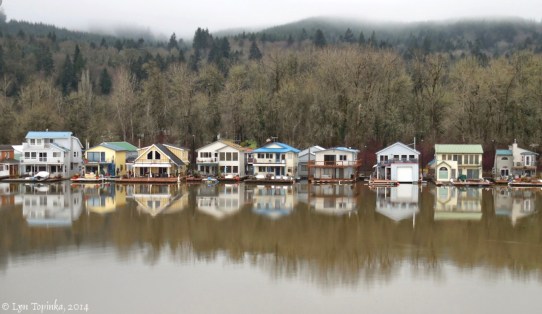
While it appears from my WEB searching that our little house no longer exists, this is an accurate view of the moorage taken from across the channel in 2014. It was as bucolic as it looks, with calm water and a backdrop of cottonwood trees. Water and sewer were supplied in pipes that ran along the walkway. The parking lot was up the hill at one end of the walkway.

How was it to live on the water? I will be telling you in the posts to come.

“More Manageable”

IMG_0130I still had the problem of more expenses than income. Fortunately the owner of the large apartment complex had also built an 8 unit in a much more peaceful neighborhood. My responsibilities were simpler: renting the other seven units, collecting the rent, phoning him with maintenance issues and generally keeping an eye on things. The units rented easily, they were new and needed little maintenance, and nothing much went on in the neighborhood. I moved into the top right unit pictured more recently in the photo.
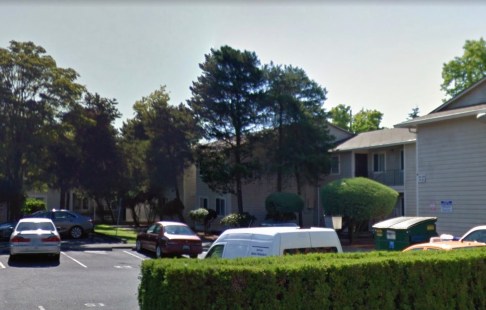
By now I had acquired a roommate, my husband to be, and it was a comfortable place to live. During the time I lived there I encountered no drama and no need to call the police. The river was an easy walk away, and a new shopping area was another few blocks away.

But I had a long standing dream of living on a houseboat. More tomorrow!

“What Me Manage?”

IMG_0128

After a year of working boring jobs, I decided to use the always available fallback plan for a female English major in 1970, go back to school for my teaching degree. I was admitted to a Master’s in Education program which began that summer. Even though my house was only $90 a month, it was too expensive on my small stipend. I accepted an offer to manage a 24 unit apartment house which had been newly opened a few blocks from my house. Then I could live there for “free.”

All I can say in my defense is that I was 23. Not to insult anyone who is 23, but I was really pretty clueless about managing a 24 unit apartment house and only thought about the free rent. This was a HUD subsidized building, new construction with income limits that were fairly easy to meet. I filled the place quickly, only requiring pay stubs to ensure eligibility. No background checks, no instant internet access to past history, no nothing! Many single mothers with small children were in most of the units, since it was designed for families.

I was horrible about hounding people for the rent. I was useless about routine maintenance. I disliked being bothered at all times of the day and night. In short, I was a terrible manager. The final straw for me, however, came when a tenant pushed another tenant through a window. The cops didn’t come when I called. The taxi I called to take the woman to the hospital refused to take her because she was bleeding. When the taxi driver called the cops, they came. I suddenly realized that I was not safe. Somehow this had  never occurred to me!

I moved out. I had lasted six months.


“A Home of My Own”

IMG_0127

After college, I returned to Portland, Oregon and got a job working for a travel agency. This job had nothing to do with my English major, but in the 1969 Portland job market I was expected to do female work, basically typing. I could not get my error-free word per minute rate high enough to qualify for most jobs. A father of an old school friend hired me to book Trailways bus tours.

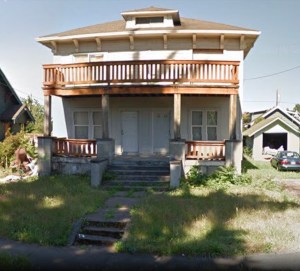
I earned $65 a week and a friend at work told me about her neighborhood’s affordable places. I was able to rent the entire first floor of this house for $90 a month including utilities except for heating oil. I bought some used furniture from a store on the corner and was set. My upstairs neighbor was very nice, but I suspect she earned her money “on her own,” since she went out in the evening dressed to the nines and had no day job.

The house had an old wringer washer in “my” basement and a clothesline in the back. I had a big kitchen and was able to keep cooking my “Italian” meals for friends.  I enjoyed my independent life with a neighborhood tavern around the corner, a grocery store near by and my own home. Finally I really felt grown up.

“Sort of Off Campus”

spl_32_20170605142324_2

The dorm was a little overwhelming, but there was an alternative called “off campus.” This really wasn’t today’s meaning of the word, but rather housing that was outside the quadrangle of the big dorms. It was a privilege, and available only by seniority. Fortunately I had friends a year ahead of me who needed a fourth to apply. So I signed on with them and we were able to get two large rooms at 12 Walker Street called Coggeshall(another old Boston name.) I shared the corner room on the second floor left front of this photo.

We could still take our meals at Cabot, which was handy for dinner, only a block and a half away. However, there was a very large kitchen with an industrial sized refrigerator which we could use to store food. So I usually had a light breakfast here. I had learned about bagels and cream cheese for the first time, and I loved a toasted one in the morning.

i lived at 12 Walker for the remaining three years of college. Junior and senior years I had a single room which was the bay window on the second floor. Literally, it was the hall and bay window with a door to close it off. My bed was in the bay window and I always loved the snug feeling, rather like being in a boat’s cabin.

The bathrooms were large and individual with the original deep claw foot tubs, great for long soaks. We were able to have individual phones, and there was no “bells” work. The place was very homelike, and I actually had a couple of dinner parties, cooking veal Parmesan that I had learned from those wonderful “kitchen ladies.” “Sort of off campus” was a perfect life for me.

“Home Cooking, Italian Style”

spl_32_20170604161518_2

Before the large college catering companies like Sage took over, individual dorms had their own kitchens and cooks. Cabot Hall had a wonderful crew of kitchen workers who prepared lunch six days a week and dinner six days a week. On Sunday we had a formal dinner at 1pm and an assortment of cheese and fruit for supper. Our kitchen also served the dorm next door, so they fed about 180 girls a day.

I had grown up on a very bland, unvaried diet. We had frozen vegetables, considered a true step up from the canned vegetables of our parents. We had hamburgers, meat loaf, fish sticks, macaroni and cheese and roast chicken, in a seemingly endless rotation. No one I knew ate much differently. But the cooks at Cabot were local and cooked food with which they were familiar, and they introduced me to manicotti, lasagna, veal Parmesan, fish on Friday, roast beef and Yorkshire pudding. I often asked the cook what the food was, much to her amusement.

On Sundays, dinner was a formal sit down meal, unlike the steam tables of other days. Different girls took turns serving, and everyone was expected to be on time. In fact, if one was late, it was necessary to apologize to the dorm parents. I often rushed to get back from church in Boston to avoid that embarrassing routine.

I have always been grateful to those warm Cabot “kitchen ladies”who truly served every meal with love and care. And I only gained the “freshman five,” not ten!