
“I Am Saved By Words!”

8FEF7D36-6A1C-42E5-912A-F44C8DF4A2C2

I titled my blog “saved by words” because I really do feel that at certain points in my life I was rescued by either things I read or things I heard. In the case of my first year in college, it was a combination of both. I registered for English 150, a survey of American poetry my first semester. It was the only elective I had, since the other three courses(we only took four at a time) were general required surveys in humanities, natural sciences and social sciences. A girl from my floor walked to the same class and we became fast friends. She remained my friend for many years.

My first experience in a large lecture hall with over a hundred students startled me. Somehow I knew so little about the university that I didn’t even realize that most of my courses would be large lecture based! But Albert Gelpi gave well constructed, fascinating talks and I was riveted.

The course began with Anne Bradstreet, a Boston Puritan writer. Her poem on the burning of her house was easy to understand. It was Gelpi’s discussion of it that grabbed my attention. He pointed out that on its surface the poem spoke of not being attached to wordly things, but in its execution it clearly lamented their loss. The idea that she could tell the truth but “tell it slant”(from Dickinson who we also studied) was exciting. I began to read more deeply and with more satisfaction.

Koestler may have put me off, but my American poetry class assured me that I was in the right place. It had “saved me.”

“Required Reading”


The summer before I went off to college, a letter came asking that I read Arthur Koestler’s recent book The Act of Creation. A long book, essentially a philosophical discourse on the root of creativity,  totally confused me. Today, looking over a description of the text, I can see why. I had no experience reading philosophy, had almost no background in abstract thinking, didn’t think of myself as a particularly creative person, and was used to sentences I could absorb with one reading. Koestler’s book and I could not find a place to connect. I went off the college concerned about what would be asked of me regarding the book.

The book was never mentioned again. To this day I have no idea what purpose was to have been served by having the entire incoming class read the volume. I know that the effect it had on me was one of total intimidation. If I couldn’t understand the first book they were asking me to read, how would I ever succeed at the University? I hope that was not the intention.

At any rate, no book during the subsequent four years of college ever confounded me the way Koestler’s book did. Thank goodness.

“Movie Night”

onthewaterfront

The next evening the introductory events continued. We had experienced the sherry in the living room with the college president. Now we were huddled in the basement, sitting on the floor in front of a portable movie screen watching “On The Waterfront,” a 1954 Brando portrayal of longshoremen on the docks of New Jersey. Involving crime, love, and a Catholic priest, it was the first time I had been introduced to the idea of “film.”

I came from Oregon where we went to the movies. We enjoyed them for the scenery, the music, the plots and the actors(especially the handsome ones.) I had no concept of “film,” much less of an intellectual discussion after viewing a “film,” such as I was expected to take part in. I had no point of connection with the story, being unfamiliar with Catholic priests(I knew none,) longshoremen(my father a marine attorney represented the shipping lines), or organized crime(I had heard of it, but that was all.) I understood that the love story wasn’t the main point, though it was the only aspect I was familiar with having seen it in “movies” for years. I was almost literally struck dumb and said nothing. Girls around me dove into the cinematography, the direction, the point of view, etc. etc. etc. Me? I went back to my room, tucked myself into that upper bunk and went to sleep.

Something told me I wasn’t in Oregon any more!

“Say What???”

33F79493-181E-4FF9-8EF6-022D6A2E975C

So many changes hit me in a short period of time after I arrived at my college home that it will take a few posts to convey the impact of that first year. I am grateful to Geoff Le Pard who blogs as TanGental for his series of posts about arriving at his university. His reminiscences awoke many of my own, long in deep storage. Our experiences were quite different, but his sense of culture shock rang a bell.

As I settled into my dorm room, after trudging up three flights of stairs and locating it on the far end of the building, I heard a loud rant coming from across the hall. It was a woman screaming the “f-word” at the top of her lungs yelling somewhat like “f” my “f”ing shoes, where the “f” are they? Today I suppose that would have no effect on an 18 year old girl. However, not only had I never heard a girl talk like that, I had never even heard an adult man use that language. The worst word I ever heard with any frequency, and that almost exclusively from men, was “damn.”

I can clearly recall walking on into my room, climbing up to my top bunk(the bottom already having been claimed by my new roommate)(without consultation–another shock) and wondering what I had just done. And whose idea was this anyway? Oh, yeah. Mine.


“An Even Bigger Pond”

E2B9CF59-F558-4FB6-BF8F-5F995DE45839

By the time I had finished high school, I had a pretty good sense of myself, my school and my city. That would all undergo an upheaval when I moved 3000 miles away for college, to a place I knew no one, to a town I had visited only once. What could have possessed me, you might ask? My sophomore year in high school we were to take a large book about colleges, review it, and pick one we would like to attend. I saw that the hardest college for a girl to be admitted was Radcliffe, so with the snarky attitude of a student rebelling at an assignment, I wrote about it. When asked to explain why, I replied “it is impossible to get into.”

Meanwhile, I made plans to attend Oberlin College in Oberlin, Ohio, the school my parents, my aunts and uncles and my cousins had all attended. I would be admitted as a “legacy” with no problem.  I had visited the place, liked it, had relatives near by, and was set to go there in the fall of 1964. But, as a continuing spite action against that stupid assignment, I also applied to Radcliffe. What was the harm?

Yikes. Radcliffe practiced “geographic distribution” in their admissions, a fact I didn’t know. They always took one girl from Oregon. Almost no girls applied from there. I was accepted. Now I had to go. No one would accept my turning down the acceptance.

With a large trunk packed, I boarded the train to Boston, a five day journey from Oregon. I arrived, tired, sweaty and dirty, to a “welcome sherry” get together with the college president in my dormitory. And, for those who don’t know, Radcliffe existed as dormitories only. I was about to start my studies at Harvard University and all my classes were to begin in two days.

“Peaceable Assembly”

4F3960B6-8E1E-4B77-B1CA-D4A11BB14528

After the United States Constitution was ratified, ten amendments, commonly called the Bill of Rights, was added. Much noise surrounds the second amendment which concerns the right to form a “well regulated militia” and bear arms. (How that has been variously interpreted is another topic.) But much more pertinent today is the First Amendment, particularly the ending phrases. Here we are guaranteed the right “peaceably to assemble” and to “petition the Government for a redress of grievances.”

Looting is of course against the law. Arson is against the law. But gathering en masse to assemble and protest is protected by the Constitution of the United States. Some people are deeply offended by gatherings of people holding views different from their own. Some leaders want to stop these gatherings from taking place. But over the years disparate groups have been protected and allowed to assemble. Today is no different.

Back to the history classroom many need to go!

(I have had to interrupt my series on massive changes for the moment. Our country suffers deeply at the moment and I need to comment. I hope to make it clear that I support law, the Constitution and freedom for all people.)

“Worth Reading”

D5182F10-FCAE-4EB6-BE3A-3B836B3696F0This is a very painful time to be a citizen of my country. For those my age it is all too reminiscent of 1968, with the fires and demonstrations. Some people went the way of violence then too, although the majority of protests were peaceful. In fact one former friend joined the Weathermen, determined to use bombing as a tactic.

I was heartened this morning to read this statement from the police department of my Connecticut town. Not all police are vicious. Not all will stand by when one of their own acts out with murderous rage.

If you are a prayerful person, please pray for peace for the United States. If you are not, please think of those of us living through this perilous time.

“Little Fish, Big Pond”

Once I became accustomed to the new grade school, I settled in and, since the school went through eighth grade, spent the rest of my elementary years there. Then it was off to the high school on the right, a large one putting together graduates from five grade schools. After finally figuring out how to navigate the small school, I now found myself bewildered by the huge new place with its endless hallways, double staircases, raucous cafeteria and loud bells to signal class periods starting and stopping. Worse yet, only four minutes were allowed between classes which were often at opposite ends of the other floor. Running was forbidden, but we really hustled.

I soon discovered that graduates from one grade school ruled the place, and I hadn’t attended that one. After realizing that social standing was impossible, I immersed myself in studies. The curriculum was challenging since there accelerated offerings in most courses. Eventually accelerated offerings would be eliminated being blamed for “shaming” less academically capable students. But it gave me a steady cohort of friends and an identity. Yes it was an identity as a “grind,” a  dateless grind at that, but I felt at home.

The best years of my life? No way. And I will always find myself bewildered by those who claim that title for high school.


“Summer In The City”

8732FB21-D2B2-4506-92B8-B8D7FFEEE85B

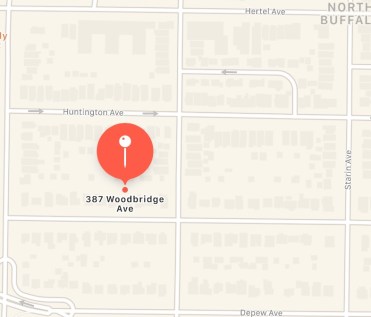
In the summer of 1958, when I was eleven, my mother, siblings and I spent two months with my grandparents. They lived in Buffalo, New York and also had a summer farm in Pike, New York. We traveled by train, arriving in Buffalo hot and tired, ready to spend time there until we all decamped to Pike. Above is a piece of the map illustrating my grandparents’ house and the adjacent streets.

We lived in a neighborhood with no sidewalks.  The area had pretensions of being in the country and forbid any commercial enterprises. To my amazement my grandparents’ house had a long sidewalk in front and sidewalks forming grids in each direction. I promptly put on my aunt’s discarded roller skates and learned how to race up and down the walks. Most wonderfully of all, the house was two blocks from Hertel Avenue. Hertel Avenue, a commercial street, offered candy and comic books. My eight year old brother and I could not believe it when the adults said we were allowed to walk up to Hertel Avenue on our own. So for our time in the city I skated around and around a four block circle and  occasionally walked up to Hertel Avenue.

The benefits of this kind of neighborhood over the one I lived in made a lasting impression on me. When I first bought a home of my own, I insisted on sidewalks and a corner store. When we moved to Connecticut, I again listed sidewalks as a non-negotiable feature. Since much of Connecticut has the same prejudice against sidewalks, this limited us somewhat. Still we found our home, sidewalks galore, with stores and shops an easy walk away. No more “planned communities” for me.


“New Everything”

I lived in the Cape house on the left from 1950 until 1955 when we moved into the large ivy covered house on the right. While I don’t remember moving into the Cape, I vividly remember the relocation when I was nearly eight. By then I had established ties with all the neighborhood kids, the neighbors, the shortcuts and my school. But my mother was expecting  her fourth child and the house had only two bedrooms and a somewhat converted attic. When the neighbor’s aunt died leaving him the large house, my parents bought it from him.

Everything was new and very disorienting. My new school rarely gained new pupils, since most families had been in the area for a long time. In fact, many of my new classmates were the younger siblings of students already well known to the teachers. It was the middle of March when I joined the second grade class of Miss Horton, and I didn’t fit into the well established pecking order of the girls.

The new house was enormous, mostly unfurnished, and very isolated on two acres. I didn’t know any neighbors nor was I familiar with the geography. Meanwhile my mother gave birth to my little sister on April 5, just two weeks after the move. As an adult I can see how difficult that was for her. As a child I just experienced intense loneliness.

Sometimes moves can go smoothly for kids. This one was a severe jolt to my understanding of the world. I had to start from scratch in a way to get to know the other kids, the school and the neighborhood. The transition was challenging to say the least. Looking back I have deep compassion for the child I was. Fortunately I lived in that house, finding my own way with friends, schools and place, until I left for college.