“Reverence or Idolatry?

E_00016A

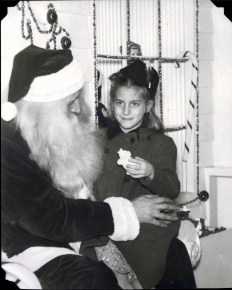
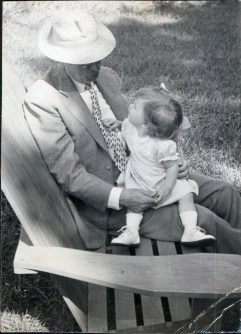
It has taken me two days to think through an understanding of reverence, a listed virtue, and distinguish it from its cousin idolatry. These two words seem to be constantly mixed up, causing undue problems between people. I think that the photo above depicts reverence from my one year old self looking at my grandfather. Of course, I wouldn’t have known that word, but I am clearly giving him deep attention with affection.

In many different parts of the world, different images and symbols are treated with reverence, an attitude of deep respect and esteem. I think that this differs from worship which  has a sense of deep devotion and often ritual observances to accompany the devotion. This continuum from reverence to worship seems to make many quick to label the devotion “idolatry,” which has a clearly derogatory meaning to it. For instance, in my Catholic faith, many revere Mary. This has caused some Protestants to say that the Catholic faith practices idolatry, worshiping Mary rather than her son Jesus. This joins a parade of ways people of different faiths deride others, often by misunderstanding their practices.

I would welcome the day that we could accept different patterns of reverence around the world without being so quick to label it idolatry. In one’s personal religion observances, one can decide who or what to worship. But may we respect that one woman’s reverence may be very different from our own. That is something that reading blogs from around the world has certainly taught me.


 

“Constancy or Inflexibility”

D1BCD744-B119-4C44-9F33-912354BDB34E

My maternal grandfather also was in the Army during World War I though he never left the United States. Here he stands in his uniform, a picture of constancy, a recognized virtue. But what distinguishes constancy from inflexibility? Why is one praised and the other criticized?

Reflecting on this pair of qualities, I decided that constancy has more to do with deep seated character rather than any particular action. A person with constancy remains predictable in her qualities such as kindness, compassion and forbearance. However, we would not expect her to always eat only turnips or only dress in purple. She could remain constant in her core but flexible in her choices. I expect her “I never would” statement might refer to never hitting her child. Meanwhile she might accept someone very different from herself when given the chance. She would be inflexible only if she said “I never would” talk to a Libertarian.

I have not heard constancy discussed much in recent years. The focus always seems to be on the new, the unique, the “cutting edge.” But what I value most in people is their steadfast character. Something we could all use a little more of in the United States at the moment!

“Patience or Resignation”

brokenhourglass2

Patience appears on many lists of virtues. I thought about the virtue of patience and the temptation of resignation when I considered the difference. Patience seems to me to have a hint of hope about it. We wait with calm and assurance when we are being patient. Perhaps the doctor is running late because she is taking extra time with the earlier patient. Perhaps the traffic is held up because a deer has been hit on the highway. We can settle into patience–with practice–when we have a reasonable expectation that eventually what we are waiting for will occur.

What about resignation?  Resignation, I think, has a sour sense to it. There seems to be some sense of victimhood. We want sympathy for how long we had to wait, believing that it shouldn’t have happened to us. But “what are you going to do?” we ask sadly. Resignation also seems tinged with anger. It signals a giving up which seems different from acceptance. Somehow life has disappointed us once again we sigh resignedly.

There is an old joke that if you pray for patience you will be sure to receive numerous opportunities to practice it. I am not going to pray for patience, but I am going to try to practice waiting with more grace than I sometimes have. I am not, despite my best hopes, the center of the world. Many times I have to wait my turn! May I do so with patience.

“100 Years Ago”

Captain Robert Kenneth Lindsay


Regimental Number: NA
Force: Army
Regiment: Canadian Army Medical Corps
Unit: No. 11 Field Ambulance

I never met my paternal grandfather since he died in 1930, but he served in the Canadian Expeditionary Forces in France in the first world war as an ambulance worker. He was present at the terrible battle at Vimy Ridge, France where over 3000 Canadian soldiers died and over 7000 were injured. I cannot imagine viewing such carnage, particularly as a medic.

Today Prime Minister Justin Trudeau of Canada was at Vimy Ridge paying homage to the soldiers of that battle.

C8B80796-9051-453F-8218-736058C4244C

Although this is Armistice Day recognizing the 100th anniversary of the peace in Europe following World War 1, it seems that war rages on in the world. May we find some way beyond yelling, shaming and killing to settle our differences.

“Forbearance or Resentment?”

C4F026

When I ran across “forbearance” in one list of virtues, I had to think about where I ever heard the word used. For years I had only heard it in terms of bank loans being cancelled. But such an old fashioned sounding word deserved deeper consideration, and I found the definition as “the quality of being patient and being able to forgive someone or control yourself in a difficult situation.” This certainly sounded like a challenging virtue.

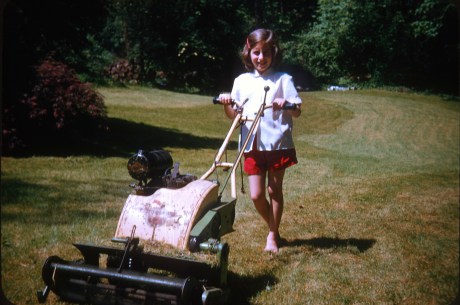
I think I find it easier to pretend to control myself in a difficult situation while seething with resentment. Being patient and being able to forgive someone in a disagreement seems more difficult. I have heard resentment described as “anger with a history,” which aptly puts words to that lingering feeling seeking revenge or retribution. I put the picture of me mowing the lawn(without shoes–a dangerous practice) since I am smiling while I was typically completely uninterested in the lawn work. In fact, I imagine I resented having been taken from my reading to help in the yard. I could have used help in understanding that it is possible to do something one resists with patience.

Having spent some time with this virtue(two days in fact) I will remain attentive to the difference between forbearance and resentment. I hope to experience more of the first and less of the second!

“Worthy of Trust or False Promises?”

l-assorted-fam_00009a.jpg

Here my grandfather has crouched down to share some reading with me. I often cite my grandfather when I write about virtues because he was one consistently trustworthy man in my childhood. He lived 3000 miles away, but he stayed in touch with letters, post cards from his travels abroad, and twice yearly long distance telephone calls. Three different summers we traveled East and I spent extended time with him and my grandmother. I could rely on his constancy and trustworthiness. He never promised what he could not follow through on. He didn’t make false promises just to cheer me up.

In Connecticut, a politician who promised the elimination of the state income tax was defeated. I think a majority of residents saw that this was a false promise, unlikely to be achieved without significant upheaval in services. Everyone would like to have no taxes, but they are our collective way of paying for shared services. By now we have become jaded by politicians promising things–peace with North Korea, peace in the Middle East, a return to 1950’s America–that are unlikely to be fulfilled. In fact we have come to distrust politicians for just such false promises.

I’m not sure that trust has to earned, as many believe, but I do believe it can be lost. I like to think that I begin with giving someone the benefit of the doubt and that my trust has to be broken. Sadly broken trust can take a long time to repair. At heart I think trustworthiness means following through on promises, not agreeing to something just to placate someone(with no intention of doing it!) and meaning what one says. I worshiped among Quakers for many years. They didn’t believe in swearing oaths. Rather they believed that they should “let your yea be yea and your nay be nay.” That seems a right path to follow.

“Hope or Wishful Thinking?”

E38BFBF0-D221-4AC6-8880-9F1DEFC8B5AF

I am pondering the virtue of hope and wondering how it is different from wishful thinking. I first remembered an old saying “if wishes were horses, beggars would ride.” That certainly suggests the futility of just wishing for something. Then sometimes denial masquerades as wishful thinking. “I’m sure he won’t use on his father’s birthday.” That kind of thinking often keeps someone from seeing and acknowledging the truth.

What then signifies hope? For Emily Dickinson “Hope is the thing with feathers–That perches in the soul–And sings the tune without the words–And never stops at all.” A small bird then nestled deep inside of someone singing without ceasing. Hope does seem intrinsic sometimes, something we are born with, an expectation that things will work out somehow. Of course many experiences can dash, squash and hamper hope. Cynicism seems a logical retreat when hopes are so often met with disappointment. But since the ancients saw hope as a virtue, I am considering the possibility that I and others can nurture it.

I’m not clear on how to feed hope when so much around me feeds despair and cynicism. Good music seems to feed the little bird of hope in me. So does attending weekly Mass. Gratitude for what is serves to remind me that past times of despair preceded present times of joy. May I continue to learn how to nurture hope and counter discouragement. May I be open to learning from others how to keep hope alive.

“Character or Facade?”

73D80416-B433-412C-BEA6-29B43AF018BB.jpeg

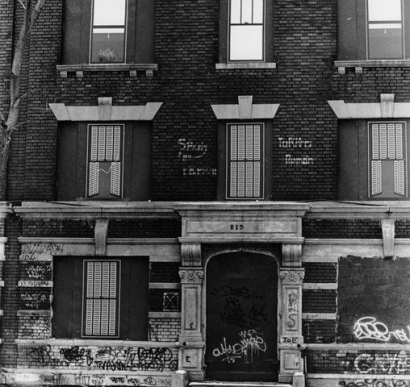
In the 1980’s New York City had many abandoned buildings, many of them next to the commuter rail line coming from the suburbs. Someone came up with the idea to put decals of curtains and blinds on the windows to seem as if they were occupied. Above you can see the semi-success of this idea. Of course these decals didn’t change anything, they just put a more attractive face on things.

When I say someone is of good character, I don’t mean that they appear attractive on the surface. If someone just looks, but isn’t, reliable I might call her a “character,” but I wouldn’t mean that they had character. Character itself seems to be rather scarce in many circles right now. Many people are concerned with their facade and not their inner person. “Selfies” represent the facade but give us no clue about the person’s character.

When I think of someone with character I imagine that they behave basically the same whether or not someone is looking on. I expect that if one of those snooping television program spied on the person, it would find no real surprises. Steadiness seems to mark someone with character. Of course, steadiness doesn’t fill cable news or grocery store tabloids. So in general we are exposed endlessly to people pretending to be someone they aren’t. I think that the inundation of news about duplicity makes us all a little jaded. It’s easy to think that no one is really who they appear to be. But cynicism doesn’t serve us well. I hope that I can continue to see and acknowledge character in people I know and observe. Decals may cover abandoned buildings, but they don’t bring about actual renewal.

“Courage or Bravado?”

1948-50s 159

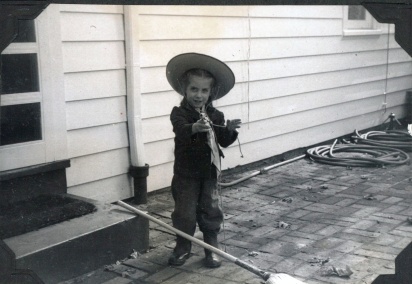
Courage stands among the list of virtues, and I paused today to reflect on it and bravado, courage’s imposter. Our airwaves are full of statements of bravado and demonstrations of cowardice. Bravado exists to inflate, courage exists to enable difficult action. Above I stand in the perfect stance of bravado, pointing my cap gun at any intruder. Since I am only four, people will pretend to cower before me. But some adults use weapons in the same way, with disastrous results. Too often they give weak adults a sense of bravery, when they only give them a way to do senseless harm.

When I was growing up, I thought that courage was something boys had a patent on. They would grow up to fight wars, climb mountains, face wild beasts and defeat evil. No one ever stressed the necessity of courage for daily life. As an adult I find many opportunities for courage, though none involving mountains or wild beasts. Mine are the quiet, uncelebrated acts, most often of speaking the truth. Boundary setting, not with a wall but with words, requires courage. Saying no to bigotry when confronted with it takes courage. Refusing to join in gossip, no matter how delicious, takes courage.

No one ever told me that fear is an active component of courage. There is an old adage “courage is fear that has said its prayers.” Moving fully into truth, whether about our past or our present takes courage. It also can make us quake in fear. Sometimes we do get backlash when we are brave. But I look at the law makers of this country afraid to challenge the President and wonder what it would take for them to act with courage. Whatever it is, I hope they find it. Otherwise bravado will continue to take center stage.

“Compassion or Pity?”

915BBD38-995F-4D1C-A33C-4C3185CBE799

Nearly every one feels protective toward a new baby, even though the newborn is completely dependent and unable to do anything for herself. At the rite of Baptism at church, every face, no matter how beaten down, lightens as the baby is processed into the sanctuary. A sense of tenderness fills the space as we all feel compassion for the tired young parents. We don’t pity them.

What makes compassion a virtue and pity something people dislike? I think compassion involves feeling with and for the other. We imagine how it might be to be that person, whether we have had the same experience or not. We are equals at heart if not in the particular instance of suffering. We know that we too have been or could be in the same situation and we care for the other.

I think pity stands apart from and looks down on one who suffers. We know that WE would not have taken it so hard. WE would be over it by now. WE would never let that happen to us. So we extend what looks like care but is accurately received by the recipient as pity. No one likes to be pitied because none of us want to be seen as less than.

Compassion joins with. Pity sits apart. I like to think about the difference in both my behavior and in peoples’ responses to my times of trial. I hope to provide compassion more often than pity.