“Louisa, Jo and Me”

2D69F68A-C00A-4299-9EE7-EE69EF9B001B
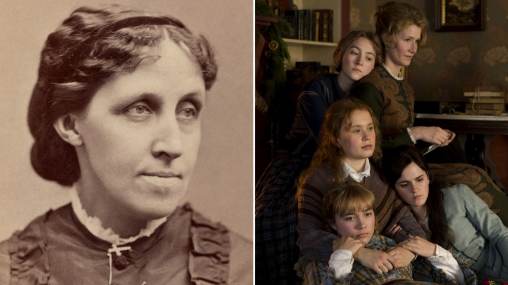
Louisa May Alcott                                       “Little Women” 2019

(If you have never read the novel Little Women or if you have read the novel but have not seen the latest film version of it and you plan to do so, skip this post.)

As a grade school girl, I devoured the novel Little Women, written in 1868 by Louisa May Alcott, a Massachusetts author. I loved many books with four children as the central characters, connecting them with the four children in my own family. In high school I visited Concord, Massachusetts and saw her home, Orchard House, where she wrote the novel. I watched both the 1949 film adaptation of the novel and the 1994 version. As an adult scholar of women’s literature, I learned a great deal about Louisa May Alcott herself. As I did so, I became aware of her need to make money by writing the novel and her preference for her other writing over this book.

Then last week I finally made it to the theater to watch the 2019 film directed by Greta Gerwig. My granddaughter, who had seen the trailer, had no interest in the remake. She told me that she disliked the way the movie seemed to go back and forth in time which she found confusing. It turns out that she was on to something.

The film somehow conflates the story line of the novel with the real life experience of Alcott as a writer. As it goes back and forth from the time the novel is ready for publication to ten years earlier in the fictional home of the girls, it makes no clear distinction between the life of Alcott and the character of Jo. Sometimes it is Alcott who is urged to make the novel have a happy ending. Sometimes it is Jo who is given a happy ending. The blurring between the novel as fiction and as autobiography confused me, even though I am clear which is which in reality.

I truly enjoyed the depiction of the novel, appreciating the distinct character of each girl. The actresses illuminated the real differences among the girls, and they demonstrated equivalent strengths and weaknesses. However, the switching back and forth clearly confused the two women sitting next to us. When a very ill Beth dies they were at sea. I heard them whispering “Did someone die?” “One of the girls I think.”

I have yet to read any reviews of the film, nor have I read any conversations with the director. I wanted to be able to form my own opinions, although my granddaughter had already commented to me. Now I am eager to read about the film. Clearly the director and producer felt the time was ripe to present the book again. I probably would have let the novel, the two earlier movie versions, and the biography of Alcott herself suffice.


 

“HUAC And the Speech Police?

5BD72398-0239-49C8-9864-2878A1C3A366

In 1964 the Senate Committee on Subversive Activities came to Portland and I, along with many others, picketed them. The photo above shows a similar protest in San Francisco. Men with cameras I assume were F.B.I. agents were snapping lots of photos, so I suppose my picture is in some government archive somewhere. What was the committee and why my objection?

This group was the offshoot of the House Unamerican Activities Committee, most famously associated with the relentless hunt for Communists or Communist “sympathizers” which operated in the 1950’s. People were under surveillance for activity considered “unAmerican,” and many times lost their jobs without due process. Reed College, in Portland, let some faculty go during that time for suspected “Red” leanings.

Just as I now strenuously object to the speech police who seem to want to suppress views not “liberal” enough to suit them, I objected then to people whose views were not “American” enough. Then a group of lawmakers determined who was or was not “American” enough. Now a movement, mainly of young adults, has decided what is “enlightened” enough. I have lived long enough to see very little difference between the two extremes.

I grew up understanding that one of the key parts of the Bill of Rights added to the United States Constitution was freedom of speech. It seems that there will always be people eager to contest the idea. And I will continue to disagree with them.

“Say What?”

266B0A6F-1F28-462E-8E42-9DC260869637

I wrote about listening the other day, and then I read in a book about aging how our brain fills in when we only catch part of a word. I found the concept intriguing, and I was then given a chance to see it in action. We went to a lovely restaurant for dinner Saturday night but were next to a very noisy bunch of young adults. The waiter was telling me about the cod special. Since I love cod, I was listening as attentively as possible as he described the dish. Then he said ” it is on a bed of corrabi.” I asked him what he had just said and he repeated “corrabi.” My brain froze. Did I really not know the name of some food after all these years? I stared at my table mates. My husband said “kohlrabi,” with a “k.” Aha. My poor mind was going off in the direction of “correlate,” “correspond,” and “corpulent.” It wasn’t going to get to “kohlrabi” if I had sat there all night!

In a similar vein, my husband yelled at me from the other room. I apparently only heard East Hartford is having a”ar,” “ing” and “an.”  I filled in the phrase making it “East Hartford is getting a marching band.” This made no sense, so I asked him why in a snow storm we were getting a marching band. No. It was “East Hartford is having a parking ban.” Now that made sense.

Kids do the same, trying to learn new words by comparing them to ones they already know. Years ago as I was talking about my forebears, our youngest piped up. “I know about the three bears, but who are the four bears?” When I discussed my Great-Uncle Jimmy, another asked, “is the other our bad Uncle Jimmy?”

As easy as it is to miss meanings, it is amazing that we communicate at all!

“Listen Up!”

yourenotlistening

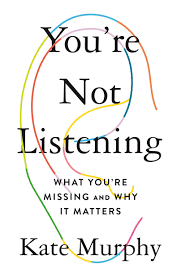
I picked this new book up at the library on a whim, not expecting to find such a thoughtful and well documented book on listening, a skill greatly lacking in much of contemporary modern culture. Murphy, a contributing writer for The New York Times, delves into many aspects of listening, going far beyond tips for being a better listener.

One chapter in particular grabbed my attention since I had recently posted about the college that had to zip tie its chairs to prevent them being thrown at a controversial speaker. In her section “Listening to Opposing Views,” she addresses head on the students complaints that they feel “unsafe” around views different from their own. She cites a nationwide survey of college students from 2017 which found that 51% thought it was acceptable to shout down a speaker with whom they disagreed. More troubling, but corroborated by the chair tying, was that 19% supported using violence to prevent a speaker from delivering an address.

Further in the same chapter she explores the relationship between the amygdala in the brain which causes us to react to something we find threatening and the area needed for careful listening. “For example, children who have so-called helicopter parents tend to have overactive amygdala when faced with adversity. They have an exaggerated sense of threat likely because Mom and Dad have always run interference for them.” This means they truly feel unsafe around views different from their own and react with over the top emotions.

One sad fact I learned from her, as I am a devotee of the slow pace of listening to audio books, is that numbers of people listen to them at double and triple speed to get through them faster. My audio player has a feature to change the speed, but I have only used it to slow down the reader who goes to fast for me!

And in case you have wondered, contemporary restaurants really are too loud, many coming in at 90 decibels which causes hearing loss after four hours. So it’s not just you being curmudgeonly. (At least about restaurants!)

“Starring ME!!”

1940 Family_00039A

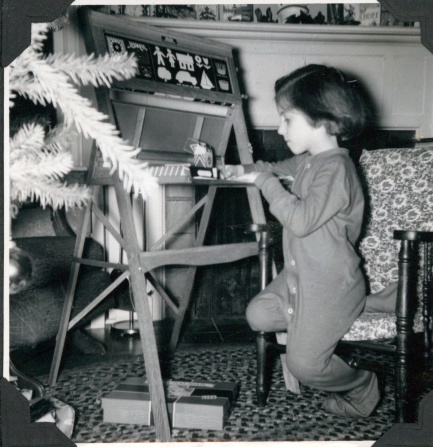
During the time I have written this blog, I have had comments about my collection of photographs of me. I thought I would take a bit of time to explain my cache. My grandparents lived on the opposite coast from us, and my parents  kept in touch by sending many pictures of our family. My parents, likewise, took many pictures of us at home, on vacation and especially at Christmas. Each year, in fact, our Christmas card featured the four kids in matching pajamas.

My father represented the Sawyer company, so we had a slide projector along with those ViewMaster gizmos with their circles of photos. Once they had the slide projector and color film, my parents created many slides instead of photos. We had a screen and frequently had “slide shows” within our family. And no, we didn’t subject guests to any of these shows.

When my mother died in 2015, my brother took all the photo albums, slides and scrapbooks that she owned to a processing service which turned every image into a digital format. He then sent each of us DVD’s containing all the collection. I uploaded them to my computer so I have ready access to them. (I also made hard copies of each and sorted and labeled them for future viewers, not entirely trusting digital storage.)

I have hundreds of images that include me with one or more of my siblings, alone, with our parents, or with other relatives. I also have countless pictures of my own children and grandchildren. Why, then, so many pictures of just me or my late sister? I respect the privacy of all living relatives and consciously choose to not post their images. Right now that means you will only see me, my late sister and my deceased relatives on my blog. And mostly, as it turns out, you will see ME!

“Writing It Down”

1948-50s-370

I was reading a post from a fellow blogger who was wondering what to write about. She was following the dictum to “write what you know,” but was still considering the words for any given post. It made me consider the various blogs I follow as well as my own. As I did this, I realized that each one has its own particular tone and voice, even though many range over various topics.

What makes another person’s writing interesting varies from reader to reader. I find for myself that my natural curiosity about other peoples’ lives gets fed by the writers I choose to follow. Some focus mainly on their family and daily life. Some show me pictures of their gardens and their pets. Some are creative writers. Some deal with chronic illness. One thing they have in common seems to be that each is firmly located in a particular geography, whether Asia, Africa, Europe, Australia or North America. I get to travel without leaving home, which I find very satisfying.

Another trait they share is a bent toward thoughtfulness, which I suppose is shared by default with most writers. My own blog roams freely over many different topics, but in each instance I hope to share the result of my contemplation about the given subject. I enjoy the opportunity to think through something and then share it with others. And I thrive on the comments we writers share with each other.

My advice to that writer is just get writing. Interact with other writers. Leave comments whenever you read a post. Follow a core group of blogs. After a while you will wonder why you ever lacked for ideas!

“The First Stone”

A955CF42-88E7-421C-B198-F11B93650302

The United States has two places named Kansas City. One is in the state of Kansas. One is in the state of Missouri. Yesterday, in the semi-national holiday called the Super Bowl, the football team called the Kansas City Chiefs won. The team comes from Missouri. The president sent out a tweet congratulating Kansas. Uproar followed as people rushed to be the first to call him out for this apparently grievous mistake.

When I was growing up two statements were pressed into me. The first was “people who live in glass houses shouldn’t throw stones.” The second, long before I knew it was a Biblical reference, was “don’t throw the first stone.” I heard these phrases constantly, and they took root in my psyche and my behavior.

Yes, it was a mistake to say that the team was from Kansas, not Missouri. Not an important mistake. Not a mistake to gleefully counter. But in today’s “call out” culture,  people RUSH to cast the first stone. Often of course they do this hiding anonymously or with a pseudonym or calling a radio station or tweeting using an avatar. No fools they, they do seem vaguely aware that otherwise they would expose themselves to stones coming their way.

The overall message we are giving each other is that mistakes are unforgivable. We are supposed to be constantly on guard waiting to deflect that stone bound to come our way if we have a slip in word or thought. Yes, it can be argued that many politicians throw the first stone. Some say that means they are fair game. To them, I repeat a phrase drummed into my head unceasingly “two wrongs don’t make a right.”

“Happy Woodchuck Day?”

6BDA6277-0C56-43E5-9F5D-428DD3E3FC96

In the United States today is celebrated as Groundhog Day. The story goes that if the groundhog sees his shadow on February 2 there will be six more weeks of winter. If the groundhog fails to see his shadow on February 2 there will be an early spring. I have a couple of problems with this method of prognostication. First, it is counter intuitive, so no one can remember which forecasts which. I think this is because it would seem logical that seeing his shadow would mean the sun was shining, predicting an early spring. Clouds would indicate that winter will drag on. But in the custom it is the reverse. Secondly, no matter what the groundhog sees, winter in New England will go on for at least six more weeks. Spring doesn’t arrive here until  April–eight weeks out.

For some reason “groundhog” seems to engender warm fuzzy feelings from the weather casters. But even a quick glance at any pictures of “Chuckles,” our local groundhog, shows the handler wearing thick gloves. And those teeth look none too friendly.

I decided to rename February 2, “Woodchuck Day.” That would elicit the appropriate groans all around. No one who lives in New England feels warm and fuzzy towards woodchucks. They devour everything in sight, dig holes under out buildings and waddle in front of cars. Those groans would be especially apt at the start of February here. The month marks the beginning of another long stretch of cold days. Don’t let the rodent fool you. Spring is still a long way away.

“Learning Disappointment

disappointed2

I was sharing with  a contemporary a couple of experiences from our childhoods. On Valentine’s Day each student had a box on her desk to collect valentine cards from fellow pupils. We would count up our cards at the end of the day and would be regularly sad that we had fewer cards than students we knew were more popular. In gym class, two of the most athletic girls would be chosen as team captains by the teacher. Then in turn each girl would pick members from the remaining girls. I was nearly always chosen last.

A much younger(by fifty years!) gym member said “They don’t do any of that now.” When questioned, he told us that for Valentine’s Day each student has to either bring no cards or one card for each student. Teams are no longer picked by student team captains, but assembled by the gym teacher. He went on to tell us that in soccer leagues each player received a trophy. Also in Boy Scouts each boy who made a pine derby car got a trophy. Apparently it was important no one left with “negative” feelings.  We used to call these feelings “disappointment.”

I was indeed disappointed to receive fewer cards than more popular girls. However, I did know I was not one of the “in” crowd, so I wasn’t particularly surprised. In a similar way, I knew that I was the smallest and least athletic girl in my class. I wouldn’t have put me on a team either. I had feelings about both instances, but I never expected that everything in life would be fair.

So I went into life with the ability to deal with disappointment. It would have been easier if my parents had helped me with that, but they didn’t. Neither did many parents in the 1950’s, most of whom figured we had to learn to be disappointed on our own. I asked a mental health professional about the things the young person told me. She said that in fact all that cushioning from disappointment has a very negative effect. She said by preventing children from maneuvering challenging situations, adults send kids into the world unequipped to deal with the real ones they will encounter. She said, in fact, that many of those “treated all the same” kids fall apart in college when such accommodations are no longer made.

A child in my life really wanted to win the science fair. She didn’t. She was very disappointed. She didn’t get a trophy for trying, though, since her school doesn’t operate that way. We have felt her disappointment with her, but we haven’t taken it away. As the Rolling Stones once put it so crudely,”You can’t always get what you want.” It’s a good thing to know how to handle.


“Speech Police”

maria-krisanova-oxVxFGoweWM-unsplash
by Maria Krisanova/Unsplash

Continuing on with more thoughts on censorship from the self appointed culture police. Today I was speaking with a young man who worked in catering at a large university while he was in school there. A campus conservative group invited a speaker to address them. The young man had to help prepare the room where the speech would take place. One of his tasks was to fasten the 400 seats to one another with zip ties. Why?

It turns out that another campus group didn’t want the speaker to come to the campus. When their efforts failed to prevent another campus group from having its own agenda, they ramped up their protest. Not by standing outside the talk. Instead they came in and tried shouting down the guest. In past encounters, they had thrown chairs. Hence the need for the worker to zip tie them in place.

I am not sure when it was determined that universities were no longer the place for an exchange of views–even widely differing ones. In my mind the behavior of the protestors, rather than discounting the views, seemed to suggest the ideas were very powerful. So powerful that merely hearing them would cause damage. Fascism on  either end of the spectrum looks remarkably similar, doesn’t it.