“Solved At Last”

IMG_0492

In 1967 I moved into a large house with 15 other undergraduate girls. I was the only sophomore let in because I had moved in with a junior. The house had a large kitchen and one bedroom off the kitchen. The rest of us were upstairs on the second and third floor. Jane Britton, a senior, lived in that room off the kitchen. I would often come down in the morning and find Jane smoking her French cigarettes. She seemed everything I didn’t feel I was–sophisticated, bohemian, aloof(at least to me!) and brilliant.

In January 1969 Jane was murdered in the apartment she lived in after graduating from Radcliffe in 1967. It was a dreadful crime, very unusual for Cambridge, and many theories were put forward. Jane studied anthropology, and rumors abounded that it was a ritual murder connected with her studies. Everyone assumed someone who knew her had murdered her. It went unsolved until last week.

Last week detectives tied her murder, nearly fifty years later, to a now deceased serial rapist murderer using DNA from his brother. All the rumors which often seemed to implicate Jane in her own death were put to rest. She was a victim of a senseless crime by a stranger who broke into her apartment. I grieve, of course, as I remember her again. But I am relieved that it was no one she knew, that it wasn’t connected to her work, and that the detectives were persistent for all this time. I will always remember her sitting in that kitchen, self possessed, smoking her Gauloises.


“Tolerance or Patronizing?”

tolerance

Tolerance as a virtue is easy to confuse with the word “tolerate.” As in I can’t “tolerate” the way he treats her. That word suggests that immediate action is required to do something about a situation. But tolerance implies something quite different and is rarely demonstrated in the present political and religious climate of the United States. I suppose that a colloquial way of putting it would be embracing the idea of “live and let live.”

What would it mean to show tolerance about another person’s religious or political beliefs? Why am I contrasting it with being patronizing towards those beliefs? Tolerance suggests, I think, an ability to respect another person’s ideas without agreeing with them. I think that a patronizing attitude shows that I am pretending to respect another person’s ideas but really know that they are wrong. I think people can tell when we are patronizing rather than showing tolerance.

For me this is more of a challenge politically than religiously. It took me many years of exploration to finally plant myself in a Catholic church. I actually do respect other religious views or the lack of them. I am not patronizing in interactions with others about faith. But I evidence much less tolerance about political views different from my own. I am not including racist or anti-Semitic views, just run of the mill conservative outlooks. Here I seem to be having an internal discussion in my mind as I question the person’s intelligence at holding those views! I get flustered and have trouble recognizing their right to disagree with me. I have shown much less tolerance recently, joining with too many Americans in an increasingly polarized country.

May I learn to practice tolerance in politics as I do with religion. May we all.

“Temperance or Prohibition?”

temperance

I first heard the word temperance in high school when studying the liquor smashing behavior of such people as Carrie Nation. At that time in the late 19th century many people opposed alcohol in all its forms, stating that it caused many social ills. The Temperance Movement, as it was called, predated but was eventually subsumed by the Constitutional Amendment enacting Prohibition. Since the Temperance Movement opposed all alcohol, as did Prohibition, I mistakenly believed that temperance and abstinence from all drink were the same.

However, the virtue of temperance has a more nuanced meaning than total avoidance. It includes moderation in all forms, whether in food, drink, language or actions. In that sense it is close kin to prudence, which I discussed a few days ago. But for me prudence suggests a pause before action while temperance seems to be a quality to maintain during action. It would mean that I know when enough is enough, whether it is dessert or a seemingly pointless argument.

Today in the U.S. is called Black Friday because the stores are full of “unbelievable” bargains. The day certainly calls out the opposite of temperance–greed. The ads suggest that we MUST have MORE. And we need to hurry and buy before it is TOO LATE. Because we are having Thanksgiving dinner tonight to accommodate my grandchildren, I missed the sales. But ever since reading the book “Radical Gratitude,” I have found myself approaching all purchases with both prudence(before acting) and temperance(knowing I have enough.) Both are counter cultural, not easy, which I suppose is why we hear so little about these two virtues today.

“Gratitude or Thank You Cards?”

1948-50s 097

When I was three and was given this life sized doll I promptly named Sally, I didn’t know the name for the feeling I had. Now I know that it was genuine gratitude, From my heart I was glad to have received this astonishing gift. Then someone would have said “say thank you.” After a while, “say thank you” was asked of me at all sorts of times, some for things that I was glad about, some I wasn’t. The worst holiday task was writing thank you notes. My paternal grandmother unfailingly sent me awful presents. But I was required to write her a note thanking her for them. It confused me quite a bit, since I wasn’t glad to have received her gifts.

I think children often have genuine gratitude which gets hidden behind the demand that they say thank you. We can teach them that saying the words is polite, but we don’t have to teach them gratitude. That comes naturally. I remember taking our two year old granddaughter to the ocean for the first time. We talked about the ocean on the very long drive from Connecticut to Delaware. But she had no knowledge of the sea. When we got to the hotel, she walked over to the window, looked out and exclaimed in awe, “OCEAN.”

No matter our circumstances, there are moments that shine with goodness. May we give thanks, with genuine gratitude, for such times.

“Civility “

civility

I have been contrasting each virtue with a near quality that is not quite the same thing. However, I find no parallel word for “civility.” I think that we recognize that either someone is being civil or they aren’t. Even if the person is gritting their teeth while they are speaking, we still can see that they are being civil.

Civility prospers at home when children observe adults speaking to each other without mean words or violent actions. Adults teach children by saying things like “we don’t talk like that in this house.” Another commonly heard phrase is “if you can’t say something nice about a person don’t say anything at all.” Neither of these changes a child’s thoughts; rather each is teaching civility, a way to get along in the world.

Civility continues to be modeled in schools where even the youngest are taught to take turns and to speak kindly to one another. Bullying is the opposite of civility, and children learn that it is not allowed at school. Name calling similarly brings rebukes from teachers.

The United States at the moment is headed by a president who lacks any semblance of civility. Some actually applaud him for this very lack, believing that civility is unimportant. And some of us find ourselves stooping to uncivil speech and behavior as a result. While we cannot use our political climate as an example of civility for our children, we can certainly talk about why it is not OK. We can’t explain why adults are acting in ways we won’t let children act. But we know that we won’t let the bad examples influence our continuing efforts to impart civility to our young.

“Prudence or Silence?”

zipit

Prudence calls to mind a girl I knew in grade school named that. I suppose it would be a difficult name to try to live up to. I am thankful I was not named Prudence because I would be constantly teased since in my case it would be an oxymoron. Although there are many situations that call for prudence, my biggest struggle is with with what comes out of my mouth–ill timed words.

I am famous for the “blurt,” comments that go straight from the brain out the mouth. These don’t include profanity, but rather what I think of as truths which can be received  as attacks.  A long standing relationship came to an abrupt end when I blurted something I thought the other knew about herself. It turned out to be wounding, provoking a sharp:”You are not safe!” Followed by the phone being slammed down. I have still not found a way to restore things.

I also can easily come up with words I think of as humorous quips. These definitely could benefit from a little prudence. Not everyone’s sense of humor is as (you choose an adjective)(sharp?warped?sardonic?sarcastic?cynical?) as mine. Good to remember if I am going to be prudent with my speech.

Don’t worry. I am not going to go silent. But if I am to improve my virtue of prudence I might adapt the carpenter’s rule of “measure twice, cut once.” In my case “think twice, speak once.”

“Charity or Enabling?”

begging

While in earlier times charity meant love, my discussion of the virtue today will center on the way we commonly use the term today. We think of charity as giving, frequently money, to those in need. Sometimes we think of large organizations such as the Salvation Army as a charity. But my thoughts today are around the tension I feel when confronted with people asking me for money.

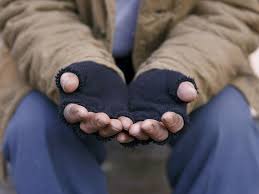
It’s a rare day when I can drive without seeing someone, usually a man, standing next to the traffic lane with a piece of cardboard hand lettered with a message saying something like “homeless, hungry, willing to work.” Unfailingly I will arrive at a stop light and sit for a time next to the person with the sign. I doubt his sign; I doubt my charitable heart; I drive on wondering about the encounter.

Our church, in a poverty stricken downtown, attracts a number of the homeless. We feed them sandwiches each day; we hand out gloves, hats and socks; our friars give out bus passes, food gift cards and medical co-pays. In the dead of winter we are an emergency warm up shelter. Still individuals ask us directly for money. Our priest has asked us to send anyone on to him and not give out money. So we don’t, but it is challenging to look at someone obviously struggling and say no.

So yes I know that many of these people are addicts. Yes I know that many of them would just use the money for drugs or alcohol. So yes I know that would be enabling. So my charity would be enabling I guess. So I put extra money in our poor box, trusting our friars to know what to do and who to help and how to best help each poor soul. That was my act of charity today.


“Kindness or Placating?”

1948-50s-258

Into every life a prickly person must come. I find them in the neighborhood, at church, at the store and on the sidewalk. Some are just passing by, but some are in my life for the long haul. Kindness as a virtue seems especially challenging for me in these situations. Most often my first impulse is to placate the person to protect myself. This habit established itself early in my life and produces faux kindness, not the real thing.

Kindness comes easily towards kittens, babies and friendly people. But most virtues aren’t easy, so I suspect that the trait has a deeper meaning. I believe that true kindness comes from the heart and should not be hampered by any expectation of results. Maybe the prickly person will mellow, maybe not. My kindness should not be conditional on what I receive back.

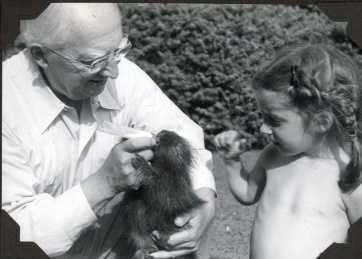
Faking kindness comes easily to me sometimes. Actually having a conversion of my heart towards a prickly person means I must cede control. I can acknowledge my distrust (as I do towards the porcupine baby in the photo) without forcing a smile. And I can continue trying to cultivate genuine kindness in my center.

“Reverence or Idolatry?

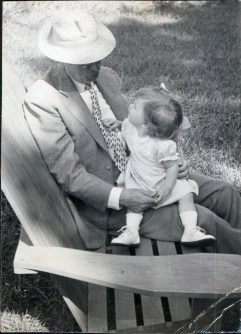
E_00016A

It has taken me two days to think through an understanding of reverence, a listed virtue, and distinguish it from its cousin idolatry. These two words seem to be constantly mixed up, causing undue problems between people. I think that the photo above depicts reverence from my one year old self looking at my grandfather. Of course, I wouldn’t have known that word, but I am clearly giving him deep attention with affection.

In many different parts of the world, different images and symbols are treated with reverence, an attitude of deep respect and esteem. I think that this differs from worship which  has a sense of deep devotion and often ritual observances to accompany the devotion. This continuum from reverence to worship seems to make many quick to label the devotion “idolatry,” which has a clearly derogatory meaning to it. For instance, in my Catholic faith, many revere Mary. This has caused some Protestants to say that the Catholic faith practices idolatry, worshiping Mary rather than her son Jesus. This joins a parade of ways people of different faiths deride others, often by misunderstanding their practices.

I would welcome the day that we could accept different patterns of reverence around the world without being so quick to label it idolatry. In one’s personal religion observances, one can decide who or what to worship. But may we respect that one woman’s reverence may be very different from our own. That is something that reading blogs from around the world has certainly taught me.


“Constancy or Inflexibility”

D1BCD744-B119-4C44-9F33-912354BDB34E

My maternal grandfather also was in the Army during World War I though he never left the United States. Here he stands in his uniform, a picture of constancy, a recognized virtue. But what distinguishes constancy from inflexibility? Why is one praised and the other criticized?

Reflecting on this pair of qualities, I decided that constancy has more to do with deep seated character rather than any particular action. A person with constancy remains predictable in her qualities such as kindness, compassion and forbearance. However, we would not expect her to always eat only turnips or only dress in purple. She could remain constant in her core but flexible in her choices. I expect her “I never would” statement might refer to never hitting her child. Meanwhile she might accept someone very different from herself when given the chance. She would be inflexible only if she said “I never would” talk to a Libertarian.

I have not heard constancy discussed much in recent years. The focus always seems to be on the new, the unique, the “cutting edge.” But what I value most in people is their steadfast character. Something we could all use a little more of in the United States at the moment!