“In Mourning”

McKenzie River before the fire
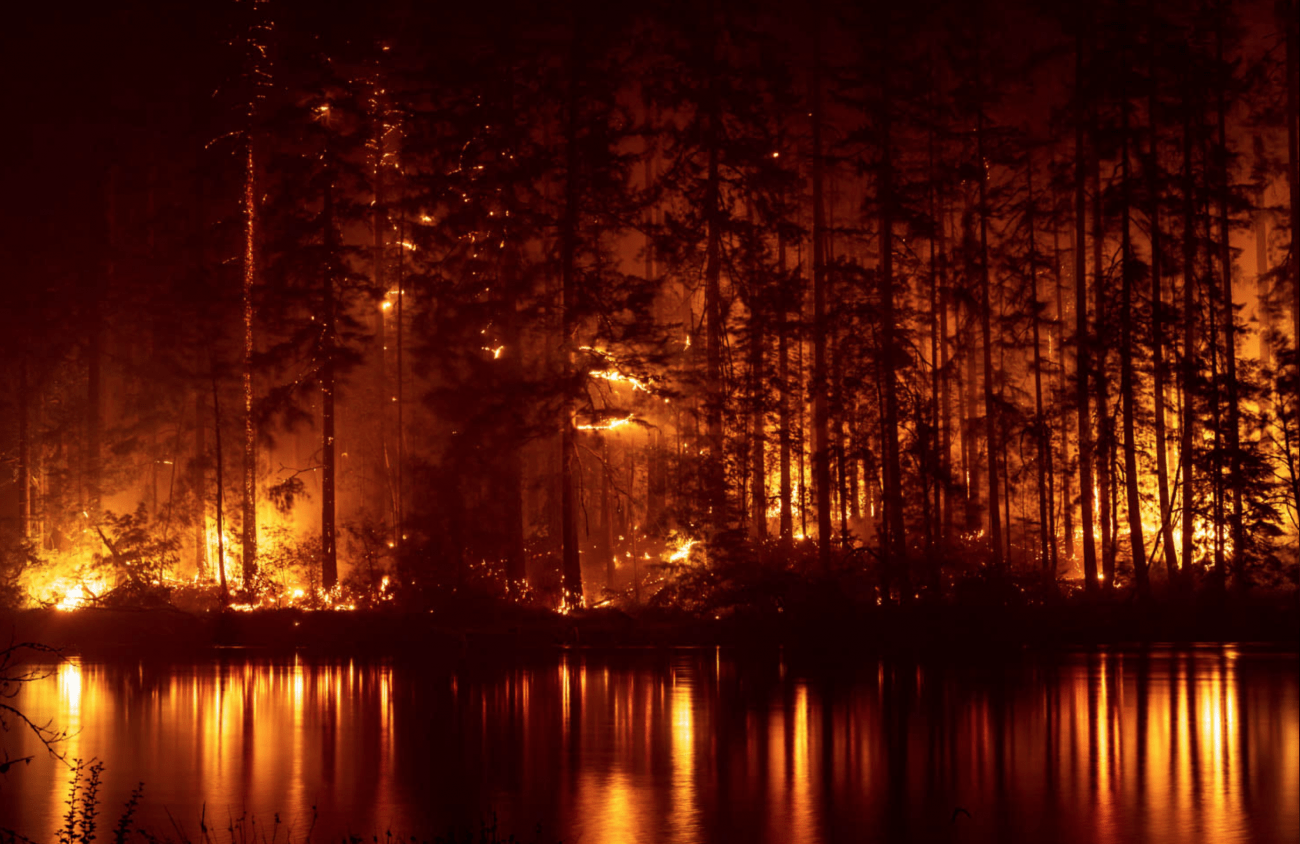
Fire along the McKenzie River

When Charlie and I first discussed plans for our honeymoon, I said I would love to go white water rafting on the Rogue River in southern Oregon. This discussion took place two years before our wedding and demonstrates that a woman overcome with hormones will say almost anything. The one time that I had gone white water rafting with Charlie and the kids, the photo taken in the biggest plunge doesn’t show me. That is because I had flung myself onto the bottom of the raft.

So I proposed that we spend a week in a small cottage on the McKenzie River in Central Oregon. That way we at least were next to, if not on, a river. We rented a small unit next to the river and spent a week exploring and reading, him doing more of the first and me doing more of the second. At one point we drove through the McKenzie Pass into central Oregon. By the middle of June, the Pass was opened for the first time of the year, having been closed for snow until then. The week was lovely, full of rest, recreation, good food and gorgeous surroundings.

This week fire destroyed both sides of the McKenzie River, taking out several small towns, restaurants and places to stay and camp along its banks. It will never recover. I feel a physical ache when I think about Oregon and the destruction that drought, wind, fire and climate change have produced. Ignore the debate still senselessly going on in my country about reality. One has only to look at the two photos to understand things have changed. Reality trumps unscientific blather every time.

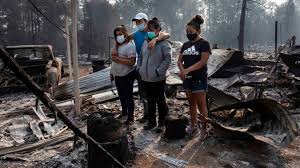
“Up In Flames”

Before we moved to Connecticut on the far east coast of the United States, I lived for fifty years in Oregon on the far west coast of the United States. I grew up near the Pacific Ocean and now live near the Atlantic Ocean. Oregon’s main industries when I was a child were logging and fishing. Oregon throughout the Cascade Mountains, one third of the way east from the ocean, was heavily forested and provided many opportunities for logging and operating lumber mills. Eventually logging mostly died out and the forests remained, most designated as National Forests, places for camping, hiking and fishing for a majority of western Oregonians. (The eastern two thirds of Oregon are dry, sparsely forested, ideal ranching land.) The Willamette River valley, that land west of the mountains and thus west of the forests, houses most Oregonians, in towns small and large, rural, suburban and urban.

I am providing this background, needed for readers outside the United States, as a prelude to my post tomorrow on the effects of the massive fires now raging over 1500 square miles of Oregon. Often when people think of forest fires and their impact they imagine people building in the woods, heedless of the danger. While that is true in some places, it definitely is not the case in Oregon at the moment.

Right now towns and suburbs involving nearly 500,000 people have been evacuated as the fires burn uncontained.

“New Kitchen Toy”

My husband has rarely met a tool he hasn’t wanted. He has electric drills, saws, and sanders along with countless hand tools and some things he has fashioned himself(a tool to clean the gutters without getting on a ladder.) I, on the other hand, have never met a small kitchen appliance without immediately realizing that, though I have never heard of it before, I MUST have it.

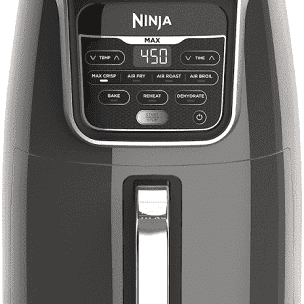
Hence the new air fryer, pictured above, now stored in my dining room since my kitchen is too full to keep it there. No one is coming over because of the pandemic, so no one is around to ask why it is sitting in the dining room! Originally these devices seemed to be made for people to heat frozen french fries and frozen chicken nuggets, so I had no interest in them. But recently I read a review and learned that they were excellent for roasting vegetables with less oil and reheating food while keeping its crunch(unlike a microwave.) In essence they are tiny convection ovens that fit on the counter(if your counter isn’t already full!), and neither take time to heat nor warm the kitchen. There are only two parts to wash, so clean up is easy.

So far I have roasted brussels sprouts, little potatoes, corn on the cob and zucchini. I reheated chicken cutlets with a crunchy topping. Everything came out perfectly, and the kitchen remained cool on the hot summer days I was cooking.

Now about that Sous Vide contraption presently consigned to the basement. I guess I can’t win them all!

“Back To Basics”

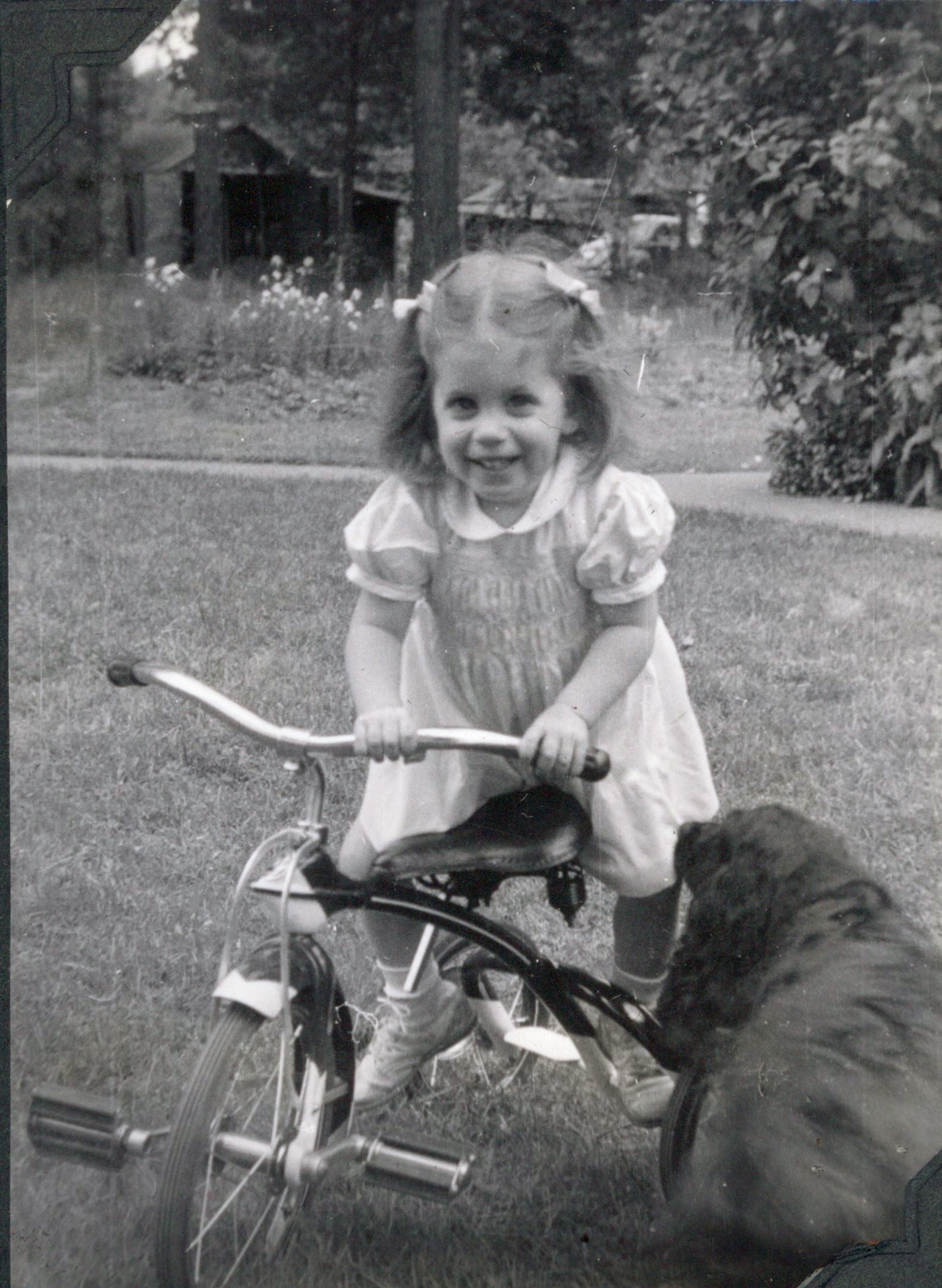
When I was three I had shoulder length hair held back from my face with barrettes. My hair was light brown and very fine with just a bit of wave. Thanks to the pandemic I had been unable to get a haircut for five months. Although I have been cutting Charlie’s hair I didn’t want to risk having him cut mine. So I have been letting my short all over layered hair grow and grow for the first time since my 20’s. Once I had a short haircut, I never experimented, always going with about the same cut.

Two weeks ago I was finally able to see my hairdresser, both of us masked, with no one else in the salon, for a haircut. I had decided by then to try out a longer look and asked her to trim off the split ends of the layers and cut the rest to shoulder length. She told me that many of her clients were trying longer hair after having the chance to let it grow out. Others had stopped dying theirs.

My hair seventy years later is still light brown, very fine, with just a bit of wave, down to my shoulders with the shorter strands held back by barrettes. I guess everything old really is new again.

“Tis the Season”

No, not that season, although a friend in the Philippines has already begun playing Christmas music. I mean the season of abundant harvest of fruit and vegetables. When I was three, I posed above with part of the bounty of my parents’ large backyard vegetable garden. My mother canned the tomatoes, but we ate and gave away the rest to neighbors and friends.

As a child in the 1950’s, I ate fresh food in season and canned food the rest of the year. My mother didn’t switch to frozen vegetables until I was in high school, but she still mostly used canned goods. She refused to buy “hothouse” tomatoes, maintaining(correctly) that they tasted like cardboard. The only fresh vegetables we had were carrots. While we ate bananas, oranges and cold storage apples all year, the rest of fruit was completely local and seasonal.

Sharing in the local farm’s produce each week, I am once again connected to the seasonal availability of fresh produce. Somehow after years of being able to buy anything any time of the year, whether from Chile or New Zealand, I had lost the instinctive knowledge I had as a kid about when I could eat a particular food. I am grateful to have the experience right now, especially as in so much of the pandemic I know neither the day or the month.

Here in the beginning of September the apples are just coming on, the corn is getting dryer, the zucchini larger, and the blueberries are done. Our own raspberry bushes are full of the fall variety and the grapes are being devoured by flocks of birds. Pretty soon I will be cooking the fall vegetables, including winter squash.

There is a rhythm to nature, and I am glad that it is still keeping her own sweet time, no matter the political or pandemic world.

“Band On The Run”

Exercise bands!

When I was in grade school one of our favorite jokes ran along the lines of “When they handed out noses, I thought they said roses, And I ordered a big red one.” This came to mind when I read the comments responding to my post about leaving no trace. I realized I had caused the confusion by not posting the picture of the bands in the gym that I was discussing.

I actually loved the idea that several readers took from that post that I had music bands on the wall. That would actually be a much better idea. I could hang all the old devices for playing music there from my first transistor radio, through my cassette player, my phonograph, and on to my Ipod. The cacophony might drown out my groans as I work out!

Then when I was working the crossword puzzle this morning, I entered the word “ajar.” That took me back to fourth grade participating in a synonym activity. We lined up against the wall; she said a word and asked for a synonym. (I guess our teacher really was tired of our wriggling in our seats!) When she said “ajar,” I responded “a bottle.” While this provoked laughter, it sent me back to my seat.

So I certainly understand word confusion.”When they handed out brains, I thought they said trains, And I missed mine.”

“Leave No Trace”

I recently bought and used hooks to hang the various workout bands in my personal “gym.” I tried out Command Strips(no I don’t get any money for saying this) which are designed to be removed without leaving a mark on the wall. They are touted as leaving no trace. I haven’t had to remove them so far, so I can’t vouch for their ability, but it did make me think about the idea of not leaving a mark.

People love to leave their marks. Bathroom walls fill with phone numbers, slang comments, jokes and initials. Lovers carve their initials on trees. Soldiers couldn’t resist leaving “Kilroy was here.” I recently saw a film about the Vikings which showed graffiti left by a soldier hundreds of years ago etched into a stone railing.

Throughout my school years, we were handed textbooks in the fall which we handed back before summer vacation. We wrote our names in the front plate and laughed about who had used the books in previous years. We signed each others’ yearbooks and autograph books. Over and again we were determined to leave our mark, signifying that we were there.

When we had to replace our bathtub, we found that the chestnut beams supporting the tub had pencil marks from the carpenter as he built the house in 1929. He died the next year, ice fishing down the road, but his mark remained, hidden for us to find 85 years later. And I did pause and think of him, realizing he too once lived in the house we now think of as ours.

“The Library At Night”

Wallace Stevens wrote a famous poem,Thirteen Ways of Looking At a Blackbird. Argentine born, French writer Alberto Manguel explores fifteen ways of thinking about a library in his 2006 book The Library at Night. I encountered this title in the international book group I mentioned a few posts back and found it at my local library.

Manguel delineates many ways that one can think about a library, from a system of order to a spatial arrangement on to a place of chance and through twelve more reflections on a collection of books. I enjoyed thinking about my own book collections, libraries I have known, my reading habits and the books in my childhood.

I have always lived surrounded by books, filling shelves, balancing by my bedside, piled alongside the bed, and basically occupying any horizontal surface wherever I have lived. As I read I frequently found myself thinking “I am not the only one.” I am not the only one who can’t find the one book I am looking for. I am not the only one who doesn’t finish every book I begin. I am not the only one still searching for a way to organize my shelves. I am not the only one who, no matter how frequently I try to pare down my library, still has books crammed willy-nilly on shelves already full.

A thoughtful and original series of reflections on owning, storing and reading books, the title should appeal to any bibliophile out there.

“Just Looking For a Part”

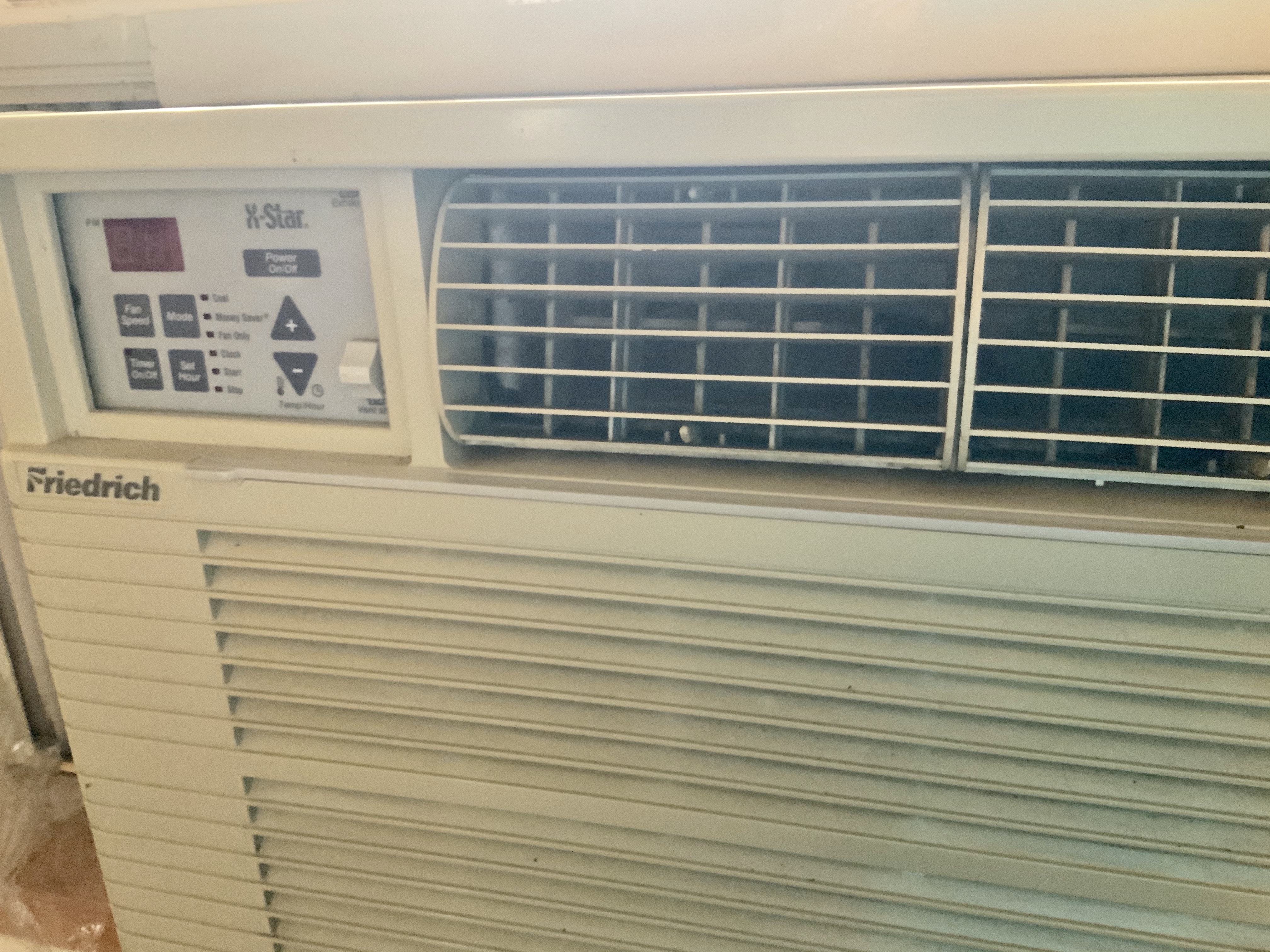
The filter in our trusty window air conditioner(pictured above) is held together with tape. If we added any more tape to the plastic screening it would no longer allow air to pass through, rather defeating the purpose. We decided to find a replacement for the filter. The unit still works very well and we only needed a new filter.

Charlie started at the local appliance store which gave him a card with a parts warehouse number. Of course we would need to know the model and serial number to order the part. The machine is made by Friedrich whose phone number was easily visible. A call to them told us how to find the required numbers by taking off the front panel of the unit.

With the two required numbers in hand, I called the parts warehouse who said they didn’t carry Friedrich parts and that I needed to call Friedrich. When I did so, the lovely clerk told me they didn’t carry parts either. But she was able to give me the number of the part and another phone number to call to order the part.

I called the new company and optimistically gave the woman the part number. The reply? “That part is no longer available and there is no replacement.”

This winter, when the air conditioner is removed, Charlie can figure out how to fix the old filter with new screening material. He always needs projects when it is snowing.

“Euphemisms For Old”

After trying unsuccessfully to get cable service to connect with our new television set, I called Comcast. After literally yelling at the automated answering system since none of the choices fit, I was finally connected to a living person. He graciously told me that I had a “legacy” set box and that it wouldn’t work with the new television.

I began to think of the variety of euphemisms I have run into in the last few years that are being substituted for old, over the hill and outdated. I guess some younger person is treading carefully around my age demographic, hoping to avoid hurting our feelings. My husband’s Levis are called “Classic.” My sweater is referred to as “Heritage.” Other carefully chosen words include “original,” and “time honored.” My own pants have what is called a “Relaxed Fit,” to distinguish them from the offering of “Modern Fit.” Here clearly the title is meant to cushion the blow of realizing that my body is now “relaxed,” rather than “modern.”

So in effect I had an old television set box, looked at by my husband in his old Levi’s and me in my old pants using an analog wristwatch and waiting for the timer on the counter to ding. It’s all right. I can accept that I like to keep things the way they are without being “new” or “improved.”