
Much name calling fills our newspapers, newscasts, internet writing and tweets. People are insistent on “calling each other out” for every view or statement they make. I was challenged this week reading an interview in The Sun magazine July, 2019 with a food activist Leah Penniman. (The article “To Free Ourselves We Must Feed Ourselves, Leah Penniman on bringing people of color back to the land is worth reading for those interested in the intersection of social justice and farming.) She stresses the importance of calling people in rather than calling them out.
I quote her since what she said struck me as deeply important: “Yes, people are not disposable. Rather than dismissing, shunning, or shaming those who make mistakes, I believe it’s our responsibility to call them into awareness and support them in their learning journey, so long as they have a desire for healing. We can’t excommunicate one another. We’re all here on this planet. Let’s try to figure it out together.”
What connections might come if we stopped fearing that every opinion out of our mouth might be labeled as one thing or another. What if we stopped shaming each other about our ignorance about religion, gender, race and ethnicity. I remember years ago in rural Oregon a white man saying to an African American friend of mine, with genuine delight, “You are the first ni—-er I have ever met.” My friend had a choice to recoil or to engage. His first response might have been “how can you use that word? ” Instead I remember him extending his hand and shaking the man’s hand. Then some conversation could begin.




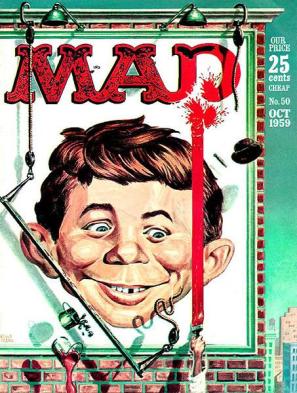 Mad Magazine has published its last issue. For many of my generation the magazine provided constant amusement throughout the 1950’s and 1960’s. My brother and I would buy one copy and share it back and forth each month. The humor was tame compared to what is available for adolescents today, but it was startling material then. We learned sarcasm, political critique, and product spoofs within its covers. Sometimes the cover could even be folded in such a way as to produce an alternative picture, usually more provocative than the newsstand version had displayed.
 Saved By Words