
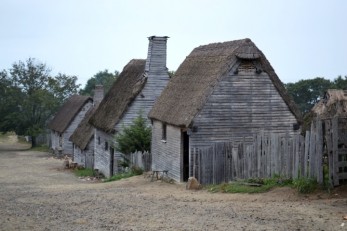
We entered the English part of the village down this dirt road lined with about ten small homes. Each had the name of one of the original families over the door. I was immediately struck by how English these houses looked compared to the ones in the 1830 living history museum, Old Sturbridge Village, near us. We would continue to find how radically living conditions had changed between 1627 and 1830 in New England.
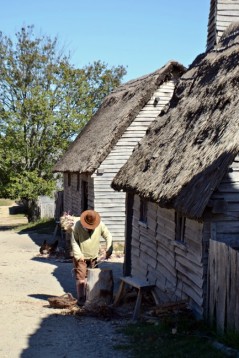
We had a lovely chat with a young man who had come under contract to a settler who had since died. He was housed with another family now. He was pounding out bent nails since iron was scarce and unavailable in the Colony.
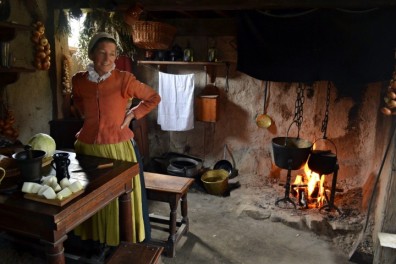
We were intrigued that each house had an individual style to it, though they were all about the same size. Most had a double bed they had brought over from England and assorted straw filled mattress-like pads piled in a corner for the other family members to sleep on. But each bed was positioned differently in each home; each had its own kind of curtain around it; and each bed had been individually made. All homes were dark, dirt floored, small and equipped for cooking. Each had a small garden outside. Chickens wandered freely all over the village and were rounded up collectively each evening into a shared chicken coop.
We left grateful for electricity, running water, heat and windows. But we also left with a very clear understanding of what life in 1627 had been like for both the English and the Wampanoag.






 Saved By Words