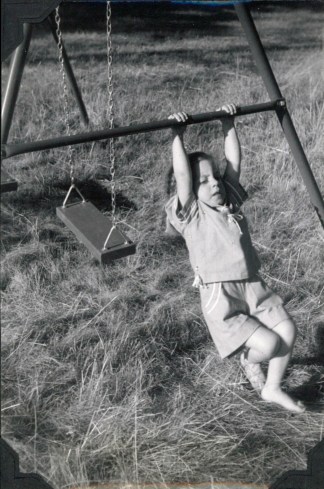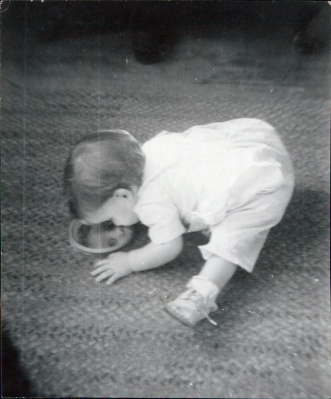
“Revisiting the Like Button”

1948-50s 305

In one of my first posts three years ago I wrote about the “like” button on WordPress. At the time I was concerned that I might be writing in order to be liked. I was intent on not doing that. Recently several different blogs I follow have either removed the like button from their page or questioned the usefulness of it. I thought I would bring my current thinking to this post

Visitors to my page are either recorded as visits, likes or comments. I always have more visits than likes and more likes than comments. Some people suspect that readers may just click like without reading the post and don’t want that option. I find, however, that I appreciate both likes and comments. Frequently someone I follow and know I am followed by just clicks “like.” I am glad to see that they dropped by. Other times I get a “like” from a new reader. This allows me to check out their blog. I have found interesting writers who simply “liked” my post but didn’t comment on it. I rarely check “like” when I read a post, preferring to comment, but I am happy to get any response to my writing.

My preference, as is true for many other writers, is a comment. I like to know that I have connected with someone. I respond to all comments though I may miss one from time to time. I did change my settings so comments from people I know appear right away. Since I only sit down once a day to write, my responses have a significant lag time, but they do get written. My comments are sometimes pretty brief as are the ones I sometimes receive. Other times we have a longer interaction if the topic calls for it. I have come to consider some writers around the world as my friends after months of comments back and forth. For me this is blogging’s most satisfying outcome.

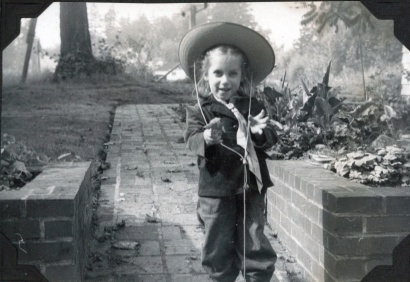
“Doomed to Repeat It”

history3

There’s an old line: “The truth will set you free, but first it will make you miserable.” I was thinking about that as I continued my marathon reading of American history filling in the numerous blanks left by my early schooling. The most balanced book I have read is These Truths by Harvard history professor Jill Lepore. She took up a challenge to write a one volume comprehensive U.S. history book after hearing that not only had not one been written since 1965, but also that it was impossible to do so. She incorporated much scholarship from the last 50 years and added it to what we generally(us non history professorial types) knew. It makes for challenging but enlightening reading.

No good comes from just highlighting the evils done by our forebears if we don’t learn from them. No good also comes from painting all who came before us as ignorant or intentionally destructive. It also serves no purpose to flip our sympathies from one group of people to another. All humans “fall short of the mark.” We are required to abandon simplistic “America All Good” or “America All Bad” and take up complex thinking. We live in a time of simplistic thinking, so it takes some effort!

But I am comforted by learning that the struggles going on in the United States have been going on for the duration of our nation. We have disagreed more often than we have agreed. We have even had Presidents as bad as the one currently in the White House. I am encouraged to know that I am learning more than the monolithic view of America than I was taught in high school. We are still living out a remarkable experiment in democracy. I pray that we will continue to work towards a “more perfect union.”


“Whose Story?”

B251DD68-57B6-43A7-A8E8-A0D6AD910D2E

When I was 11 and in New York visiting our East Coast cousins, my 12 year old cousin asked me about cowboys and Indians. He had the impression that they were a regular part of my life in Oregon. I had to tell him, in no uncertain terms, that he had a very wrong impression of Oregon! We lived normal lives, free of shoot outs on the back 40 acres. We did frequently play at cowboys and Indians, though we were always all cowboys. No one in my circle wanted to be an Indian. We weren’t sure why, but we knew on some level that the Indians lost.

Donald Trump and I were near contemporaries in school. We both were taught American history as a story of constant progress, exceptionalism and power. We were not taught about the “losers” in America, those people displaced, enslaved, deported and exploited. Slavery was an unfortunate blip in an otherwise sterling American story. When he says he wants to “Make America Great Again,” he implies that somehow we need to get back to that sense of the United States our textbooks portrayed.

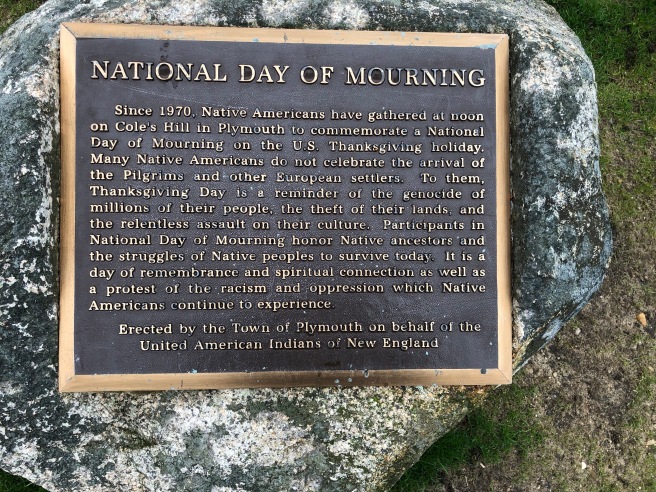
I reflected on that a lot when visiting Plymouth. I thought about it most deeply when I encountered this plaque:oChYeQhJSpK5iBav05G6UQ.jpg

I began, not for the first time, to wonder whose story I had been taught so many years ago when we dressed up like Pilgrims and Indians to share a Happy Thanksgiving.

“Time Travel”

BEEFB655-CA91-4D44-BE63-1F5A641E05A2

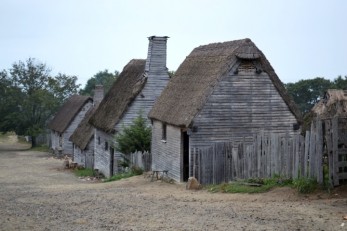
We entered the English part of the village down this dirt road lined with about ten small homes. Each had the name of one of the original families over the door. I was immediately struck by how English these houses looked compared to the ones in the 1830 living history museum, Old Sturbridge Village, near us. We would continue to find how radically living conditions had changed between 1627 and 1830 in New England.

F09ACFE5-B138-4C4A-A654-6103B3A8C633

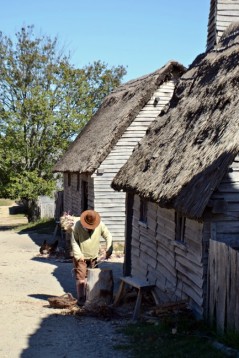
We had a lovely chat with a young man who had come under contract to a settler who had since died. He was housed with another family now. He was pounding out bent nails since iron was scarce and unavailable in the Colony.

6F21CA4B-7C81-4864-BB6F-DFBCBE423A91

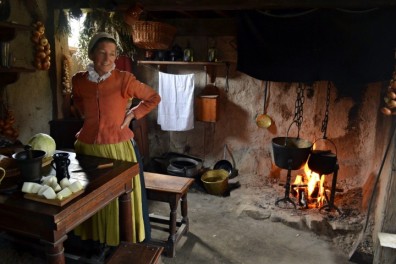
We were intrigued that each house had an individual style to it, though they were all about the same size. Most had a double bed they had brought over from England and assorted straw filled mattress-like pads piled in a corner for the other family members to sleep on. But each bed was positioned differently in each home; each had its own kind of curtain around it; and each bed had been individually made. All homes were dark, dirt floored, small and equipped for cooking. Each had a small garden outside. Chickens wandered freely all over the village and were rounded up collectively each evening into a shared chicken coop.

We left grateful for electricity, running water, heat and windows. But we also left with a very clear understanding of what life in 1627 had been like for both the English and the Wampanoag.

“Bear(not bare!) Skin Pose

IMG_0295

A highlight of our visit to Plymouth, Massachusetts was a half day spent at a living history museum Plimouth Plantation. It features a Wampanoag village and an English village, both replicating how each would have looked in 1627. The interpreters in the Native American village belong to various nations, and they respond to questions in the present. The interpreters in the English village are Americans, and they respond to questions as if it were 1627.

Today’s photo was taken inside a reproduction of a Wampanoag summer house near the Eel River. The summer houses were made of a tree branch framework covered with overlapping mats made of cattails. The sleeping, sitting, eating, working platforms on the sides were covered with animal furs. I am resting on a black bear hide. The Native Americans lived near the river in the summer, gardening and fishing to store food for the long hard New England winters. In winter they moved inland into the forest where they had more protection from the elements. Their winter homes sheltered from one to four families and were made of bark over a branch frame.

Just before the arrival of the band of English Pilgrims the Native people had been decimated with a plague, the specifics of which are still unclear. The same disease swept down the New England coast from what is now Maine and is assumed to have been introduced by European sailors. The area where the Pilgrims landed was therefore uninhabited.

Tomorrow I will show you the English village.

“The Rock!”

QgSA4uHWRgy6AKxMEHFNdw

Plymouth Rock supposedly marks the spot where the first Pilgrim set foot on land in 1620. Apparently this is not mentioned anywhere in the official records of the Colony, but that hasn’t stopped every American child of my era being taught about it. Of course I needed to see it and, hopefully, set foot on it myself. This massive structure, built over the rock, announces its importance.

0TaMpbVMSEa0cAXalyy77Q

What? The Pilgrims not only stood on this rock but they also carved 1620 into it? And how did their footprints last so long anyway? The original alleged Rock was chipped away, painted and basically destroyed. This rock, supposed to be what was left of it, was marked with the date 1620 in the late 1800’s. I have no idea who thought this was a good idea. The National Park rangers get tired of answering the same question over and over: “How did the Pilgrims make such neat numbers?”

Oh well. Maybe I can find the remnant of the cherry tree George Washington cut down!

“Getting Back Into the Swing of Things”

1948-50s-145

Yikes. I had no idea how far behind I could get with my blog, my blog comments and my reading of friends’ blogs in just a week. I had a great time for a week of visiting with a dear friend, traveling around New England with her, eating, resting, talking and praying. Now that I am back at the computer, I find that not only do I have a lot to write about from our trips but also a lot to read. So today I am just catching up with comments and commenting on blog posts. If you see a lot of comments from me all at once, that is why.

Tomorrow I go back to 1627 in Plymouth, Massachusetts and ask the all important question “what does Plymouth Rock actually look like?”

“Two Days Away”

My good friend and I spent two nights in Newport, Rhode Island at the Yankee Peddler Inn. While we both enjoy bed and breakfast places, it is difficult to find one with two beds in a room. Mostly they cater to couples I guess. We were fortunate to find the lovely room pictured above. A strong wind blowing Saturday allowed me to catch a shot of the surf rolling into the local beach. In the background you can see the cliffs, home to the Cliff Walk, a nearly three mile mostly paved path around the cliffs.

Newport is as old as Boston and is filled with colonial houses and cobbled streets and sidewalks. Eminently walkable, the town let us park the car and get everywhere on foot. I craved fish, so I had baked cod for one main meal and cod fish and chips for the other. The Inn had an expansive breakfast set up complete with fruit, eggs, assorted baked goods, cereal, oatmeal, coffee, tea and juice. Well fortified with breakfast and the main meal, we had cupcakes for dinner one night.

Newport became a summer destination for the very very wealthy of the Gilded Age in New York and is full of enormous mansions looking over the sea. These now are open for tourists to ooh and aah over. We toured Rosecliff a few years ago where they filmed The Great Gatsby. We both enjoyed the servants’ quarters more than any other part of the too too over the top place. After that we had no desire to see another mansion.  I imagine in the future people will tour Mar-A-Lago in the same way!

Tomorrow we’re off to see Plymouth, Massachusetts where there is a recreated Puritan village and a recreated Native settlement. I will try to get some photos of it too.

“Off Until Saturday”

A good friend flew in yesterday afternoon to visit for  a week. We’re in Newport , Rhode Island now and back Saturday afternoon. Hope to catch up with everyone then. I’ll also try to get a photo of one of the old Newport mansions, home to the formerly rich and infamous.

“A Catholic Writer?”

1940 Family_00037A

Here I am seriously self reflecting on what it means to be a Catholic writer. Well probably not at that age! But in this post I wanted to put down my thoughts on the matter. A common misconception about Catholic(or Jewish or Hindu or Islamic) writers is that all of their output is religiously centered and aimed at converting the reader. This prevents some writers from even mentioning religious subjects for fear that they will be seen as coercive or close minded.

Many religious writers do in fact write about purely religious subjects and do want to convert their readers. However, I am not one of them. On the other hand, I do think of myself as a Catholic writer. Why? It’s simple really; I am a Catholic and I write. I am also a woman writer, a white writer, an old writer, a New England writer, a married writer, a grandmother writer, and a dog owning writer. I am not trying to change anyone’s gender, race, geographical location, marital status or pet ownership, but all of those aspects of me are important and inform what I think about, write about, and how I respond to things I read.

Lately anti-intellectual, right wing Christians have received a lot of news coverage for their views on the Presidency and the climate. My faith bears little resemblance to theirs, though we say we worship the same God. But behind all of my writing, my reflections, my joys and my sorrows, is my faith. I would be doing it a disservice if I allowed only the others to speak for me. They don’t. I follow a Gospel that stresses that the last shall be first, that we are commanded(not suggested) to love one another, that Jesus was a refugee, and that when we do to the least we are following Christ. Just thought it was time I said that again.